
Bolivia - Memories and Recommendations
I have been to Bolivia multiple times. It's one of my all time favourite countries I've been to - and I've been to 48 at the time of writing! This post takes you through this marvellous country and might even inspire you to visit!
SOUTH AMERICATRAVEL
Thru
7/7/202631 min read
Suggested Itinerary
If you were planning to go to Bolivia and were asking me for advice on what to do and where to go, I would suggest the following:
SAN PEDRO DE ATACAMA: Fly into Santiago in Chile and onwards to Calama in the north of Chile. There, you can catch a bus to the quirky and charming village of San Pedro de Atacama where I'd suggest you spend at least a couple of days to acclimatise to the high altitude. San Pedro is located at 2,407m above sea level and there's lots of incredible things to do and see in the village, aside from also just enjoying its vibe. It's one of the two major tourist hubs of Chile, the other being Puerto Natales, the gateway to Torres del Paine in the very south of Chile. To keep you busy acclimatising in San Pedro, you could do some or all of the following:
Tatio Geyser
Quebrada del Diablo
Valle de la Luna
Lagunas Altiplánicas Miscanti y Miñiques & Piedras Rojas
Laguna Cejar combined with Ojos del Salar
Stargazing tours
SALAR DE UYUNI: Join a 3 day / 2 night jeep tour from San Pedro in Chile to Uyuni in Bolivia which takes you through some of the most spectacular landscape on the planet, through the high plains of Bolivia, dotted with volcanoes, lakes, abundant high altitude fauna and of course the famous Uyuni salt flats. Just remember to plan your season (wet vs dry) and if you do go in the wet season, try to be there around the same time the carnaval in Oruro takes place!
POTOSÍ: Travel from Uyuni to Potosí to visit the silver mines there.
SUCRE: Meant to be Bolivia's prettiest city.
LA PAZ: The journey from Sucre to La Paz is cruellingly long 12 hour bus journey with just one 30min stop for a bathroom break. This is just the reality of travelling by land across Bolivia, it takes absolute ages in less than ideal transport. If you skipped Potosí and Sucre, you would still be looking at a 9 hour bus journey, or alternatively a direct 1hr flight from Uyuni to La Paz. If flying from Sucre, it would involve flying to Cochabamba, change planes and fly from Cochabamba to La Paz. While in La Paz, you can do the following:
Explore the many markets of La Paz, including the Witches' Market.
Take in the strong indigenous feel of the city.
Tiwanaku Ruins
The Bolivian Valle de la Luna
See a Cholitas Wrestling match - the Cholitas are indigenous Aymara women wrestlers.
YUNGAS - DEATH ROAD ON A BIKE or EL CHORO TREK: You should really try to experience the Yungas of Bolivia - the zone where you drop very fast from the high altitude mountain landscape to dense tropical forest. It is such a beautiful area and a great way to see it is by tour either on a bike down the Death Road in one day or a multi-day trek called El Choro Trek. My personal preference is the bike tour, but I acknowledge that it is not for everyone. Both tours typically end in Coroico in the Yungas where you can either get transfer back to La Paz, or take the onward bus into the Bolivian Amazon.
RURRENABAQUE: Either take the long 10-12 hour bus journey from Coroico to Rurrenabaque through rather scary roads (I've done it once, never again. First time and last time I actually got motion sickness in my life), or you can take a flight from La Paz to Rurrenabaque. The only trouble is, that flights historically frequently get very delayed or even cancelled due to runway conditions in Rurrenabaque, so don't leave yourself too little time. Once in Rurrenabaque, there are two main activities and if you do both, you'll likely have to budget for 5-7 days in the Rurrenabaque area:
Pampas Tour - typically a 3 day / 2 nights tour exploring the wetland areas which is absolutely teeming with wildlife.
Jungle Tour - tour of variable length depending on your choice but never really shorter than 2 days / 1 night, where you learn about jungle survival, including edible plants, medicinal plants, poisonous plants, water-containing plants and more.
LAKE TITICACA: Fly from Rurrenabaque back to La Paz and then get on a 4 hour bus to Copacabana on the shore of Lake Titicaca, the highest navigable lake in the world. Stay overnight in Copacabana and then plan for either a full day on the island Isla del Sol, or better yet stay there overnight to experience the sunset on Lake Titicaca. While on Lake Titicaca, if you have the time, you can pop over to the Peruvian side to the city of Puno and go and see the Floating Islands of the Uros. It takes about 4 hours to get to Puno from Copacabana. You'd likely need to stay 2 nights on the Peruvian side, either in Puno or on one of the floating islands before finishing your touring. To get back to Santiago in Chile, you can either take the bus back to La Paz and then a direct flight to Santiago, or fly from Juliaca airport (very close to Puno) to Lima and then to Santiago (or just buy yourself an open-jaw ticket to South America where you fly into Santiago and from Lima to save yourself flying time).
I have been to the vast majority of the above places, and below are my memories and photographs from those trips.
Note that there are affiliate links in this article, things that were chosen by me which I think you will enjoy.
Memories from my travels through Bolivia
I have been to Bolivia a few times. I went twice in 2007, first in the Andean wet season in February 2007 entering through San Pedro de Atacama in Chile. The second time I went in October 2007 when I entered from the northern Argentina border at La Quiaca to Tupiza and the third time I went in October 2009 when I entered via the Peruvian border at Lake Titicaca and the fourth and final time I went back was in February 2010. Every time I went to Bolivia, I took it slow, took my time and saw a fair bit of the country, so you could say that I am no stranger to Bolivia. And I absolutely LOVE Bolivia. It is one of my all time favourite countries, and at the time of writing in 2026, I have been to 48 countries. I hope to take Joe there one day, but as I tell him and I will tell you as well - you need time to explore Bolivia. Things happen slowly. Buses are slow, usually uncomfortable and often either break down or get stuck due to muddy roads or road blocks. You need to allow time for the adventure, but if you do then you'll be rewarded with an unforgettable and unique experience.
This is not an up-to-date guide on Bolivia, it's merely to give you a flavour of this amazing country and see why it's worthwhile to visit. Last time I was there was over 15 years ago and things may have changed since then, so please do your research if you plan to go.
On this page I'll share with you my previous adventures to the different parts of Bolivia. The places are not in any specific order.
Places I would go if I was going back.
Sucre and The Dinosaur Tracks in Parque Cretácico
Potosi and the Silver Mines
The new Teleférico of La Paz
If you enjoy listening to audiobooks or reading, there's also a couple of recommendations for you of true stories from Bolivia.
La Paz
I don't know why I can't find any photographs from my trips to La Paz. It is an unbelievable city and I fell in love with it instantly. The bulk of the city is built up the slopes of mountains, with the city centre at the bottom of the valley, with then houses that are built on near vertical slopes right next to the city centre. The city offers amazing views of the mountain Nevado Illimani, a gigantic mountain covered in snow. One of the big attraction of La Paz is exactly how and where it's built, as well as the endless markets everywhere. I absolutely loved them. You could buy practically anything, quite literally. I browsed the Black Market, which was in fact mostly a legal market aside from the bootleg DVDs and CDs. The Witches Market (Mercado de las Brujas) present a fascinating, sensory-rich blend of ancient Andean spirituality and folk medicine. The most iconic, and startling, items on display are dried llama fetuses (sullus), which locals purchase to bury beneath the foundations of new homes as a sacred offering to Pachamama (Mother Earth) for protection and prosperity. Alongside them, Aymara healers (yatiris) sell an array of ritualistic goods, including dried frogs and toads to attract wealth, armadillos to ward off thieves and intricate soapstone amulets shaped like condors for safe travel or pumas for strength. The market is also stocked with pre-packaged spell boxes filled with colorful candies, wool and feathers, as well as medicinal herbs, aphrodisiac potions (some of which are made of menstrual blood), luck powders and sacred coca leaves used for both altitude sickness and fortune-telling.
La Paz was an incredibly cheap city when I was there - I paid just £5 GBP at the time for a night in a hotel with private bathroom and cable TV back in 2007. The prices have obviously come up in the past nearly 20 years, but if you look on Booking.com you'll see that there's still, to this day, loads of very cheap hotels to be had for under £25 per night for 2 people.
In La Paz, you can easily spend a couple of days just wandering through the streets of the city and soak in the atmosphere (and the mad traffic). There are also numerous tours that depart from La Paz, most famously daytrips to the Valle de la Luna, Death Road to Coroico on a bike, Lake Titicaca & Tiwanacu archaeological site and of course last but not least, city walking tours. Nowadays, La Paz also has these incredible cable cars that zoom up and down the city's majestic slopes, something I never had the chance to do, as they had not yet been built, but I would certainly ride, was I there again!
Lake Titicaca
Lake Titicaca is one of South America's most iconic destinations. Sitting at over 3,800 m above sea level, it's the world's highest navigable lake and is shared between Bolivia and Peru. On the Bolivian side, most visitors base themselves in the lakeside town of Copacabana, which has lots of waterfront cafes and restaurants serving fresh fish from the lake.
I stopped there very briefly, but it takes about 4 hours to get there from La Paz. Once in Copacabana, I headed to the island Isla del Sol, which takes about 2 hours by boat. When on Isla del Sol, a popular thing to do is to walk the length of the island, experiencing the beautiful landscape and the Aymara indigenous culture. Below are a few of my pictures from back then, some 20 years ago or so.
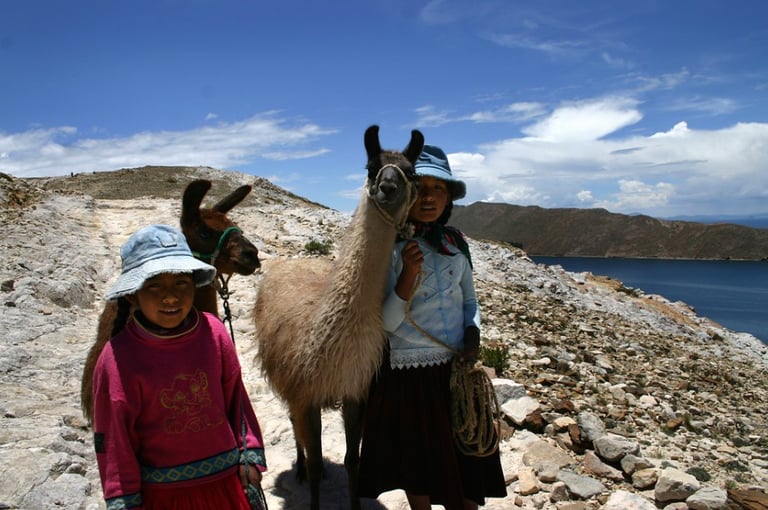
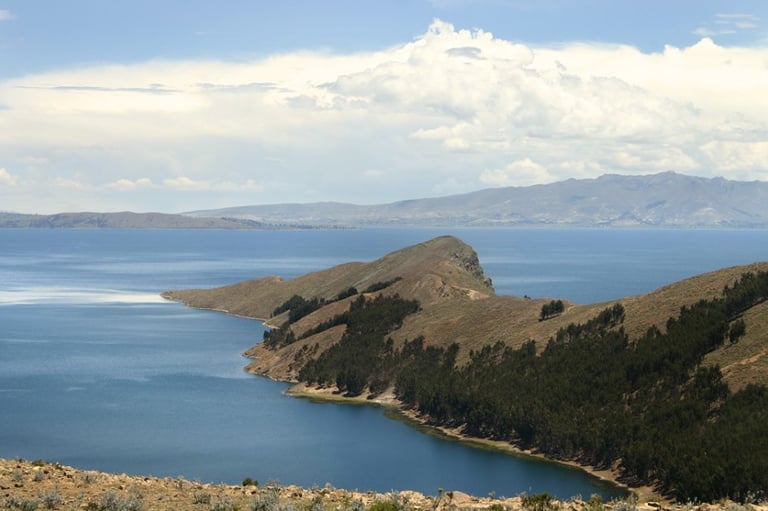
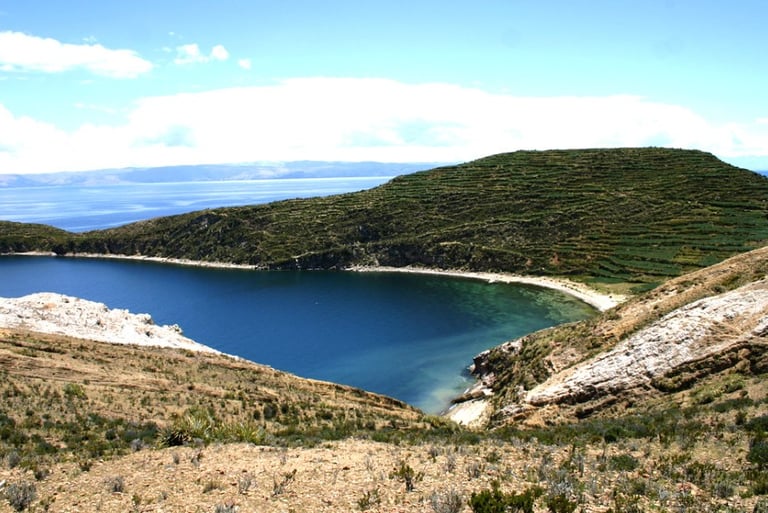
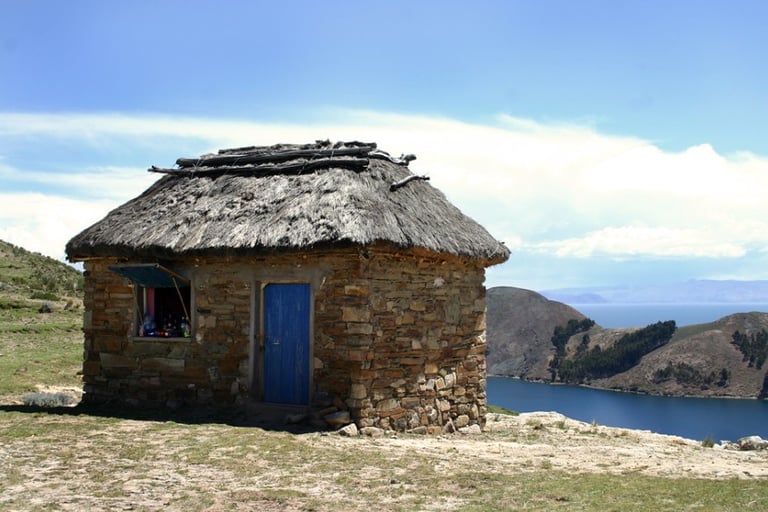
PHotos from around Isla del SOl on Lake Titicaca in Bolivia
If you make it as far as Copacabana on Lake Titicaca, I would also highly recommend crossing into Peru and go to the city of Puno. Puno is nothing special but it is the gateway to another Lake Titicaca attraction - the Floating Islands of the Uros people. It takes about 4 hours or so to get to Puno and you can then get either a boat transfer to stay on one of the islands (AirBnB has several) or do a daytour from Puno (which is what I did when I went, but people recommend overnight stay).
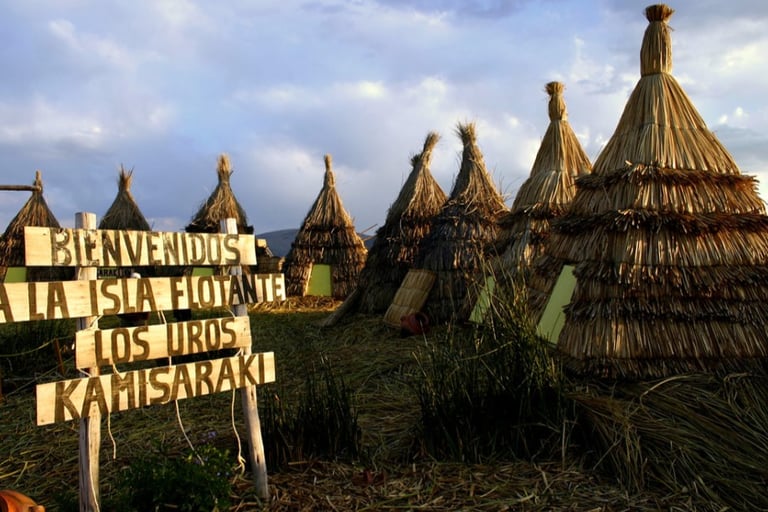
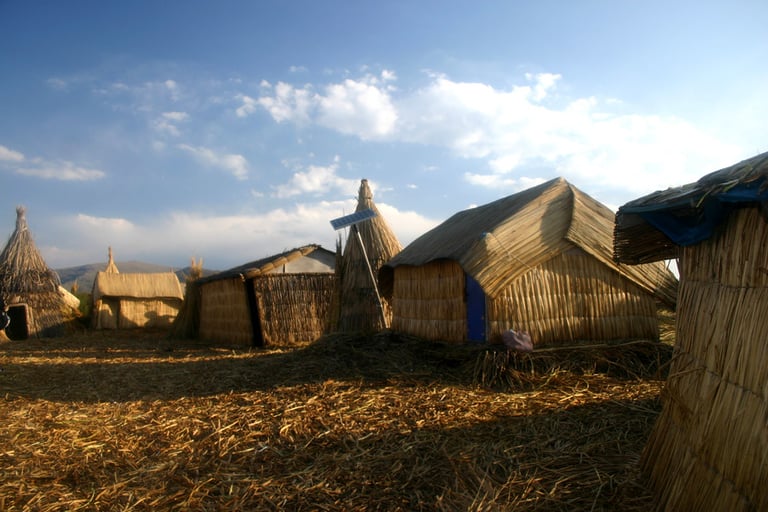
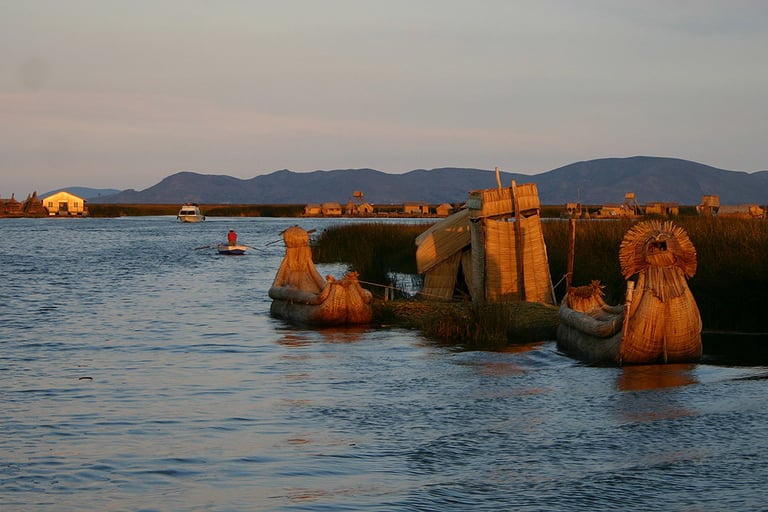
The Floating Islands of the Uros People on the Peruvian side of Lake Titicaca are a short distance from Copacabana in Bolivia
Death Road on a bike from La Paz to Coroico
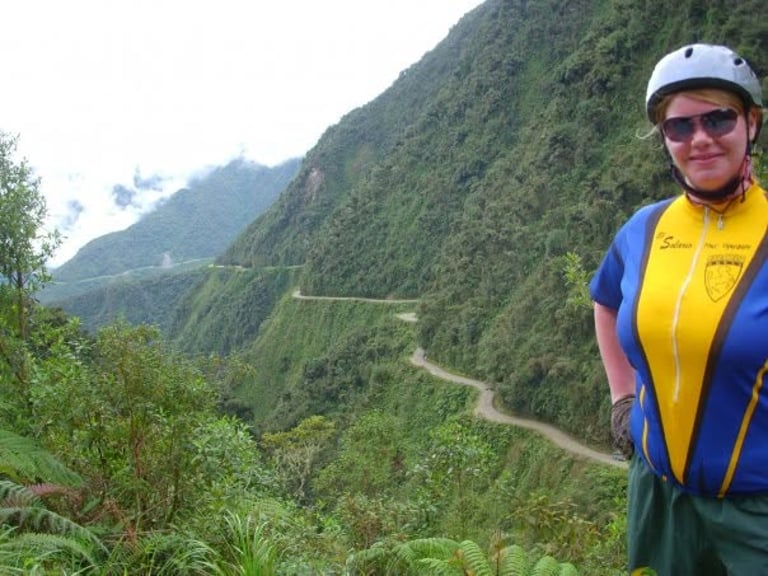
One of the things you can do in La Paz is to go on this thrilling adventure of downhill mountain biking from the high mountains to the lush jungle. I have done it twice. The first time I was a bit worried, as you move downhill FAST! The tour takes you to one of the highest points near La Paz, with the bikes up on the top of a minivan, they're taken down, you sit on it, given a cycling helmet and off you go. The first bit was on an active, paved road with traffic. We then turned off the paved road and onto the old dirt track that is known as "The Death Road".
The North Yungas Road earned its infamous title, "The Death Road" (El Camino de la Muerte, because for decades, it was statistically the most dangerous stretch of road in the entire world. During its peak usage in the late 20th century, an estimated 200 to 300 travelers were killed on the road every single year. The lethal reputation was caused by a perfect storm of terrifying factors:
Extreme Drops & No Guardrails: The single-lane road cuts directly into the side of the Andes mountains, connecting La Paz to the Amazonian Yungas region. On one side is a solid rock wall; on the other is a sheer, vertical drop of up to 600 meters (2,000 feet) with absolutely no guardrails.
Incredibly Narrow: Most of the track is only about 3 meters wide, barely enough space for a single vehicle, let alone two massive, oncoming trucks trying to pass each other.
Blinding Weather Conditions: The route transitions from freezing mountain passes to hot, humid jungle. This creates heavy, blinding fog, tropical downpours, waterfalls cascading directly onto the road, and frequent, unpredictable mudslides that would take out entire sections of the path.
The "Left-Side" Rule: To ensure safety, local driving laws were flipped exclusively on this road. Downward-bound drivers were required to drive on the left side of the road. This forced them to sit right on the outer edge of the cliff so they could look out their window and see exactly where their tires met the precipice.
The mountain biking tour along the Death Road is typically an all-day adventure (around 8 to 9 hours total from hotel pickup to return), with the actual time spent on the bicycle lasting between 4 to 5 hours. The ride covers a total distance of approximately 64 km, dropping a massive 3,600 vertical meters (nearly 12,000 feet) from the frozen Altiplano:
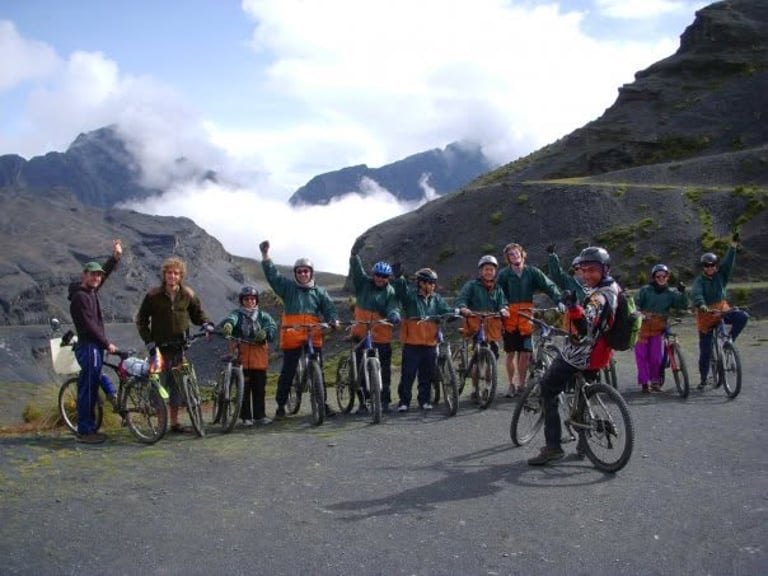
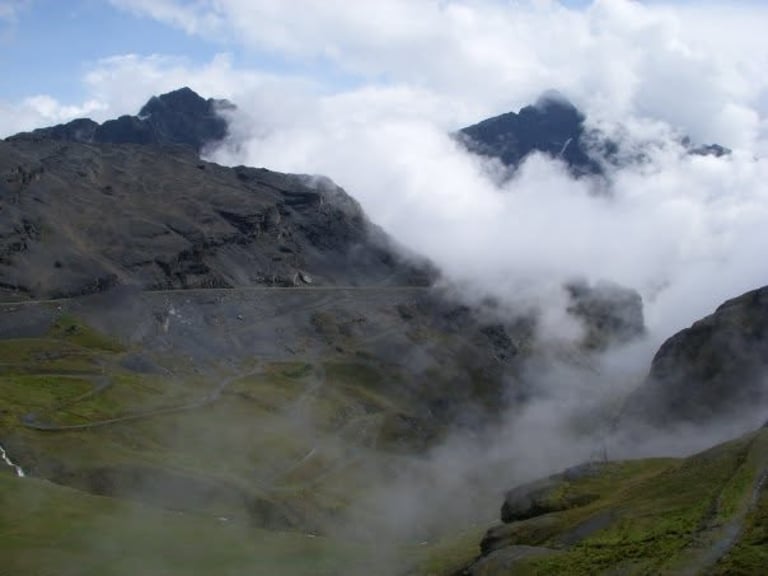
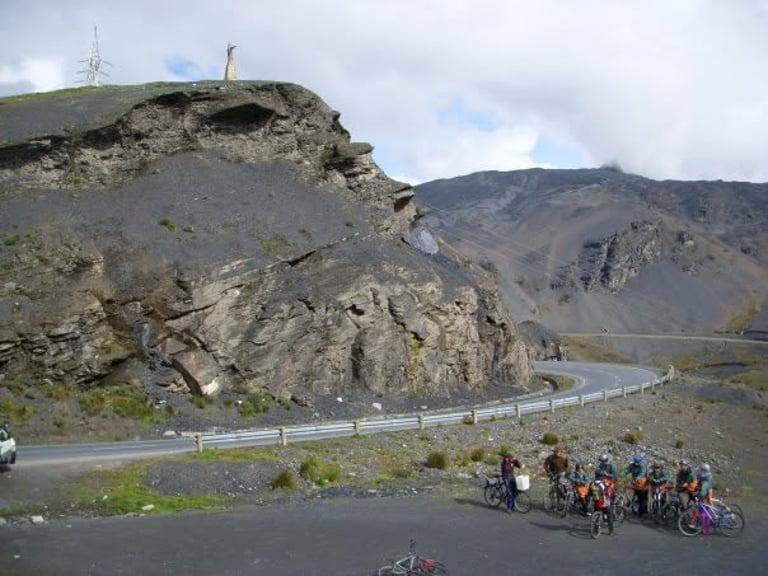
The start of the Death Road tour on a bike in the high altiplano near La Paz
... and then you head down into the humid Amazonian foothills, 3,600m lower than where you started.
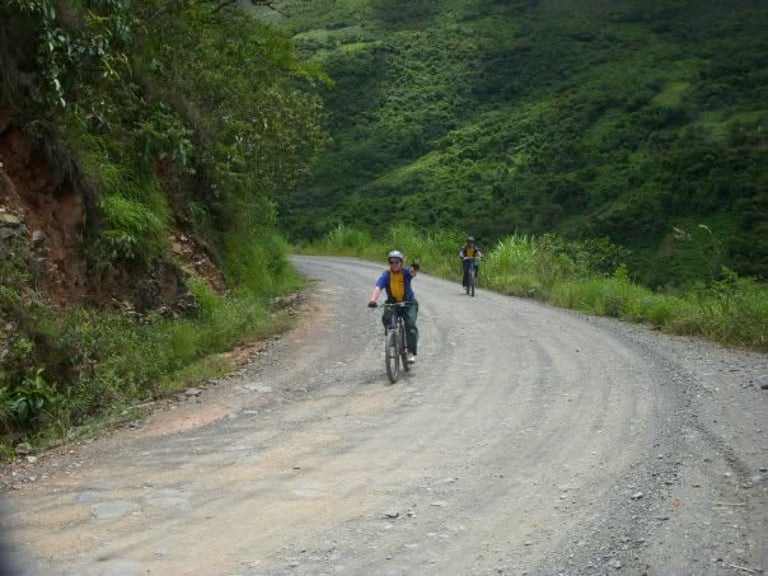
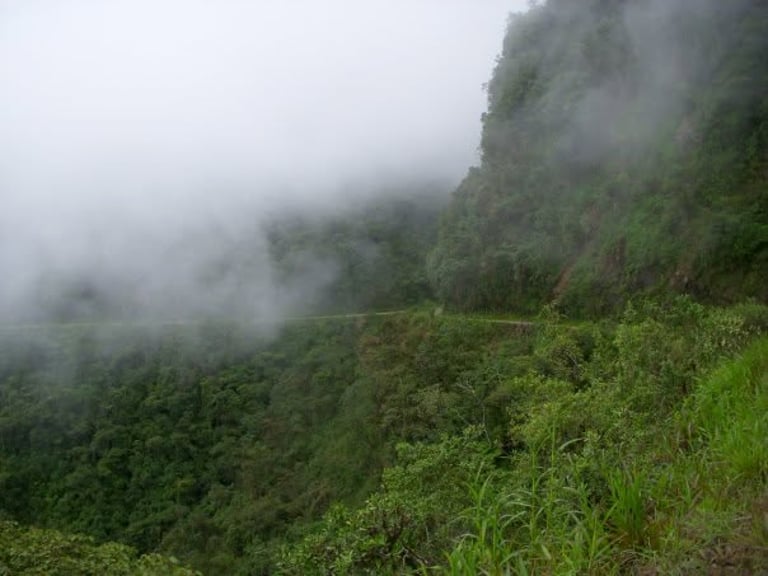
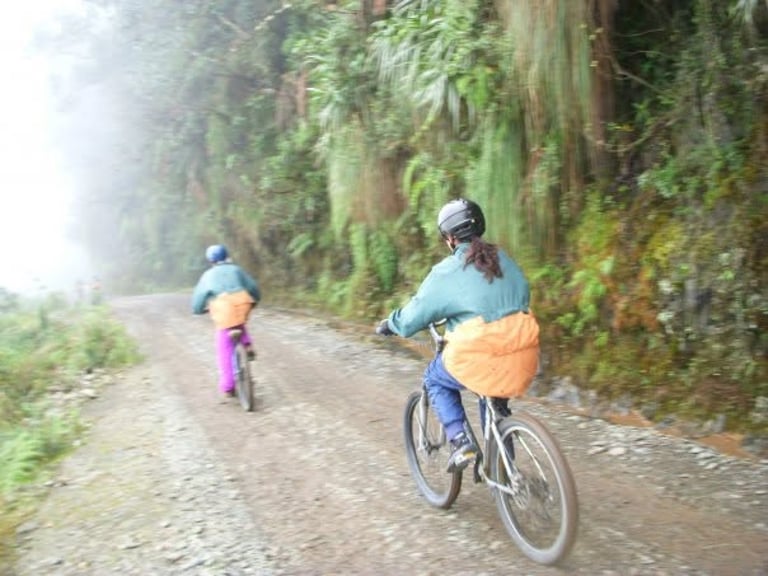
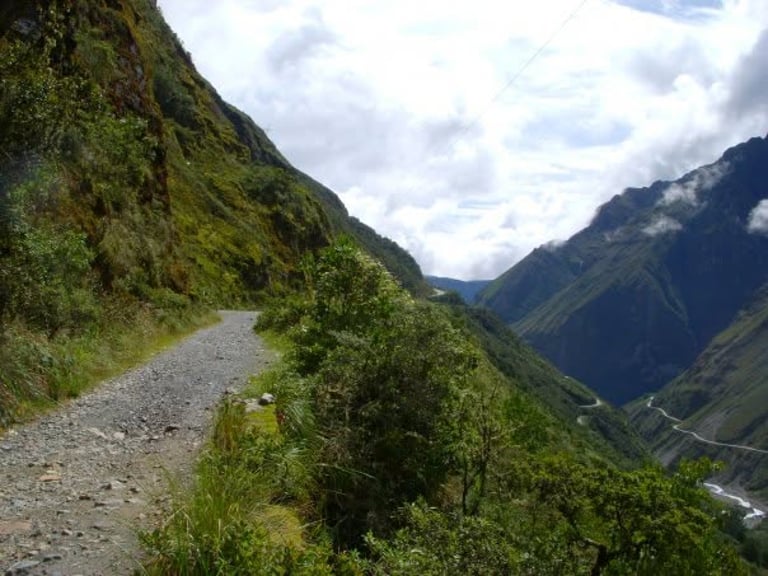
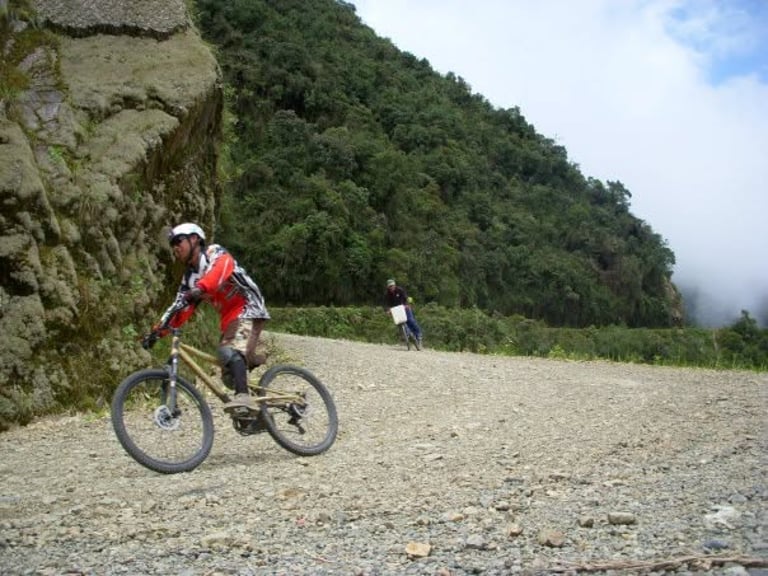
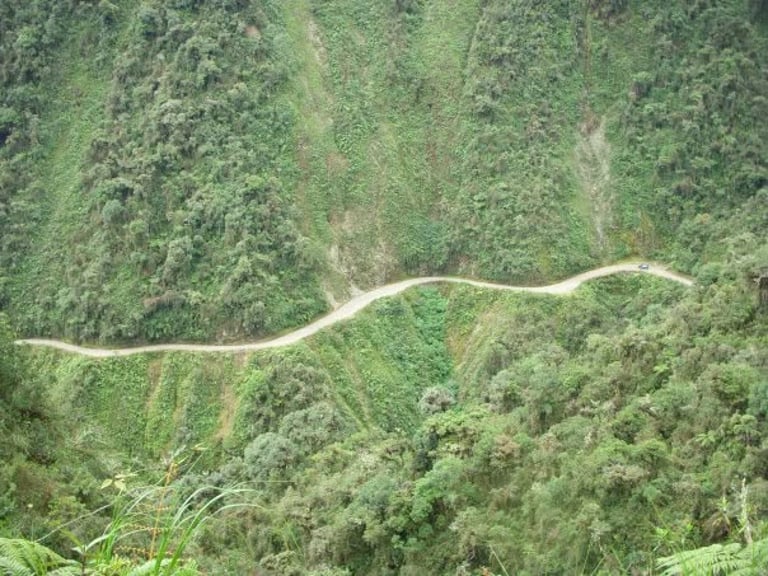
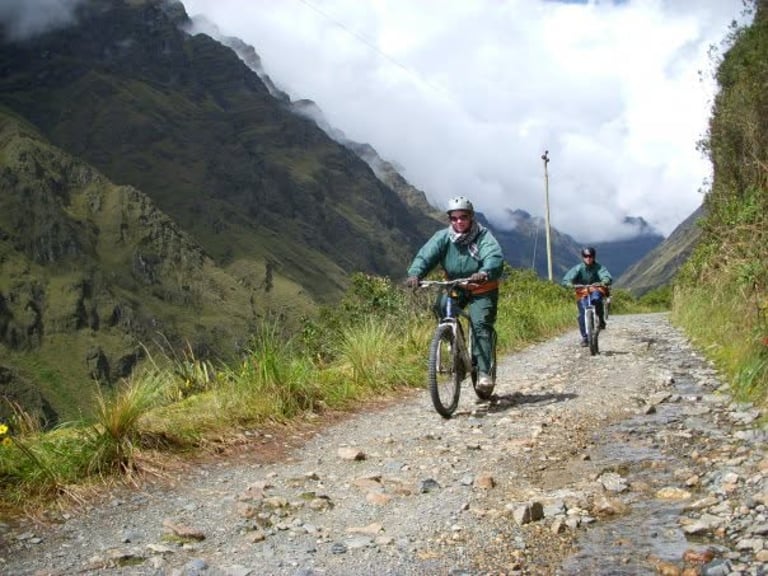
Constant downhill cycling into the Yungas
This tour is definitely among the most incredible experiences I have ever had. The scenery is utterly spectacular, and it is just so much fun! It was a lot MORE fun the second time I did it, because I wasn't as scared, I wasn't pushing the breaks all the time but just rolling with it, and as a result my hands weren't cramping for 2 hours. It's a bit of a bonkers ride and maybe not for the faint-hearted, but if you are an adventurous spirit, you will not want to miss out on this!
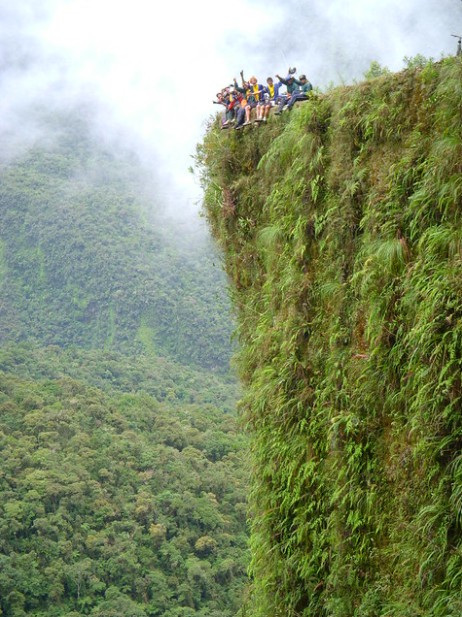
A famous photostop on the Death Road
El Choro Trek
The second time I was in Bolivia, I had already done the Death Road on a bike, but there's a hiking trail alternative, which I understood to be mostly downhill as well. Sounded good to me, as I am terrible at uphill hikes. However I did find out that there are some uphill sections, which I struggled a bit with, having a backpack on my back, particularly when you're still at high altitude, then even just a 50m climb can be a bit of a struggle.
The El Choro trek is one of the most popular pre-Columbian routes and one of the most famous in Bolivia. It's a 51 km (32 miles) long trek that starts at La Cumbre (4,900m) and finishes in Chairo (1,300m), from where you can get a taxi to Coroico. The route takes 3 to 4 days, passing through multiple climate zones. Along the route you will see waterfalls, lush vegetation, coffee plantations and small villages, as well as enjoying the tranquillity of a path with little traffic. It is advisable to take light clothing for the heat of the Yungas, but also warm clothes for the first stretches.
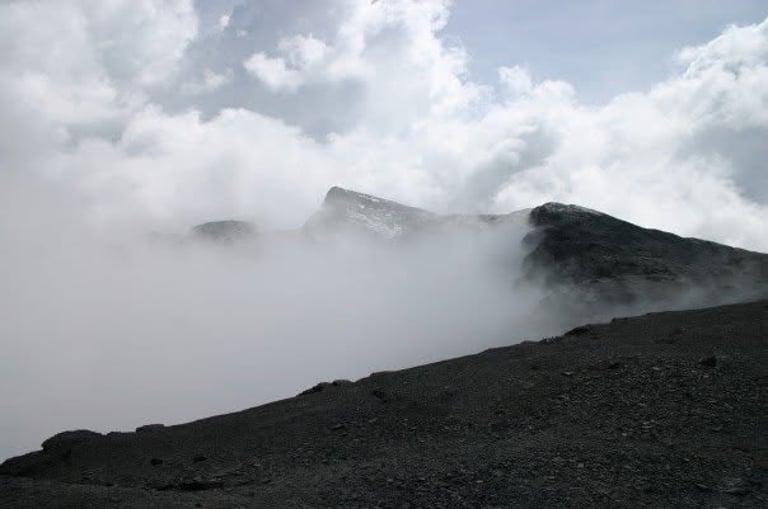
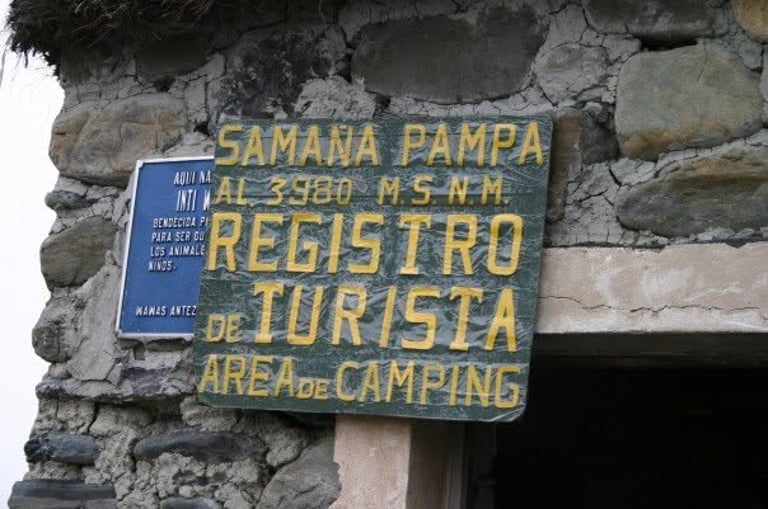
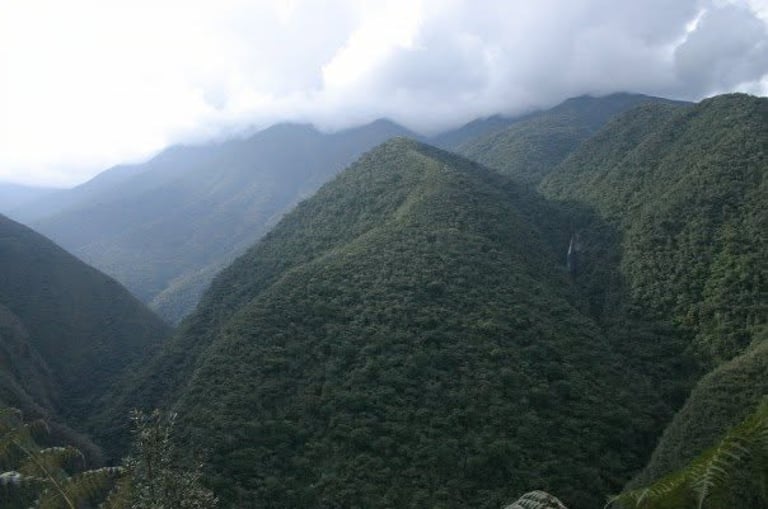
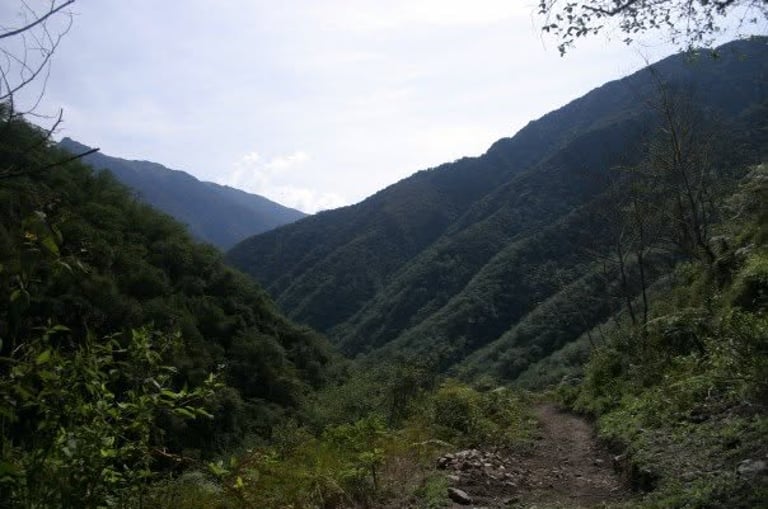
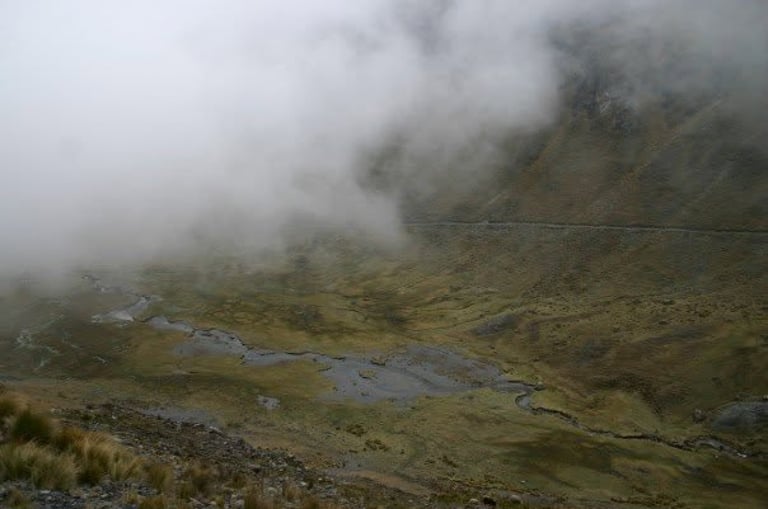
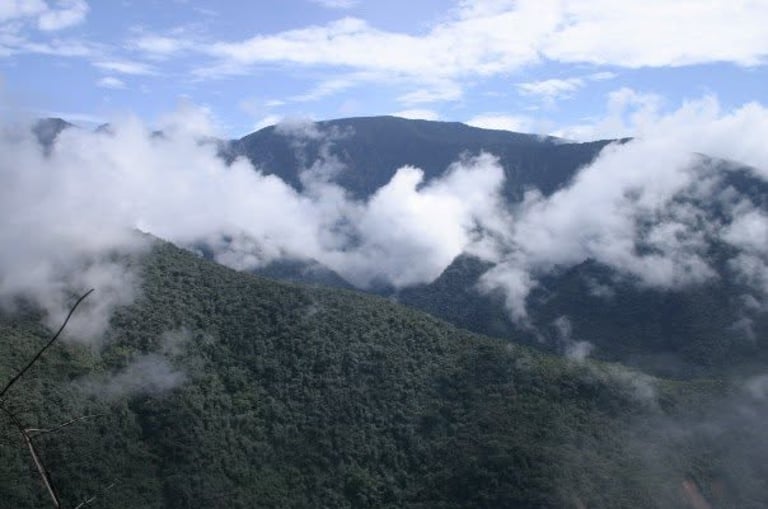
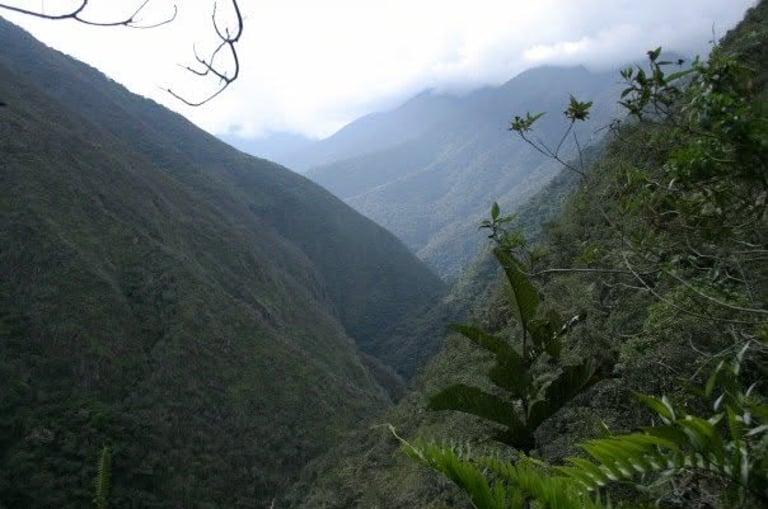
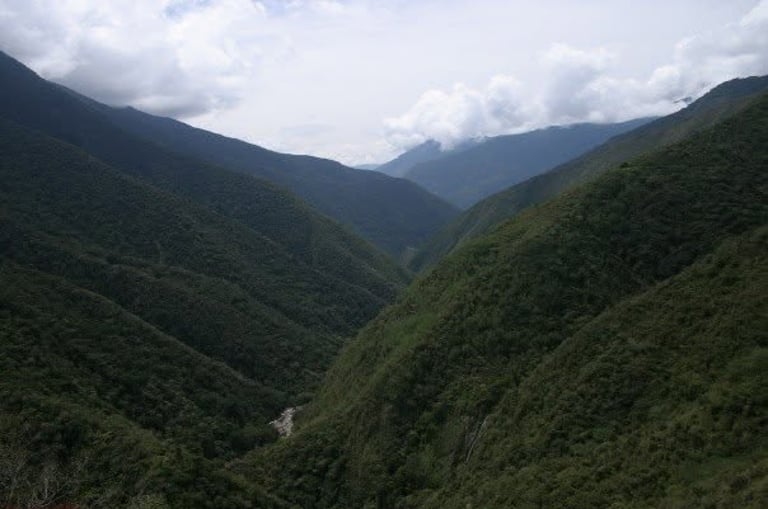
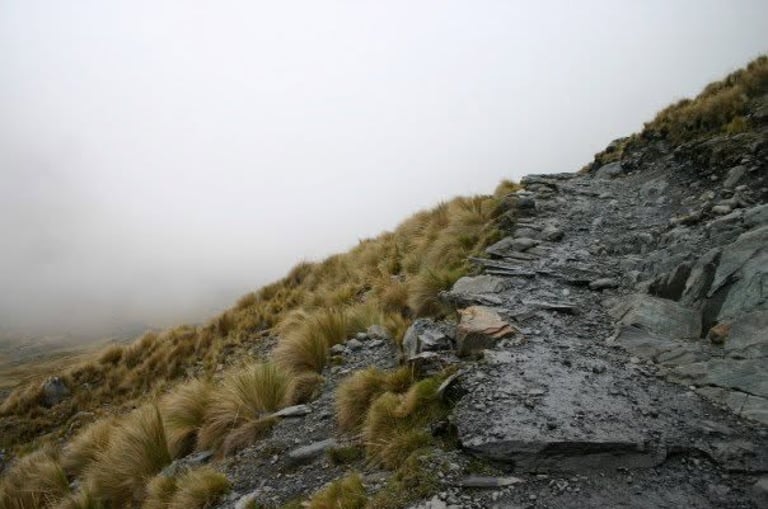
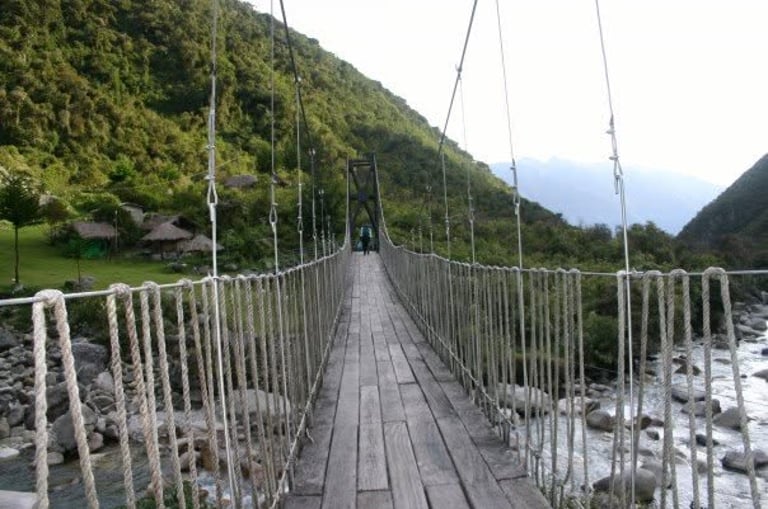
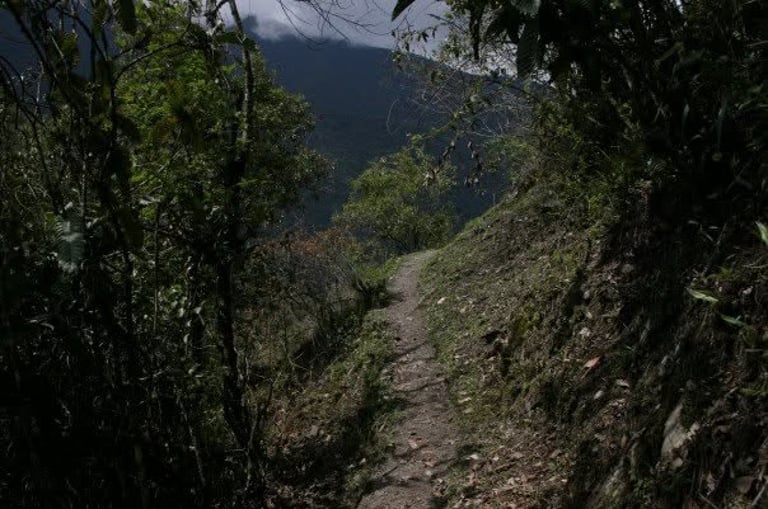
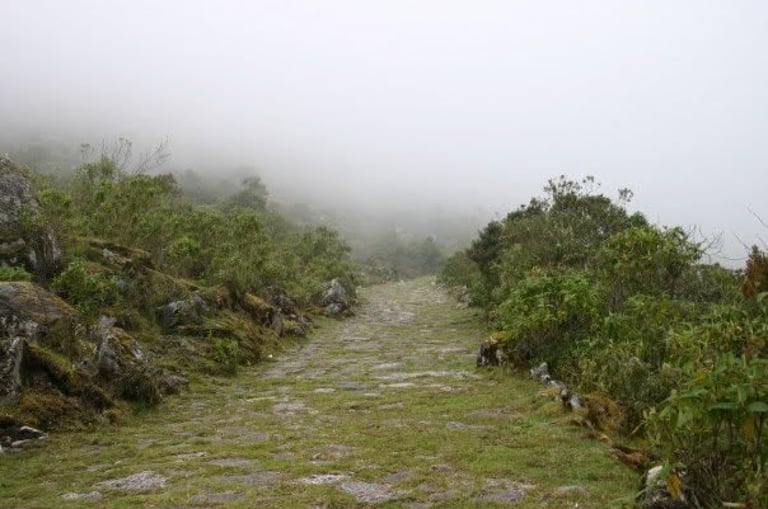
El Choro multiday trek from La Paz
I went on an organized tour with an agency in La Paz, but it ended up being just me and my travel buddy from Denmark. I wasn't impressed with the guide, who was massively disinterested and clearly bored as he took us from A to B. But I am sure there are better ones out there, but you can also just do the trek on your own but would require carrying a tent. The route can be found on Wikiloc.
While we were not very lucky with the weather for much of the trek, the landscape in this part of the world is genuinely just so beautiful. If you are into multiday treks, I am sure you'll enjoy this one in Bolivia.
Oruro - Carnaval of La Diablada
I went to Oruro on my trip in February 2007 and decided to stop there on my way from the Uyuni Altiplano tour to La Paz to experience the "La Diablada" carnaval, which just so happened to be taking place when I was there (this wasn't planned at all!). I took a very uncomfortable but very cheap 8 hour overnight bus from Uyuni to Oruro. The road was absolutely horrific, was flooded for much of the way and the big 4x4 bus moved more like a boat out at sea in a storm than a bus on a road, but thankfully we all made it to Oruro eventually. Nowadays, almost 20 years later, I suspect the roads are a bit better. You can also take the train which is very slow.
The famous Diablada is the headline performance of the Carnival of Oruro, which takes place every year in February or early March. Because the festival is tied to the Christian calendar, the exact dates change annually based on the timing of Ash Wednesday and Lent. The main event, the spectacular Saturday Entrada (Pilgrimage Parade), features thousands of costumed dancers marching toward the Sanctuary of the Virgin of the Tunnel (Socavón) over a grueling, 20-hour parade that starts early Saturday morning and goes straight through the night until Sunday dawn, but I was just there between 10am and 7pm.
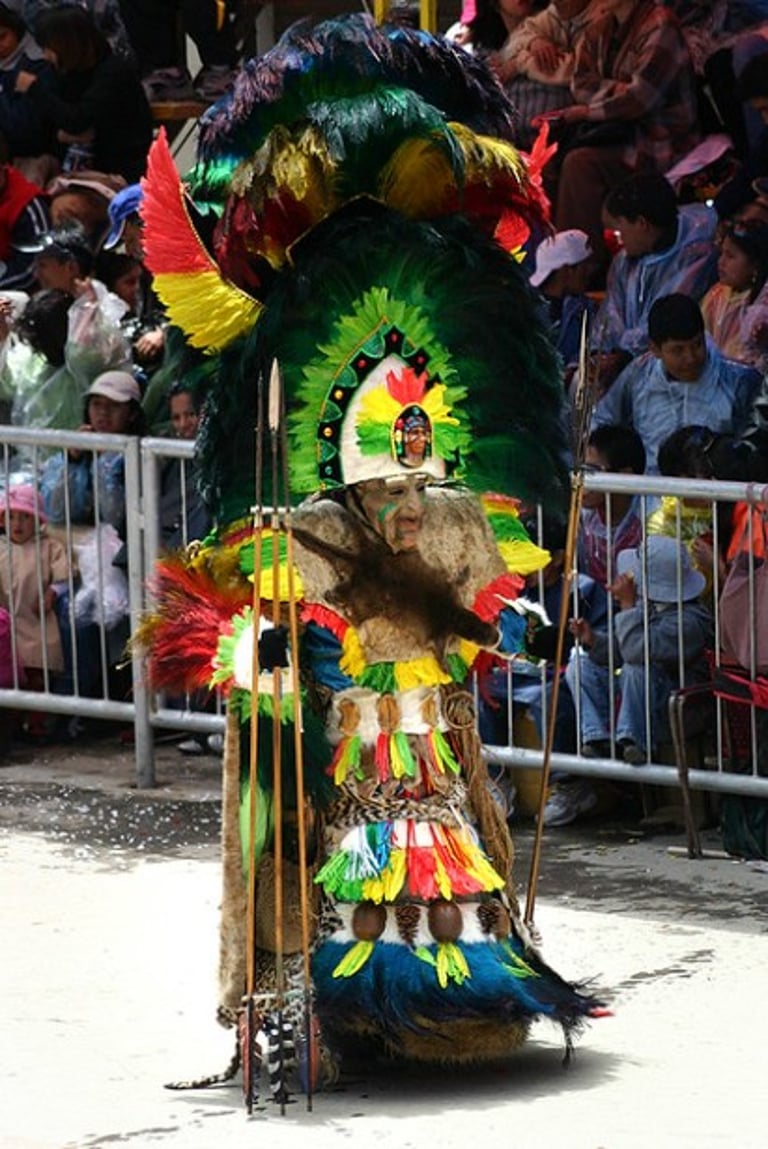
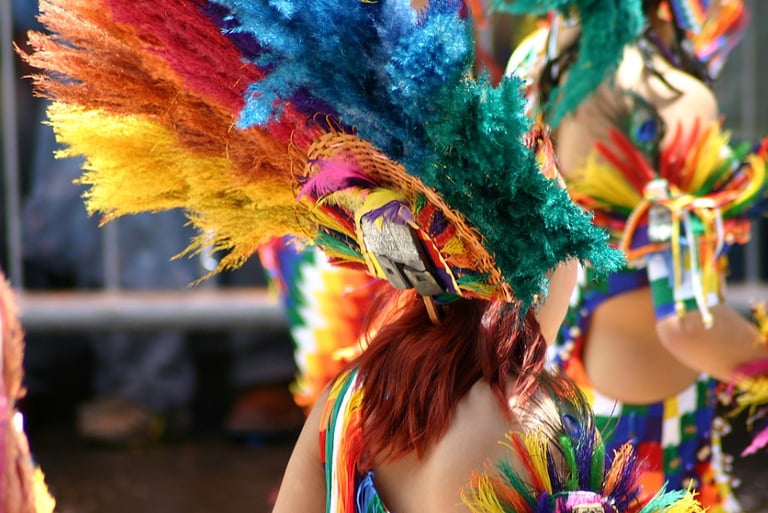
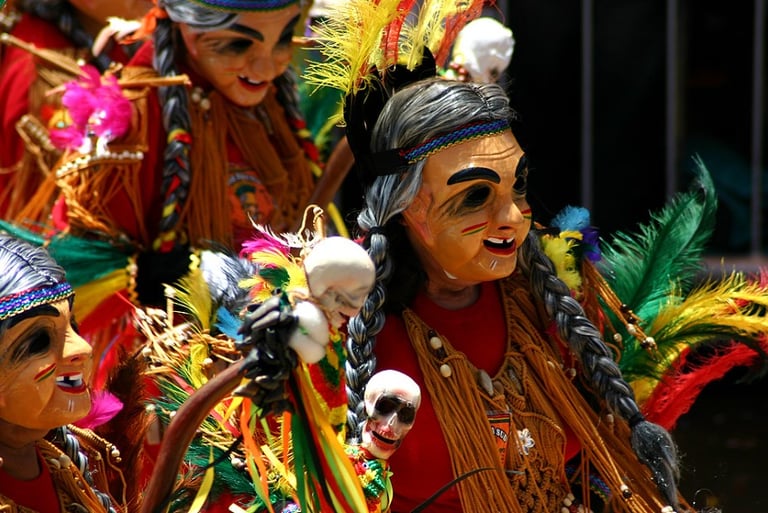
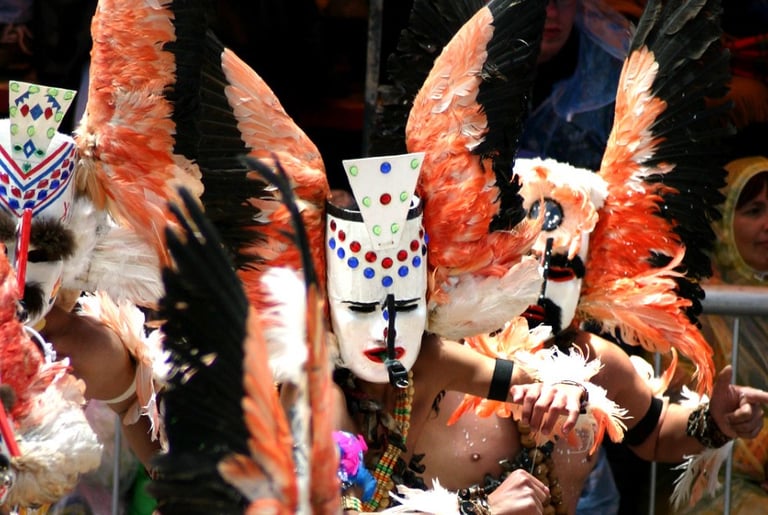
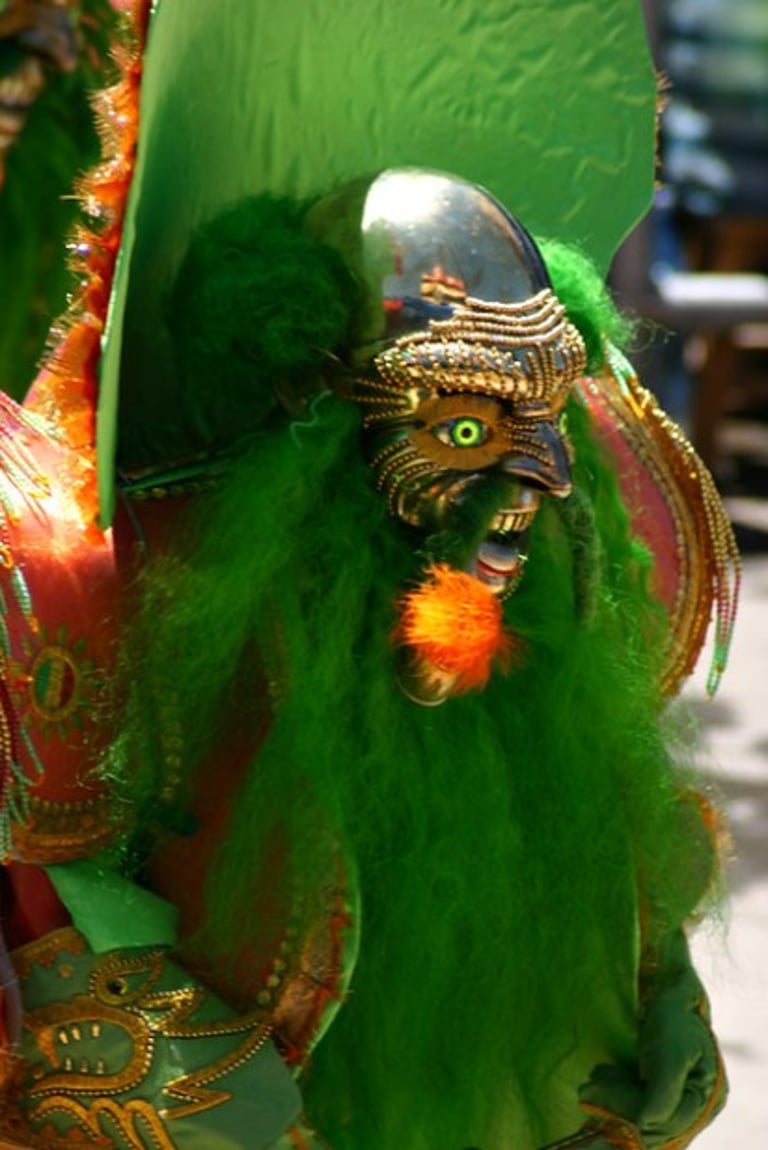
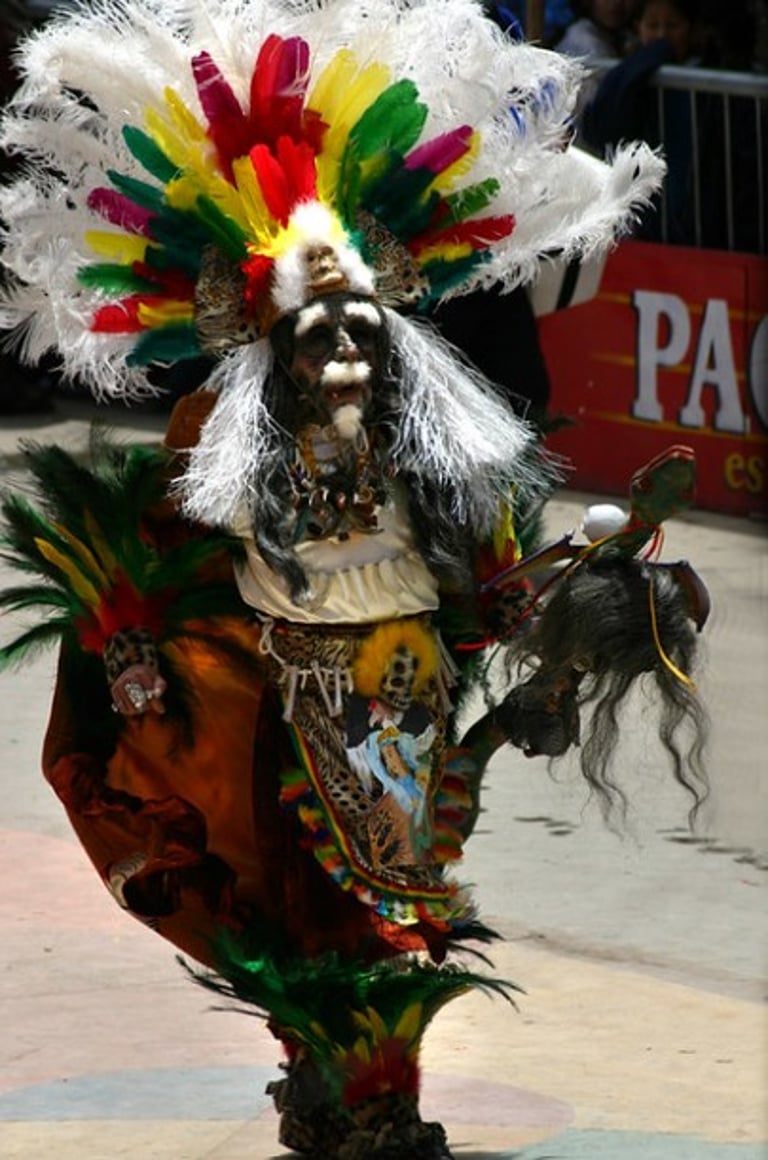
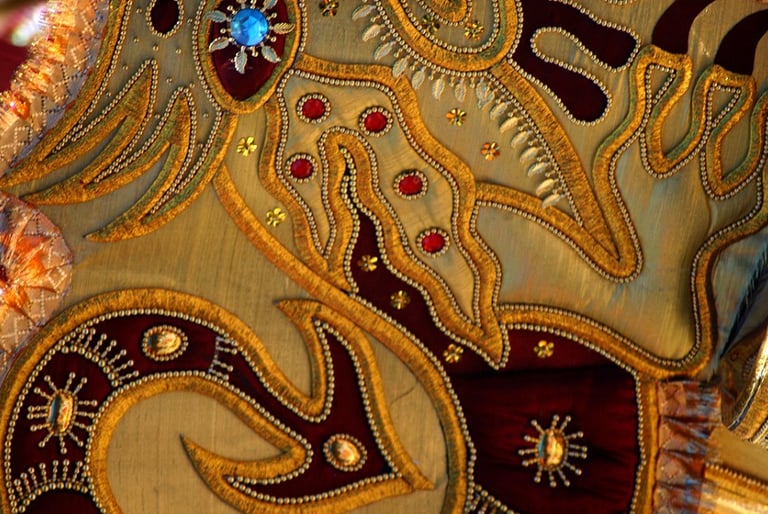
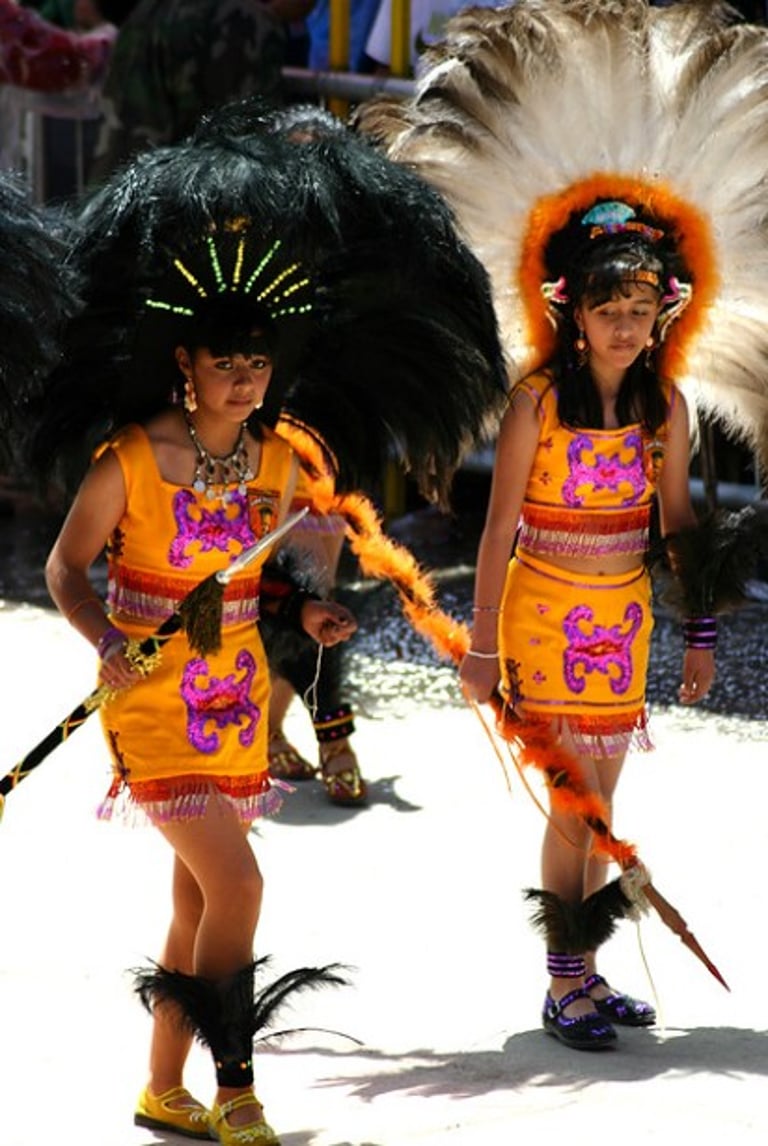
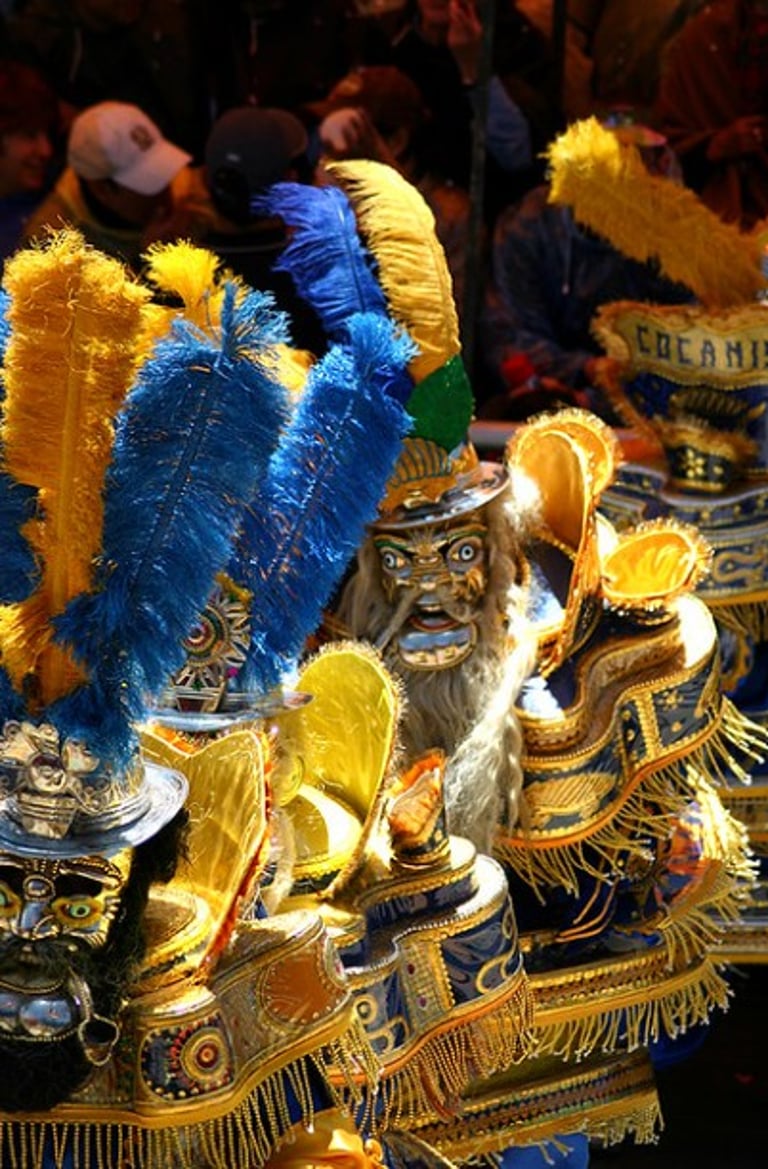
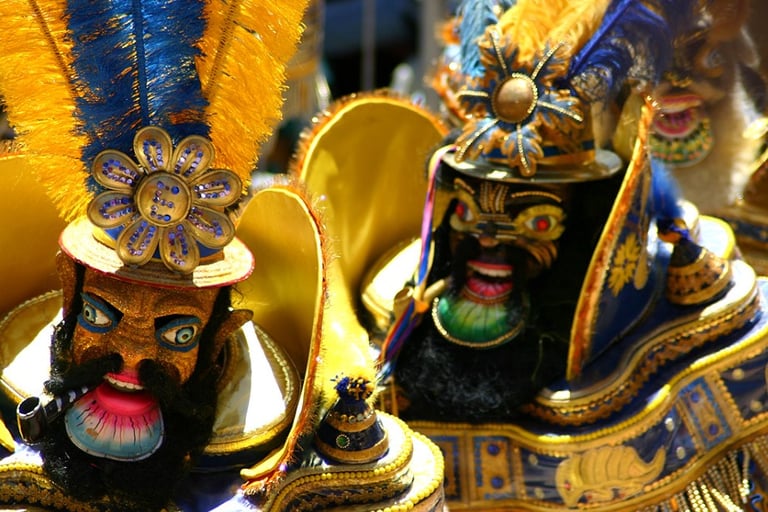
A big part of the festivities also involve getting really, really drunk - many of the locals could not stand straight by 7pm, or were passed out on the streets. The festivities also feature watergun fights, water balloon fights and spray-foam fights between absolutely everybody on the street. It is wild! I was glad that I got a seat quite high up on the spectator benches as we all watched the parade pass by, as the people sitting lowest and closest to the parade were bombarding each other with water balloons and everybody was completely soaked while I managed to stay dry. At least until 4pm when I had to leave my seat to go and find the train station to see if I could find a ticket to Villazón on the border of Argentina and Bolivia. I had no luck, as the train station was closed. And while I made my way there, EVERYBODY attacked me with foam and water pistols, I couldn't keep up with clearing foam from my eyes and try to dodge the water. I also had a foam spray in hand, and didn't use it sparingly on my "enemies".
Salar de Uyuni and the Altiplano
I've been twice to the southwestern corner of Bolivia where you find the famous Salar de Uyuni - the absolutely massive salt flats that go as far as the eye can see. The town of Uyuni is located at 3.700m above sea level but the tour people take to see the salt flats and the surrounding altiplano takes you significantly higher, with Laguna Colorada (the Red Lake) located at some 5000 m.a.s.l.
The first time I was there it was the wet season in February 2007, travelling from San Pedro de Atacama in northern Chile on a tour to cross the border and making numerous stops along the way to the very isolated village of Uyuni. The tour started at 8am and it took us to maximum altitude of 5,000 m above sea level. Some people really suffered from altitude sickness on the tour, including a young and fit French guy that just passed out all of a sudden. The guide asked people to help lifting his hands and feet and shake his extremities - the guide said that helps. He then gave him some water. There are also things called "soroche pills" or "altitude sickness pills" that apparently can help, but most people just drink coca tea.
The first absolutely striking vista you get on the tour leaving from San Pedro is that of the Licancabur Volcano that borders Chile and Bolivia, but a stop was made on the Bolivian side where you see the lake Laguna Verde and the volcano in the background.
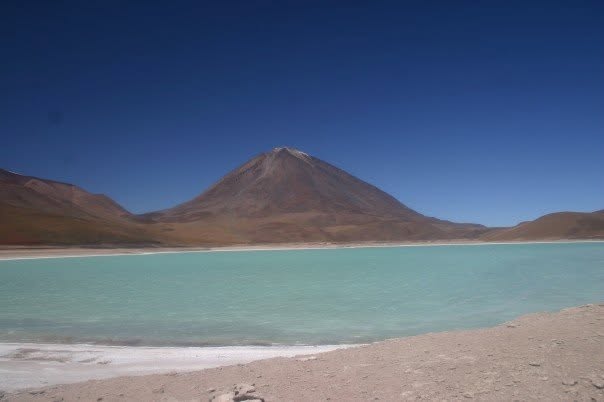
Licancabur Volcano and Laguna Verde on the Chilean - Bolivian border
One of the most epic part of the Uyuni & the Altiplano tour is that you stop at all these differently coloured lakes with stunning backdrops. Laguna Honda (or "Deep Lagoon") is a another stunning, high-altitude saltwater lake iwe stopped at, sitting at 4,114 meters above sea level near the Chilean border.
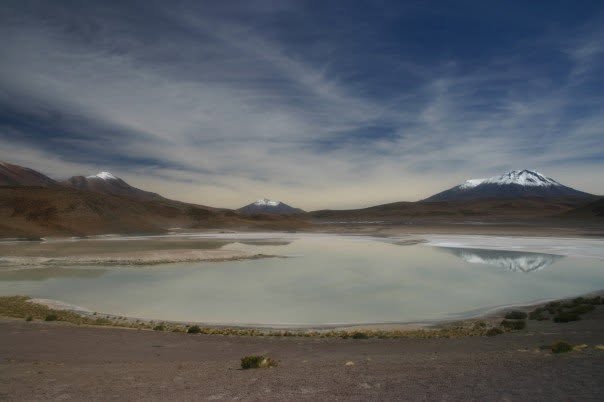
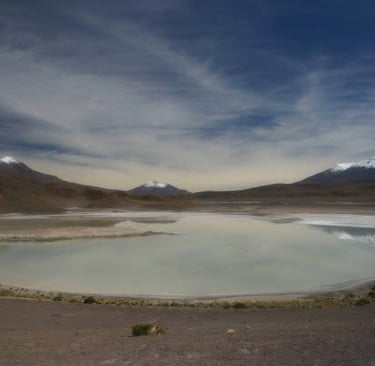
Laguna Honda or "Deep Lagoon" near the Chilean border
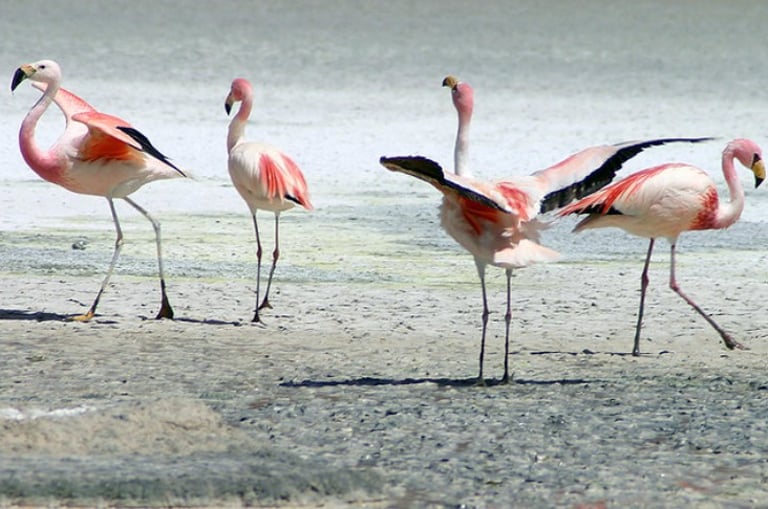
We also went to a lake called Laguna Colorada, which was red in colour and is frequented by pink flamingos. I did take a picture of the flamingos on my first trip but none of the redness of the lake for some reason. However, I did do that on my secont trip.
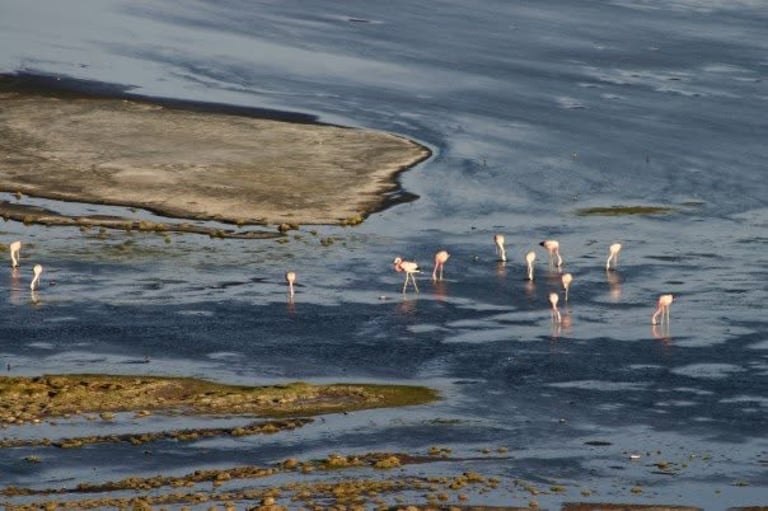
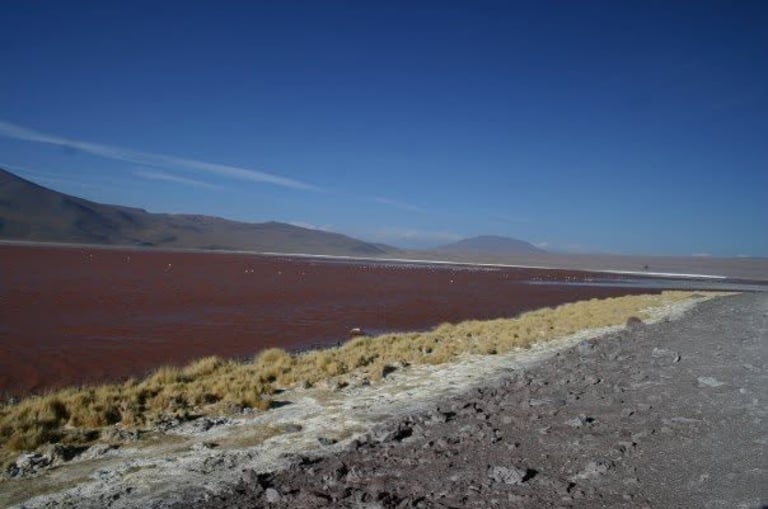
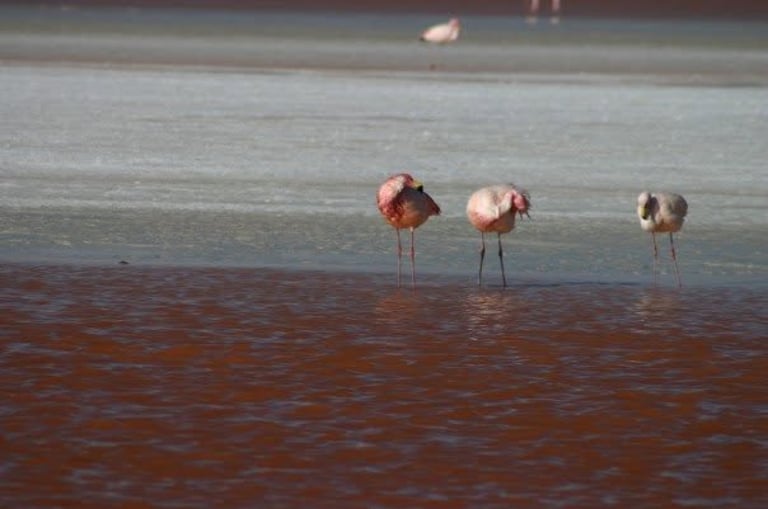
Flamingos in the red Laguna Colorada in the southwestern Bolivian Altiplano
On both tours we stayed at Laguna Colorada with the camp at a cruelling altitude of 4,400 m.a.s.l. I had been doing okay with the altitude sickness on the first trip, just a fairly bad headache that was cured with a cocktail of ibuprofen and paratabs. However, the second time I went, I was doing a lot worse, where the headache was so bad that I felt like it was about to split my skull open, quite literally. I was dozing in and out of consciousness and feeling really nauseous, unable to eat my dinner. The guide noticed me feeling unwell and gave me a coca tea, which miraculously, did help!
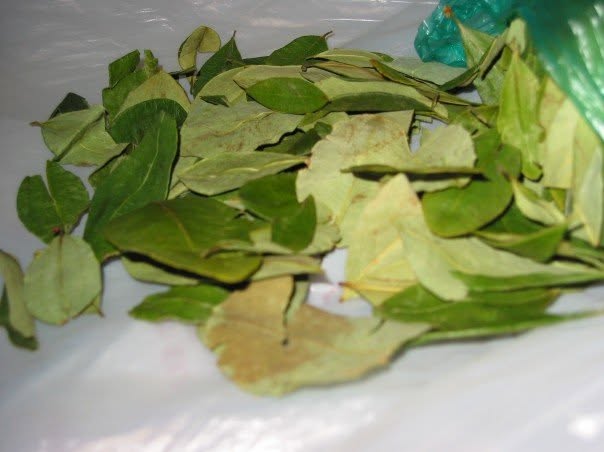
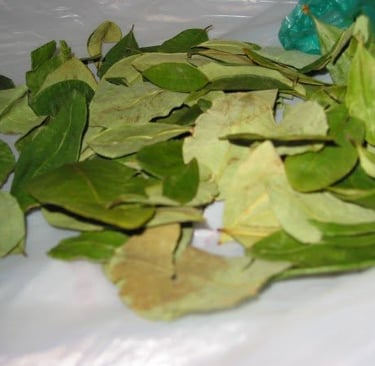
Tea from coca leaves help with the altitude sickness
The Laguna Colorada camp was extremely basic accommodation where the whole group from the tour slept in the same room. It was also very cold both times. We slept in a sleeping bag with four blankets on top and were still freezing. On the first trip it was 2 guys from Brazil, 3 young people from Spain and me. The second time there were five of us - a couple from England, a girl from Israel and a guy from Denmark but I had been on a different tour the day before in Tupiza with the guys from England and Denmark. This is the joy of travelling around South America - you always meet fellow travellers again and again, as most people are doing a similar route, and you make friends for life.
On the tour we also stopped at a sort of a "rock forest" called Valle de Piedras and saw the famous Arbol de Piedra or "Stone Tree". It obviously isn't a real tree but it's a rock. The Arbol de Piedra is a spectacular example of a geological feature known as a mushroom rock or pedestal rock. Standing about 7 meters tall in the Siloli Desert of southwestern Bolivia, its top-heavy structure looks like it shouldn't be standing at all. Its creation is due to extreme desert erosion, driven by millions of years of volcanic history, wind and salt.
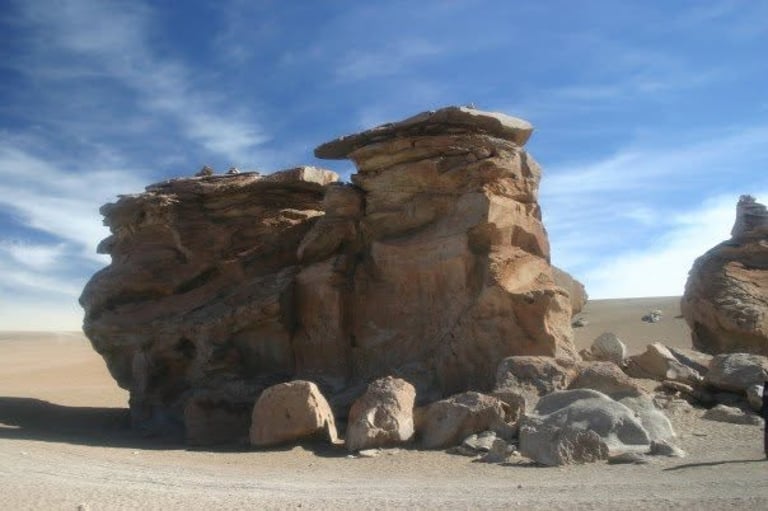
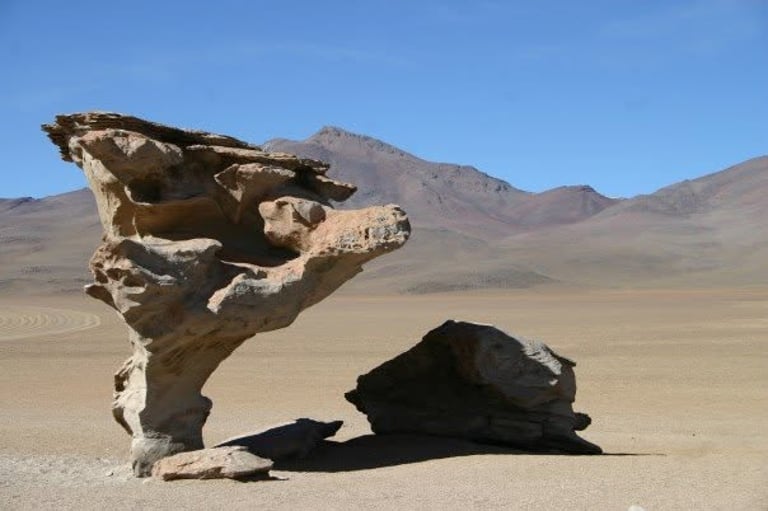
Valle de las Rocas and Arbol de Piedra in the Southwestern Bolivian Altiplano
We saw fair bit of altiplano wildlife on the tour, including heaps of flamengos, llamas, vicuñas and vizcachas, though I somehow only ended up with pictures of flamingos and alpacas.. Or at least I think they are alpacas, I struggle recognising the difference between alpacas and llamas!
Bolivian Flamingos and Alpacas (or llamas?)
We also visited some traditional, isolated indigenous Quechuan villages on both tours, including Pueblo Alota, where the houses are made with mud brick.
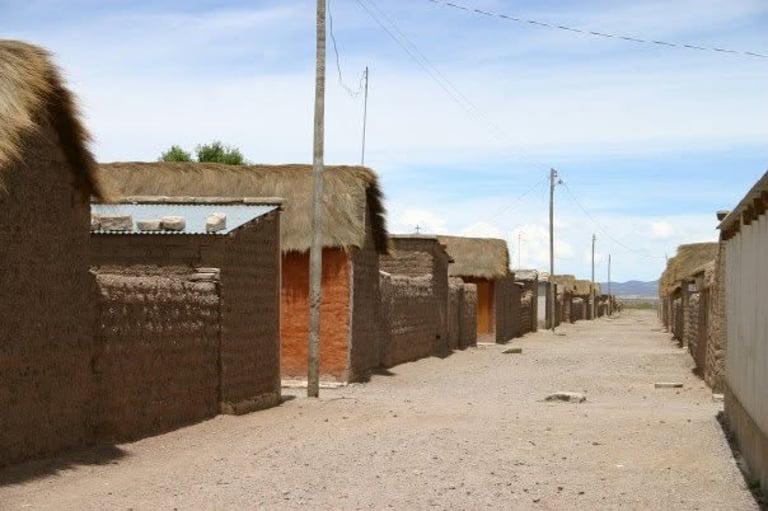
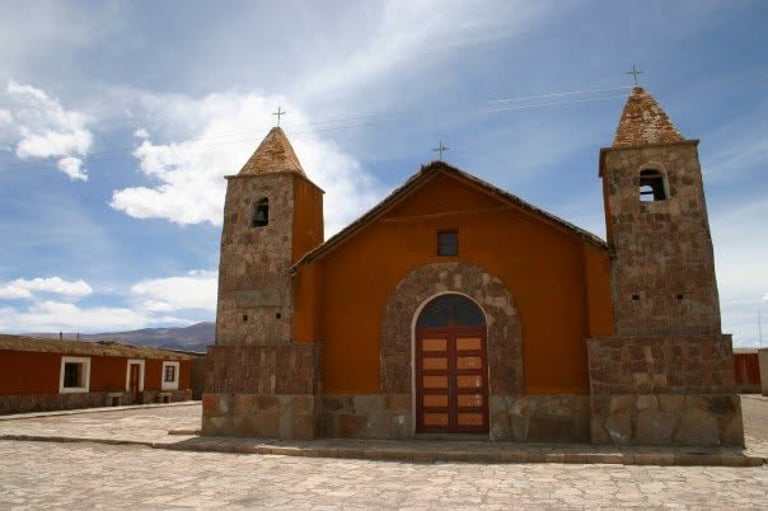
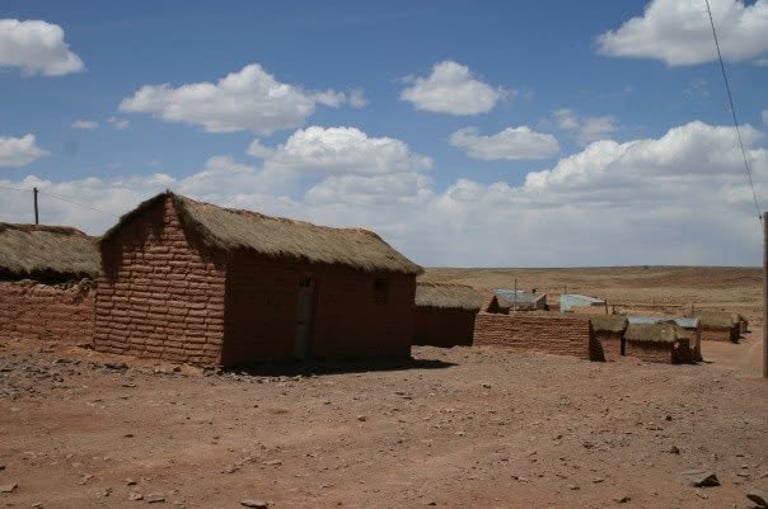
Indigenous Quechua villages in the southwestern altiplano of Bolivia
There's a good chance if you go on this tour that you'll be taken to a geothermal pool called Termas de Polques - practise extreme caution with the sun here! You're at 4,300 m.a.s.l and the sun is beaming down. Make sure you put the strongest sun lotion there exists on your shoulders, as people burn to a crisp here! It is also where a French guy just flat out passed out after getting changed into his swimming trunks.
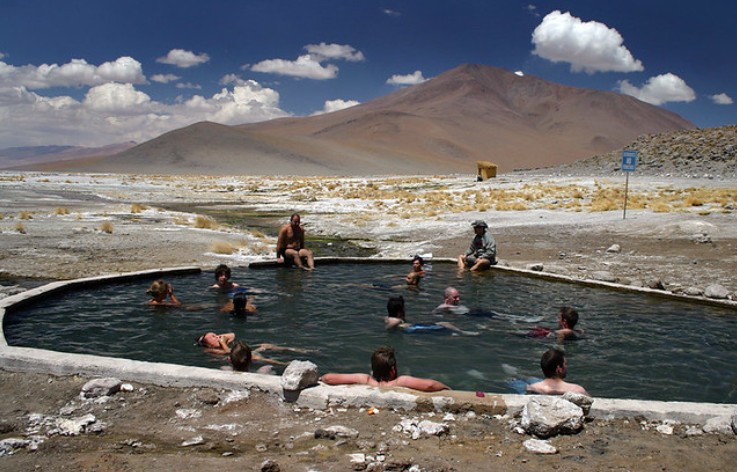
Termas de Polques in southwestern Bolivia
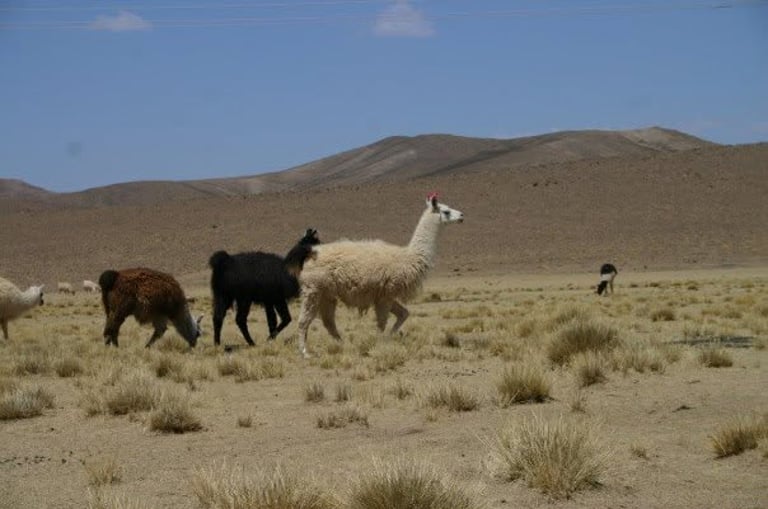
There are also just loads of absolutely incredible landscapes that you see as you travel through the high plains of Bolivia, it will just really take your breath away both figuratively and literally.
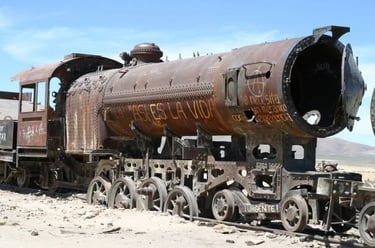
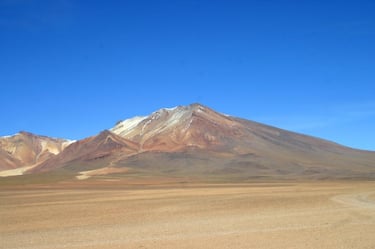
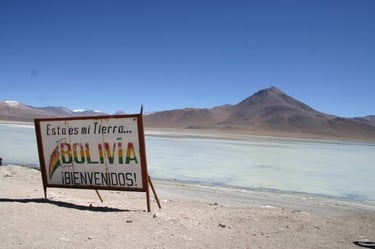
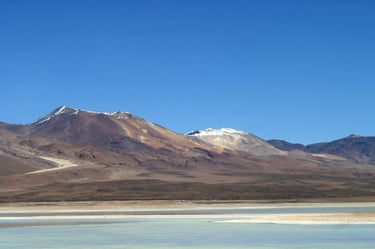
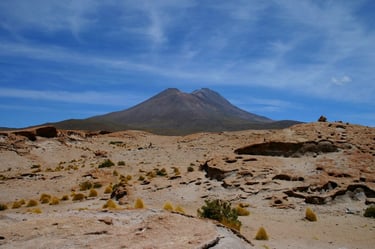
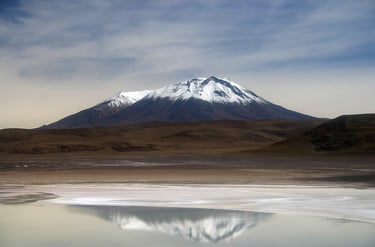
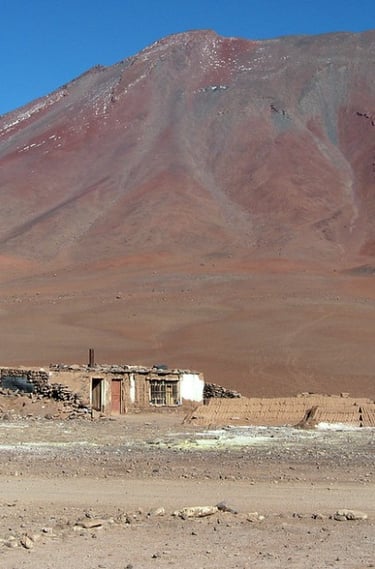
The stunning high plains scenery of southwestern Bolivia
And of course, last but not least, at the end of the trip we visited the famous Uyuni salt flats - "Salar de Uyuni". I was so fortunate to get to go twice, once in the wet season and once in the dry season, but the experience is totally different each time.
Salar de Uyuni in the dry season - October 2007
The dry season is popular due to the fact that this is when you see the blindingly white salt flats in all its glory.
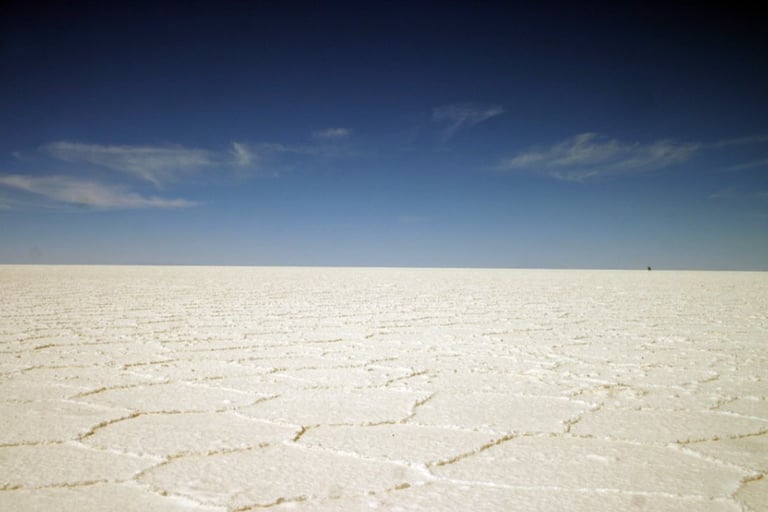
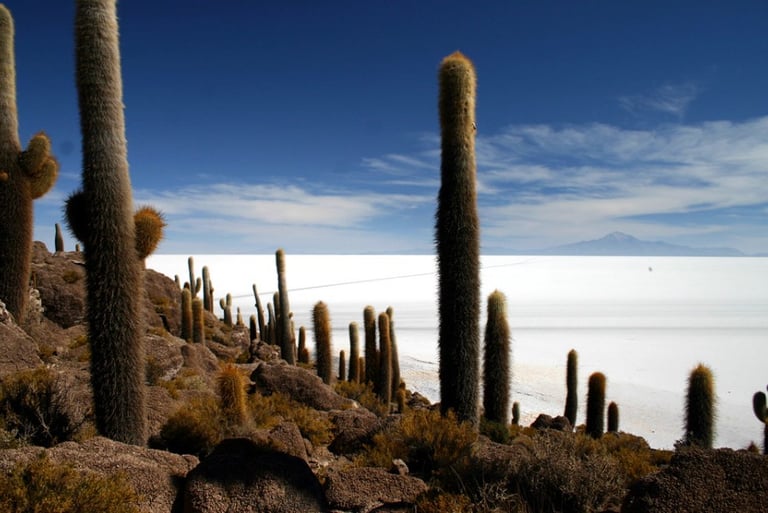
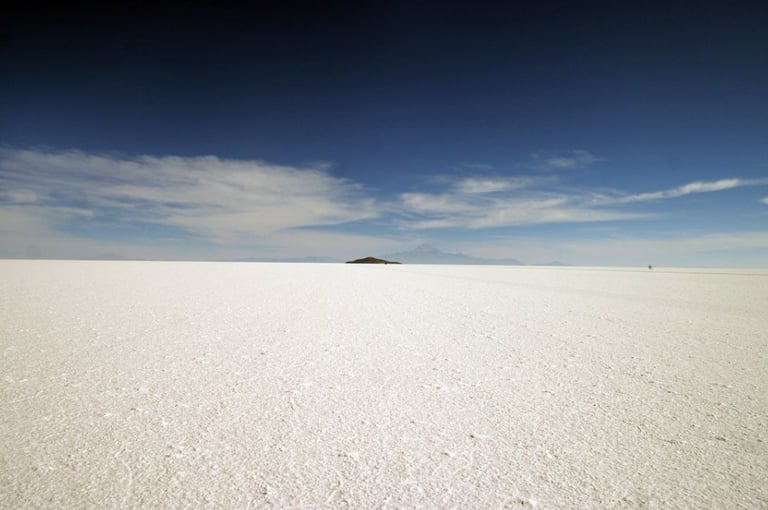
Salar de Uyuni in Dry Season
... and it's also when you can take all these real-life photoshop type of photographs where distances play a trick on your eyes (and your camera).
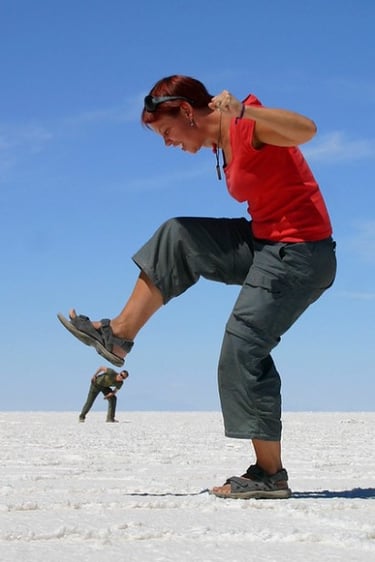
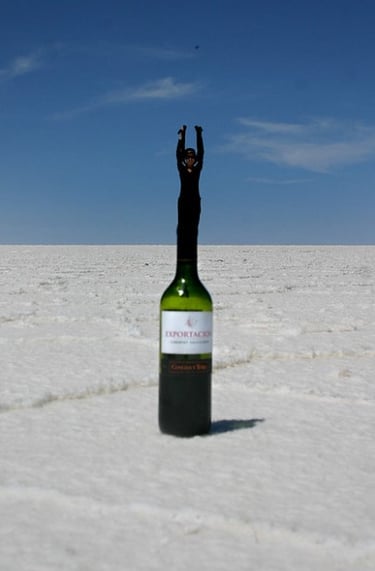
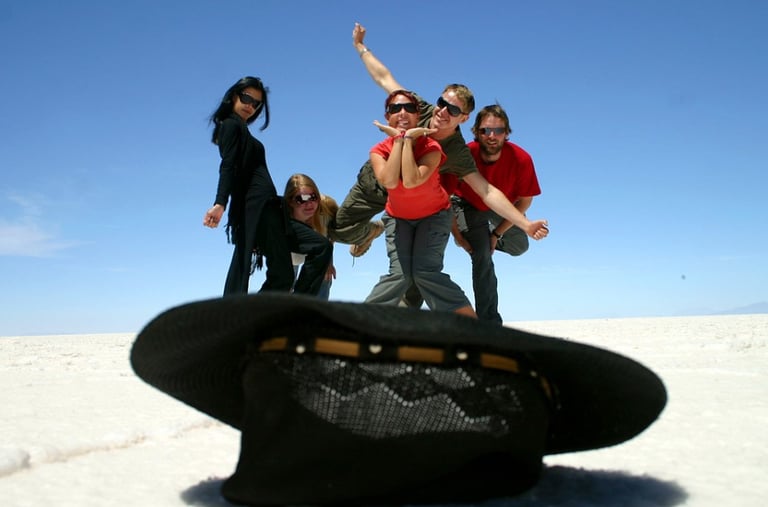
Funny photos in Salar de Uyuni
It is also generally the easier time to travel through the high Andes, as you're less likely to get stuck due to flooding or debris flows. It does however get significantly colder in the dry season, but I was there practically at the end of it - but it was still absolutely freezing at the higher altitudes!
Salar de Uyuni in the wet season - February 2007
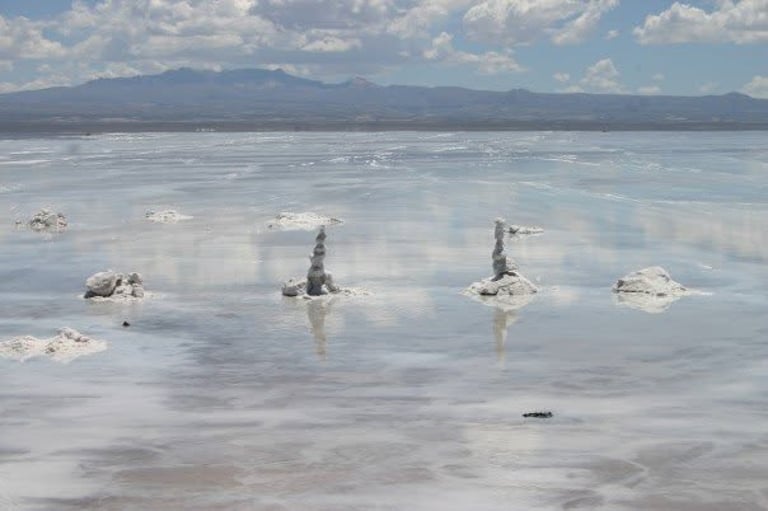
The wet season is typically warmer but also wetter. It does bring quite a magical look to the salt flats - a very thin lens of water that often doesn't even reach above your shoe soles, completely clear with zero ripples, making it look like an endless mirror.
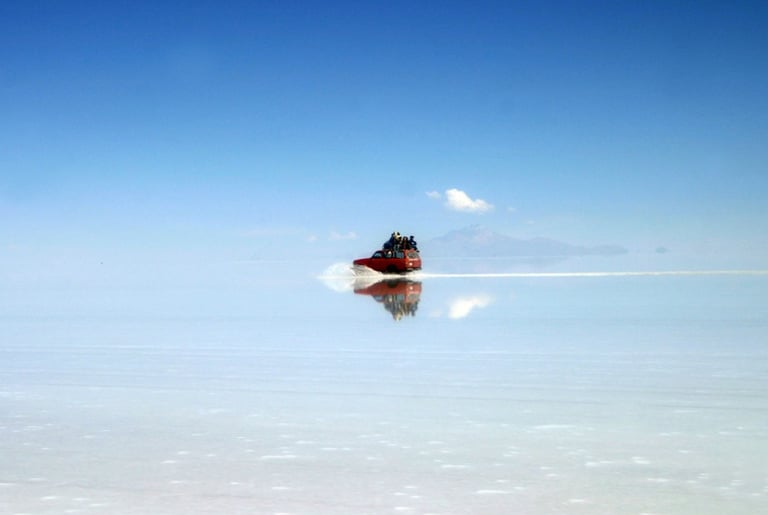
Salar de Uyuni in the wet season
While seeing the salt flats in this state is absolutely otherworldly, there are obviously not as many photo opportunities at this time of year. The guide did however somehow try to make it up to people by giving them a bit of a thrill ride, sitting on top of the roof of the 4x4 as the several vehicles raced across the mirrored plains.
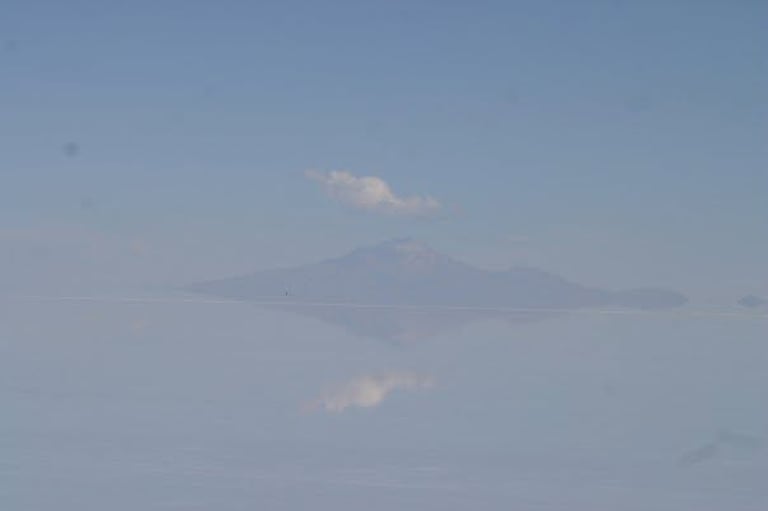
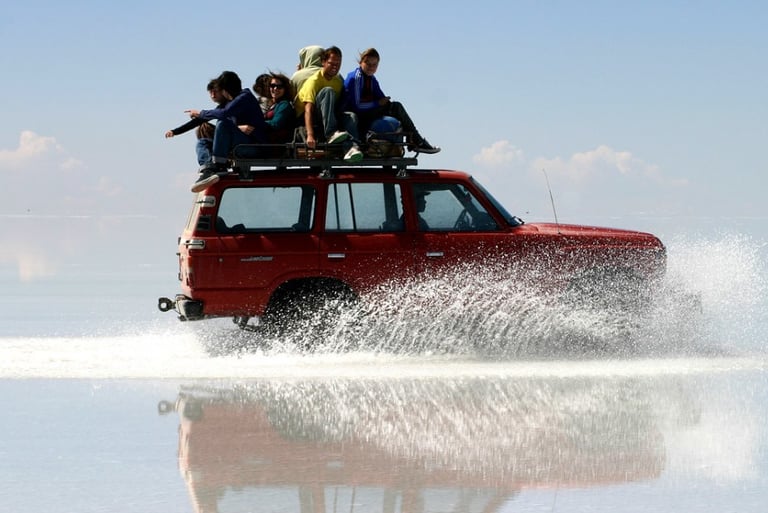
Riding on the roof of our 4x4 across the salt flats
Rurrenabaque
Rurrenabaque is a very junglesque village in the Bolivian amazon in the north of the country. When I was there, you could either choose to take the bus from La Paz to Rurrenabaque that takes absolutely forever (and what I found out on a second trip is that the road is utterly terrifying extension to the Death Road) or take an Amaszonas flight in a diddy little plane. Nowadays, my understanding is that Amaszonas no longer operate (?) and instead there's an airline called EcoJet that runs the route seasonally instead.
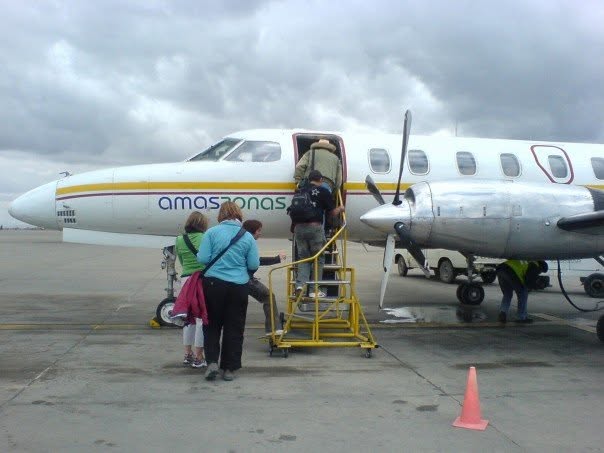
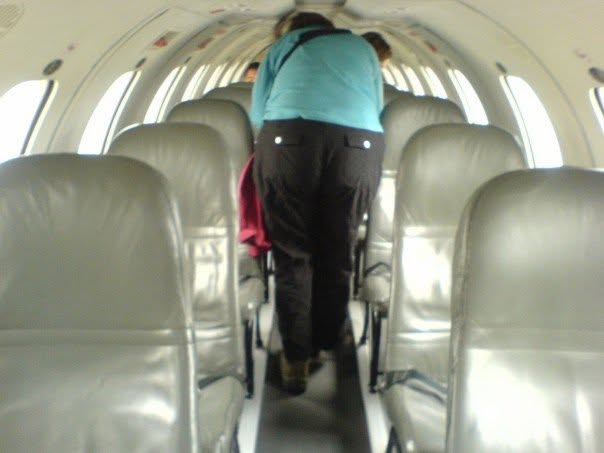
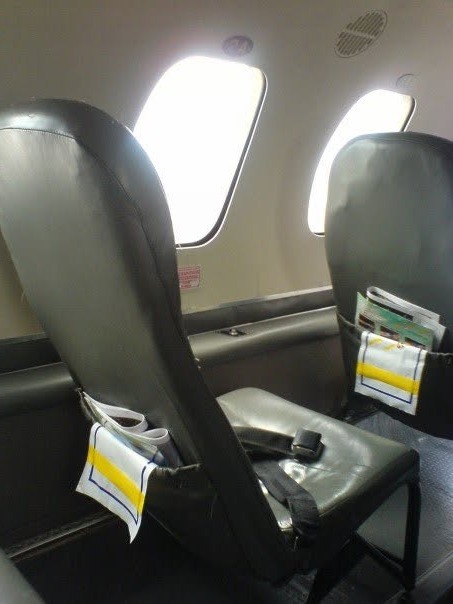
AmasZonas Airlines of Bolivia back in 2007 flying between La Paz and Rurrenabaque
Looking at Rome2Rio, it appears the roads must have gotten better since I was there, because it claims that the Trans Totai bus from La Paz only takes 3hrs 30min, and even though I made it a good chunk of the way by bike first to Coroico, it took a whole lot longer than that when I travelled by land once to Rurrenabaque. Another blog I read stated it took them 20 hours on an overnight journey, albeit in wet season. So just bear that in mind.
As a village, Rurrenabaque felt like quite an authentic, remote jungle village. Most of the houses used locally sourced materials and looked pretty basic. There were plenty of places to stay, eat and drink for such a small village and it felt safe, however people need to be very careful with the street dogs because they are not friendly. This is me as a genuine dog lover - but the locals treat the dogs very badly and as a result, they are quite often very, very aggressive towards strangers. In fact, a Danish guy I met when I was there had been stuck in Rurrenabaque for a while because he got bitten by a dog and had to get 4 doses of rabies vaccine over the course of 2 weeks as a result. I learned from the locals that the only way to keep the dogs at bay is to hold a stone in your hand and pretend you're going to throw it at it when it starts aggressively barking at you and showing its teeth. I know it sounds mean, but obviously I was never going to hurt any of the dogs ever, but they were genuinely very aggressive. Maybe the situation has gotten better in the past 20 years or so, I don't know.
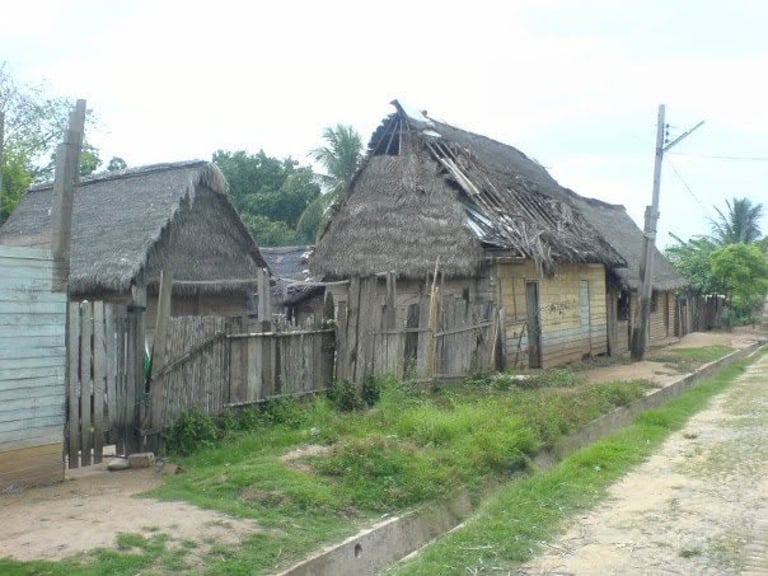
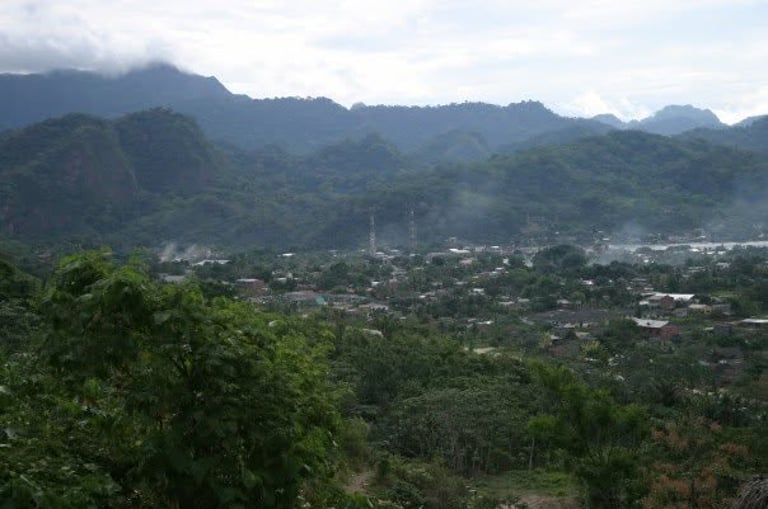
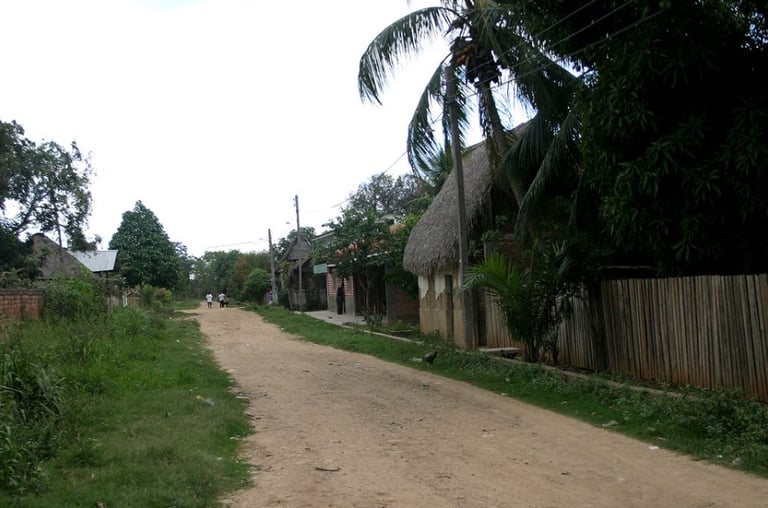
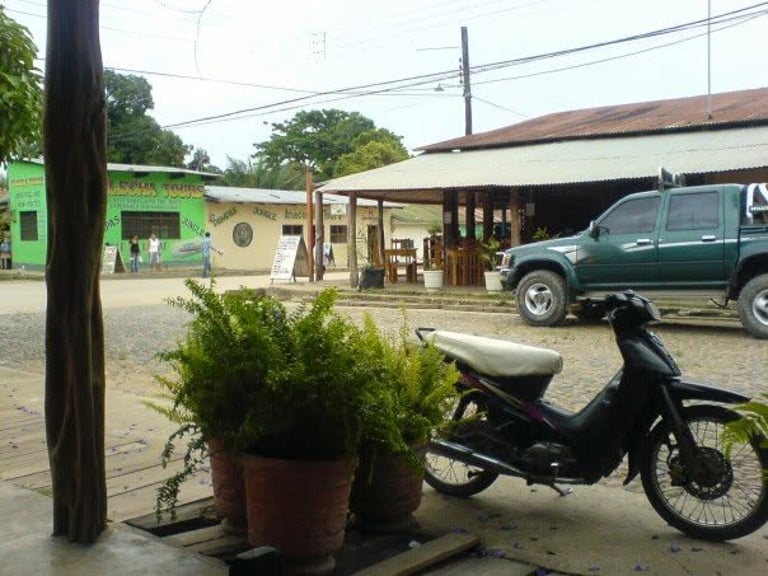
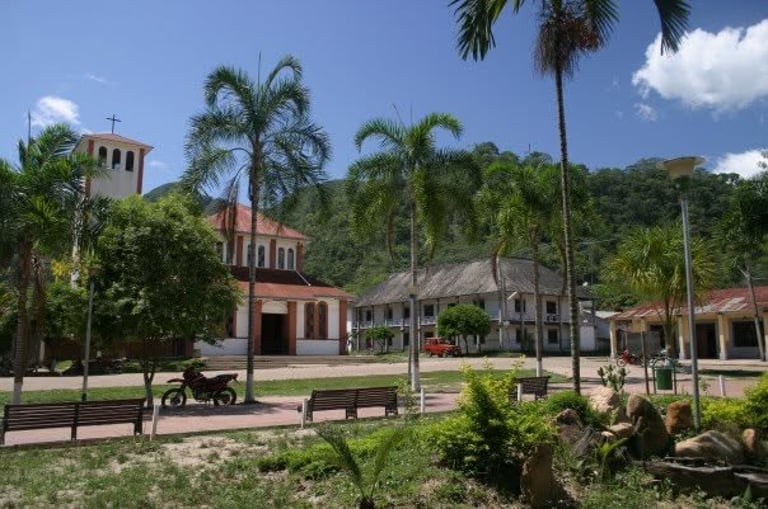
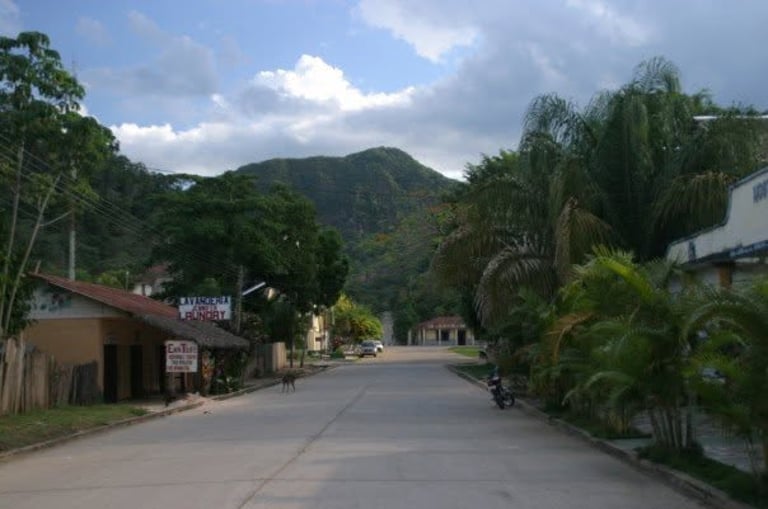
Pictures from around Rurrenabaque in the Bolivian Amazon
People, including myself, come here to see the Amazon rainforest and the wildlife but you'll find when you get there that there are two main types of tours to choose from: The Jungle Tour and The Pampas Tour.
The Jungle Tour
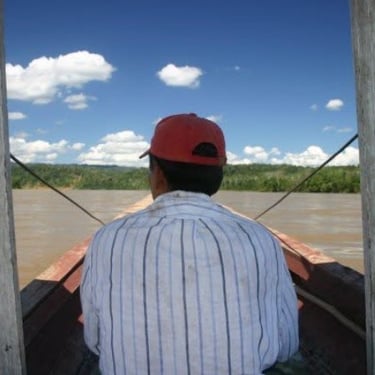
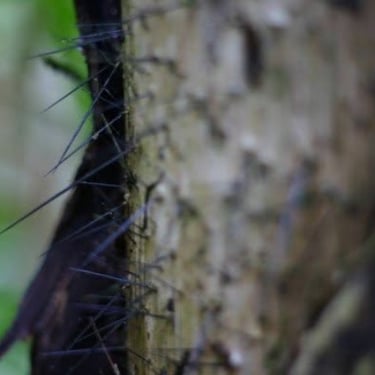
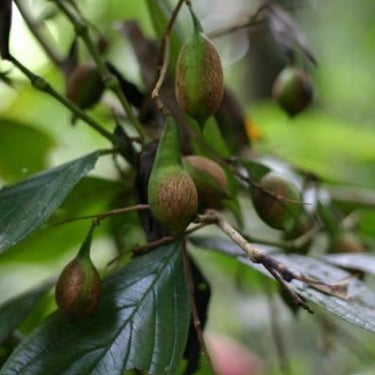
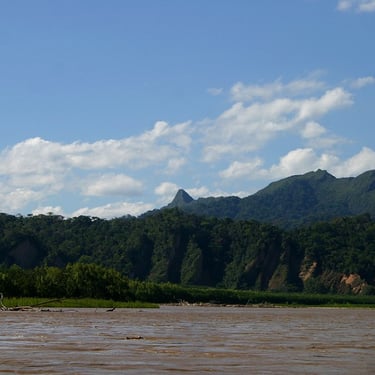
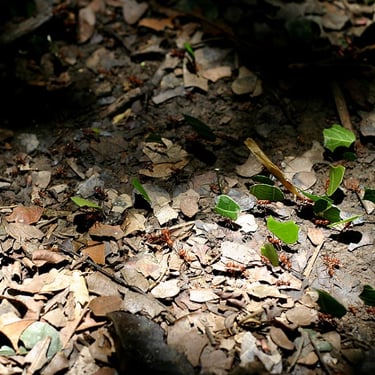
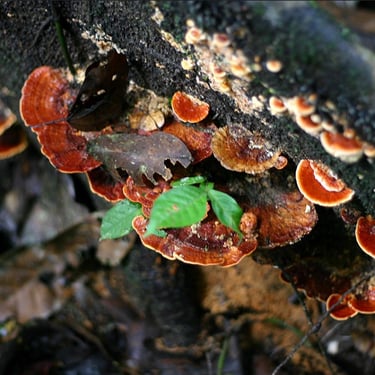
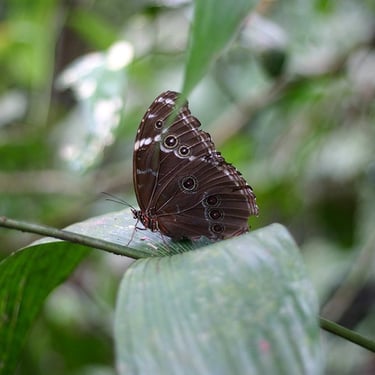
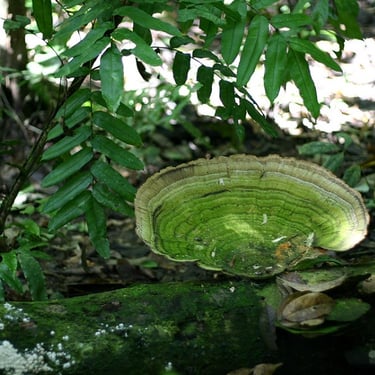
The main feature of this tour is your indigenous guide who will teach you about medicinal plants, jungle survival, tracking animal footprints and navigating the rainforest. The tour which departs from Rurrenabaque takes you deep into the primary, dense rainforest of Madidi National Park. Here, you typically travel by boat up the Beni and Tuichi rivers to a secluded eco-lodge or a very basic tent camp (as was the case for me), and your days are spent trekking on foot beneath a massive, thick jungle canopy. Because the canopy is so dense and the animals are shyer, wildlife is hard to spot, you have to really hunt for it. Depending on the tour you go on, you may see giant macaws nesting on clay cliffs, wild pigs (peccaries), leaf-cutter ants and massive ancient trees. If you are very lucky, you might spot a tapir or hear a jaguar, but you go here for the ecosystem, not a guaranteed checklist of animals. I however saw absolutely no wildlife on this tour, except "maybe" we heard wild pigs, as well as ants and butterflies.
The Pampas Tour
The tour takes you to a flat, flooded wetland savanna that sits just outside the thick jungle. Because there are relatively few trees compared to the dense jungle, the animals are much easier to spot, making wildlife viewing incredibly easy and constant. You spend almost the entire tour sitting comfortably in a motorised dugout canoe, cruising down the Yacuma River and stay in hostel-type accommodation in basic jungle lodges. You are virtually guaranteed to see hundreds of caimans lining the riverbanks, capybaras (the world’s largest rodents), pink river dolphins, turtles, squirrel monkeys and an heaps of birdlife. You'll likely go fishing for piranhas, which will be your dinner, and one morning you'll be taken on a walk through the flooded forest to look for anacondas, which frequent this part of the world. The Pampas Tour is genuinely a sensory explosion of wildlife, but because there are many tour boats, you won't feel like you have it all to yourself. I've been both in wet season and dry season and saw plenty of wildlife both times, but in the driest season, it can become tricky to navigate the waterways on the canoe.
I had an incredible experience both times I went, and while the Jungle Tour is cool too, the Pampas Tour is way, way superior when it comes to overall experience. It's one of these experiences I will never forget.
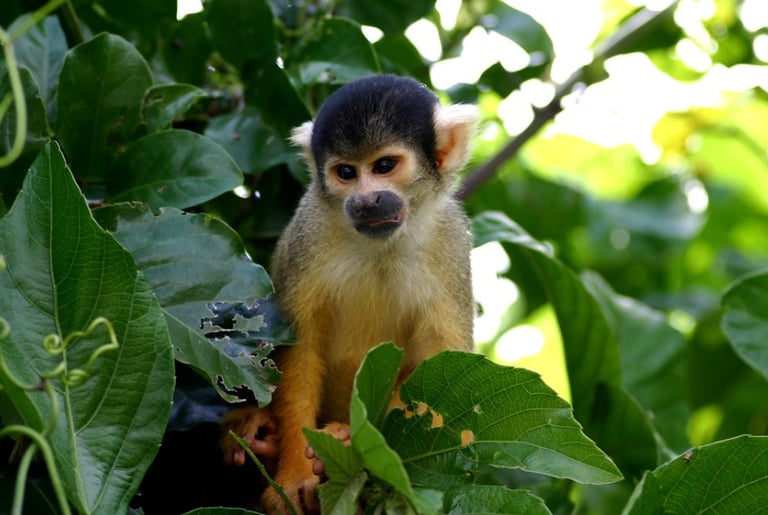
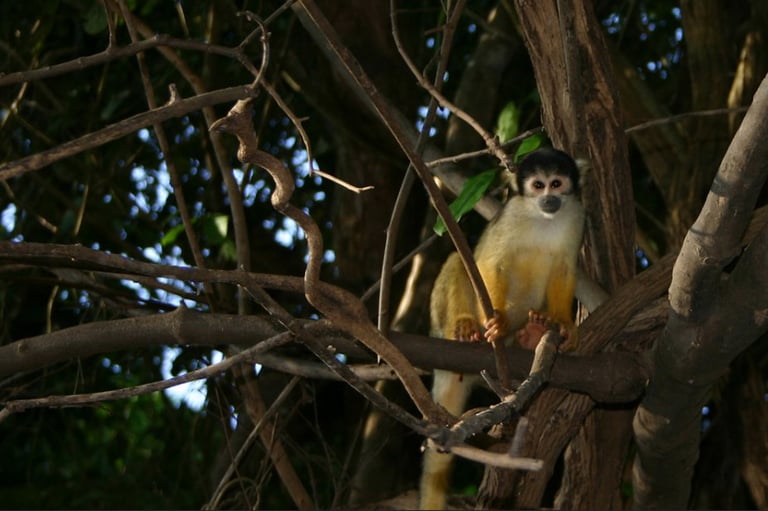
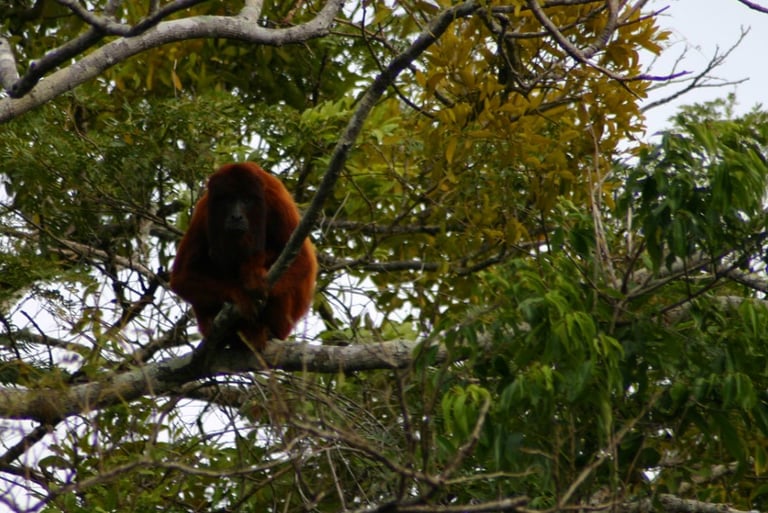
We saw and heard lots of monkeys, especially Bolivian Squirrel Monkeys and Howler Monkeys
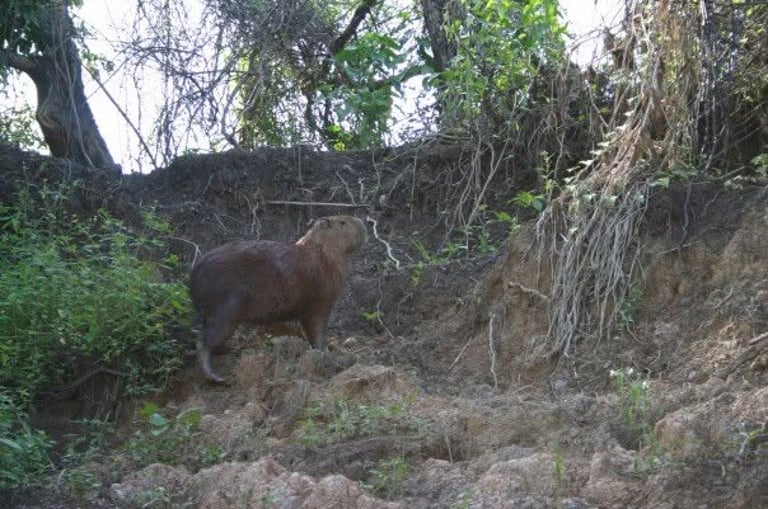
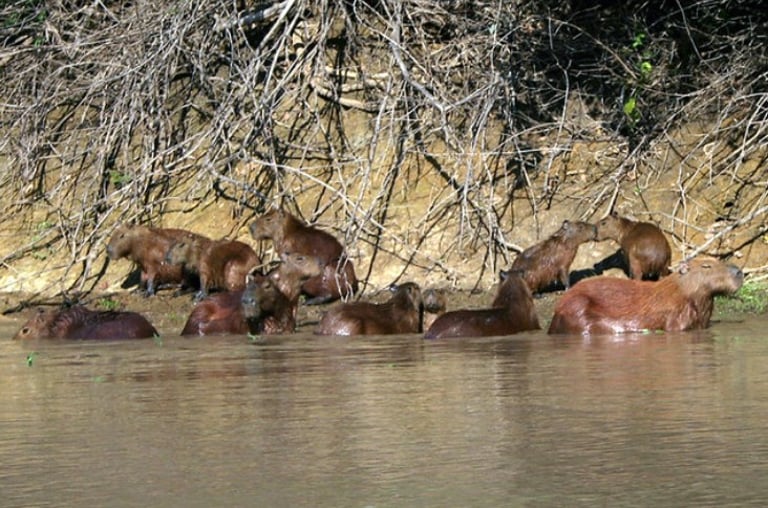
We saw lots of capybaras
We also saw the Hoatzin, one of the most unusual birds in the world. Found in South America, this tropical bird is famous for its strange smell, leaf-based diet, and baby chicks that have tiny claws on their wings. Often called a “living fossil,” the Hoatzin has unique characteristics that make it different from almost every other bird, often called a "Dinosaur Bird".
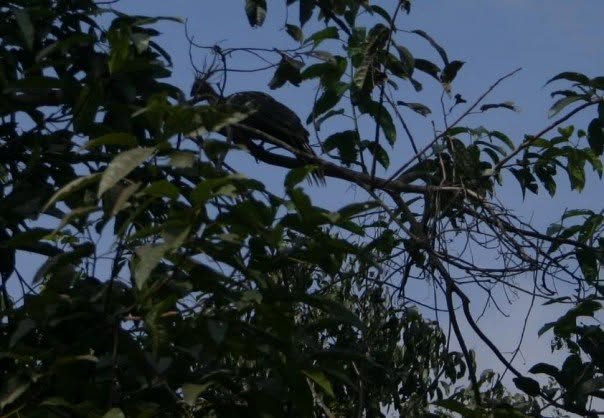
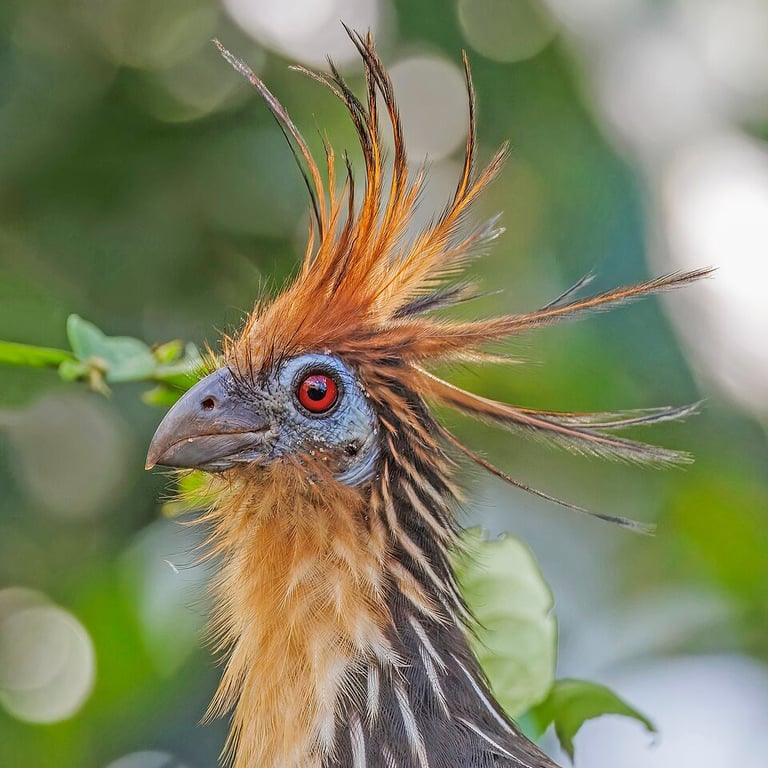
The "dinosaur bird" Hoatzin. Second photo by Charles J. Sharp - on Wikipedia (Sharp Photography, sharpphotography.co.uk)
We saw lots of cayman crocodiles - we even inadvertently swam with them when we were trying to swim with the pink river dolphins. They are really common all across Las Pampas of Bolivia, there was even one that'd just hang around our jungle lodge (bottom right photo). What I would say though about these tours, at least 20 years ago, that it is very common that the guides manhandle the animals, especially the caymans and anacondas to show them to tourists. This may have gotten better in later years, as negative reviews online would force companies to treat animals better - something that didn't use to exist really to the same extent 20 years ago.
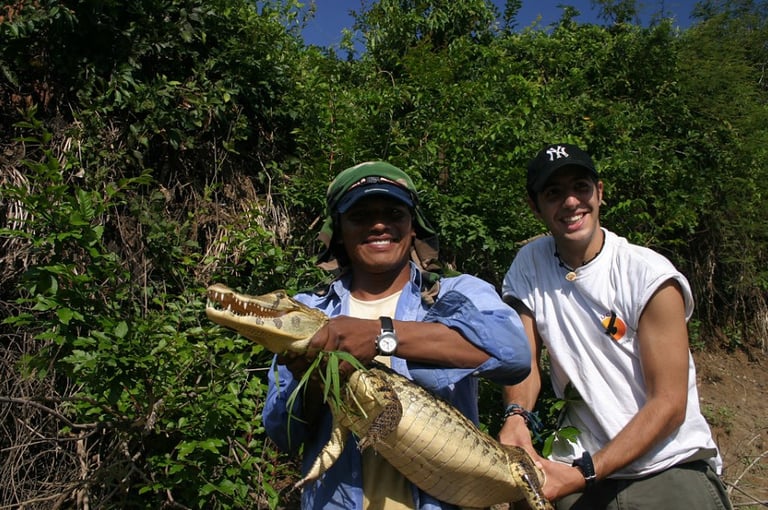
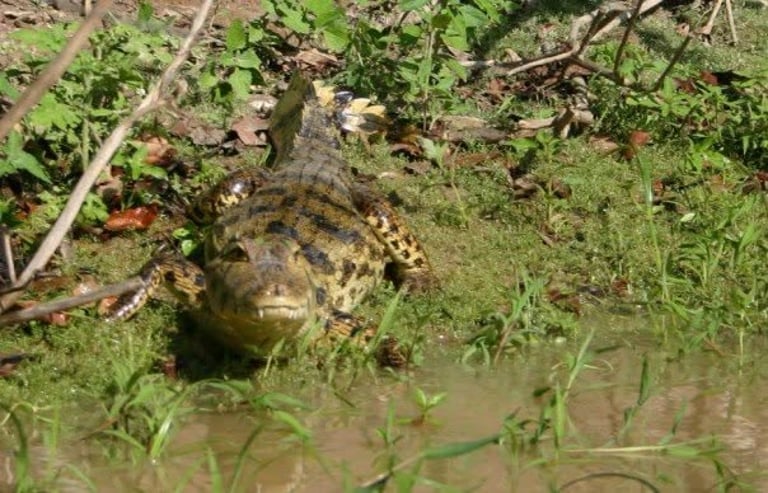
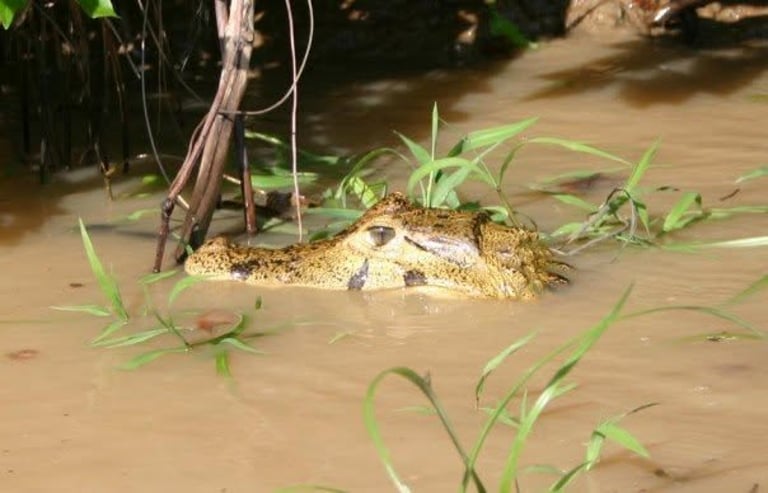
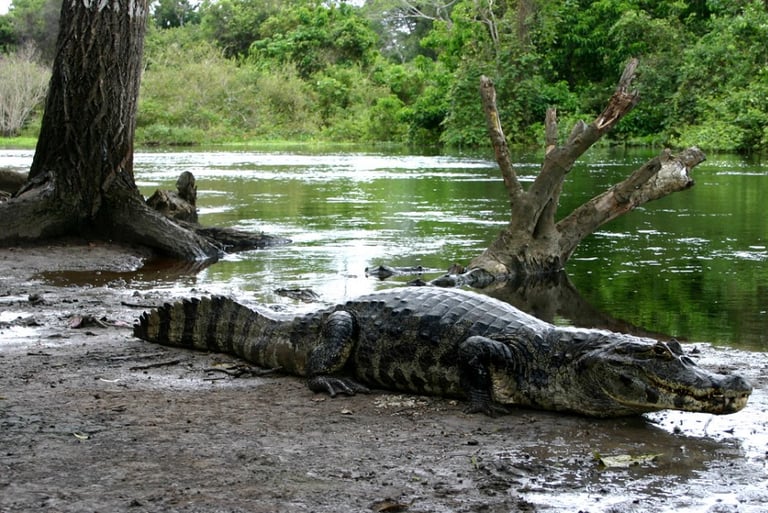
Cayman crocodiles are frequently seen on a Pampas Tour in Bolivia
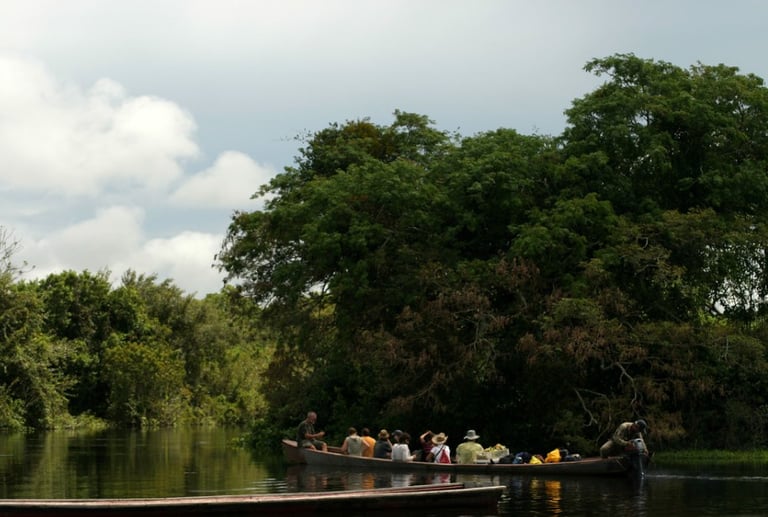
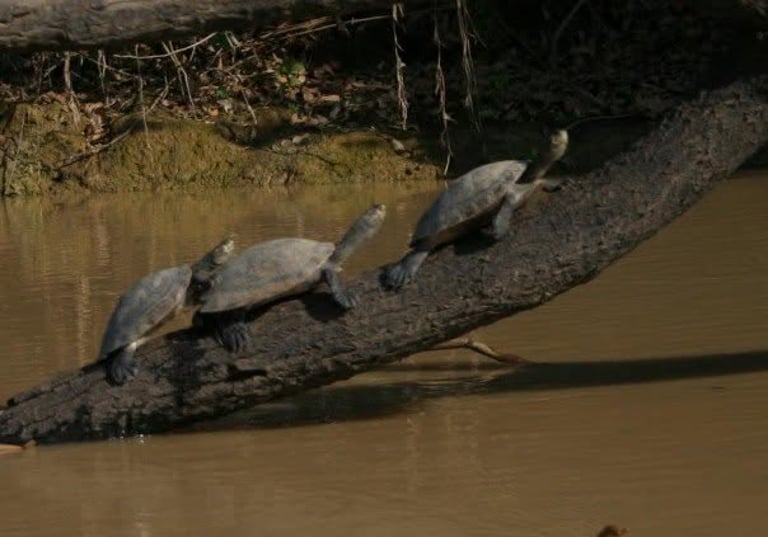
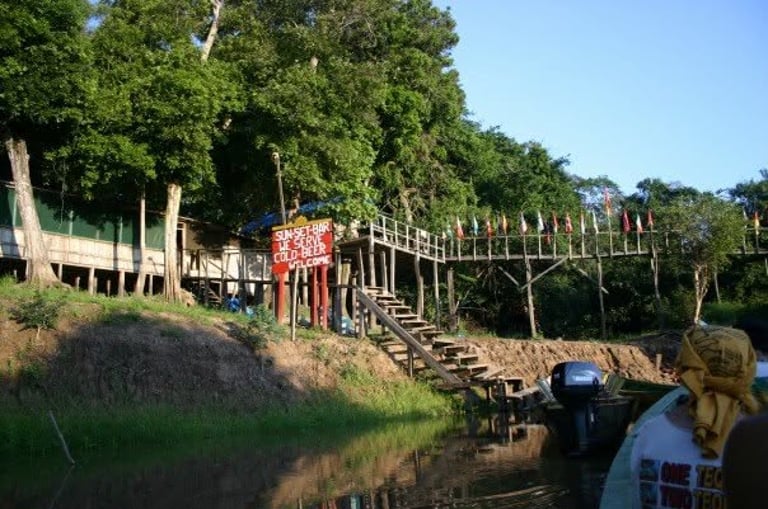
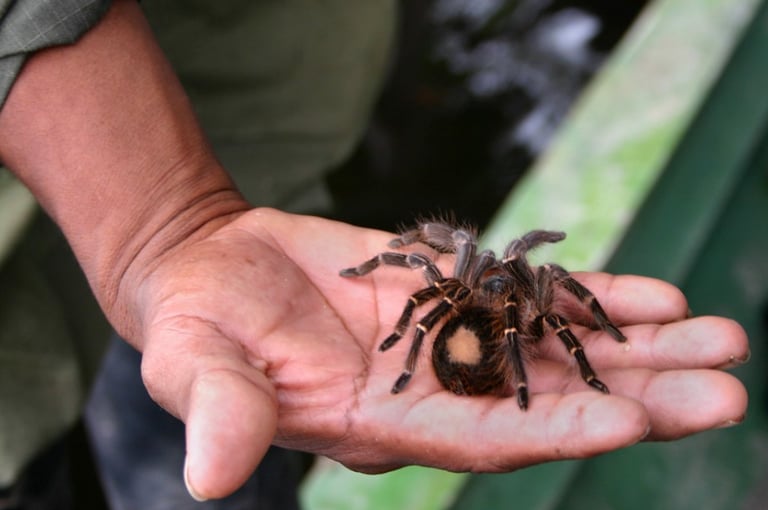
Our mode of transport, our accommodation, freshwater turtles and a tarantula
We went with this tour company which we booked with locally in Rurrenabaque called "Anaconda Tours". And obviously, given the name, they are pressured to find anacondas in the water. Our guide "Rambo" took us to the wetlands, gave us wellington boots to protect our ankles and own footwear, and took us on a walk through the flooded forest in search of an anaconda. He told us that if we'd see one, we should stop and shout "Rambo", and that he'd come and get it.
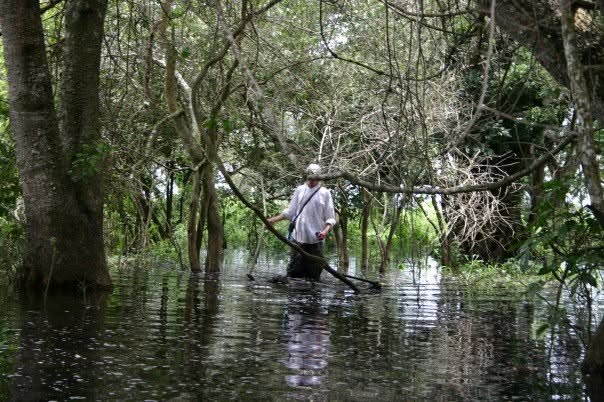
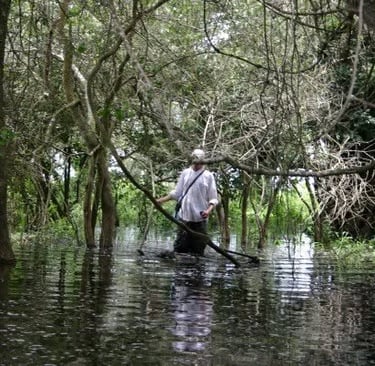
Wading through the wetlands in search of an anaconda
To be honest, the walk was absolutely exhausing, and quite unnerving. I didn't really want to find one. But I guess luckily, the size of the one we did find was... ehm... a little disappointing. But what surprised me was the absolute stench of the animal.
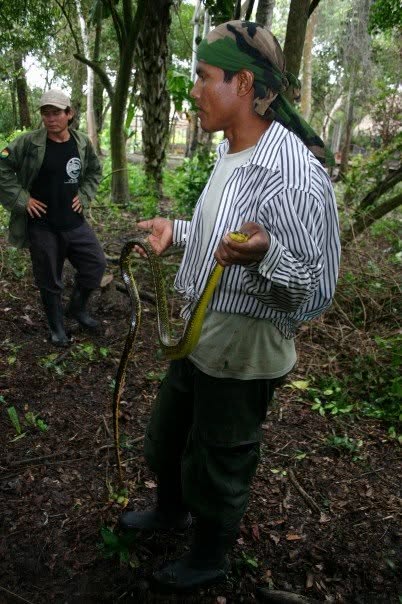
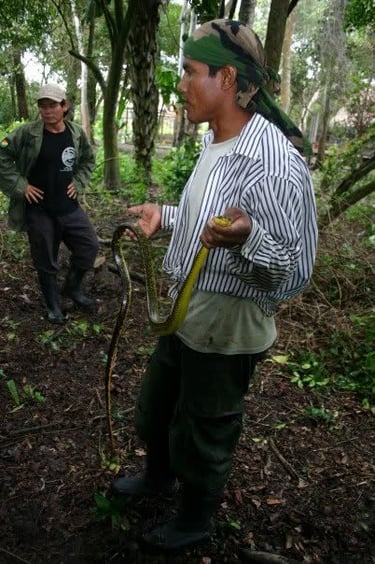
The anaconda we did find was absolutely tiny
The trip was 3 days 2 nights in total and we saw SO many animals, only Kruger National Park in South Africa compared to the sheer quantity of animals seen. If you're into your wildlife viewing, this is one not to miss!
Tupiza
I have just been to Tupiza once, and that was when I was travelling through the north of Argentina into Bolivia, crossing the border at La Quiaca / Villazon. One regret I have from my travels in this region that I should definitely have spent more time in the Jujuy region of Argentina. There are some utterly insanely amazing landscapes there around Tilcara, Humahuaca and Purmamarca. But at least that's something to go to see the next time I'm in that neck of the woods. I'd actually probably even appreciate it a lot more nowadays, after having studied geology, because that area is a geologist's paradise.
However, I made it to Tupiza, which in a way is similar to the Jujuy region of northern Argentina in the sence that the landscape is barren and very colourful, with lots of impressive geological formations. It was quite funny being in Tupiza because I swear, there was literally nothing but pizza restaurants there.... You can't get anything but Tu Pizza in Tupiza. Or that's how it was back then.
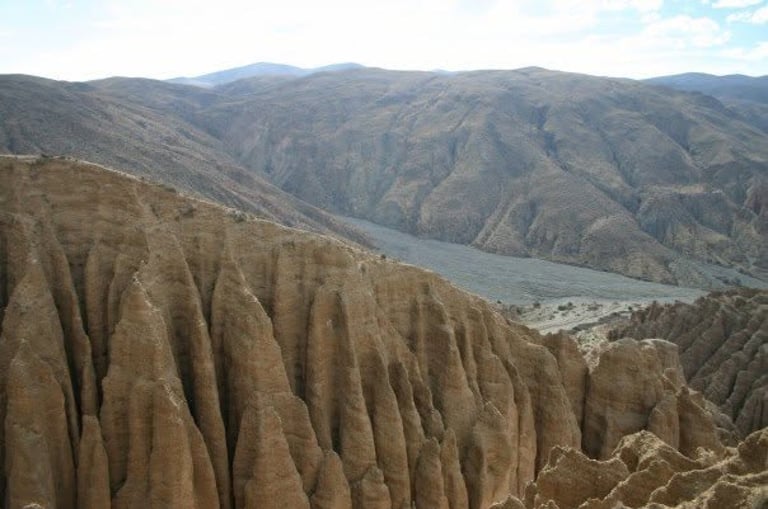
In Tupiza, there are a couple of things most people do when there - the first one is something called a "Triathlon" tour, which takes you around the region in a combination of modes of transport - horseback riding, on a jeep, cycling and walking. Below are a few pictures from back in 2007 when I was there.
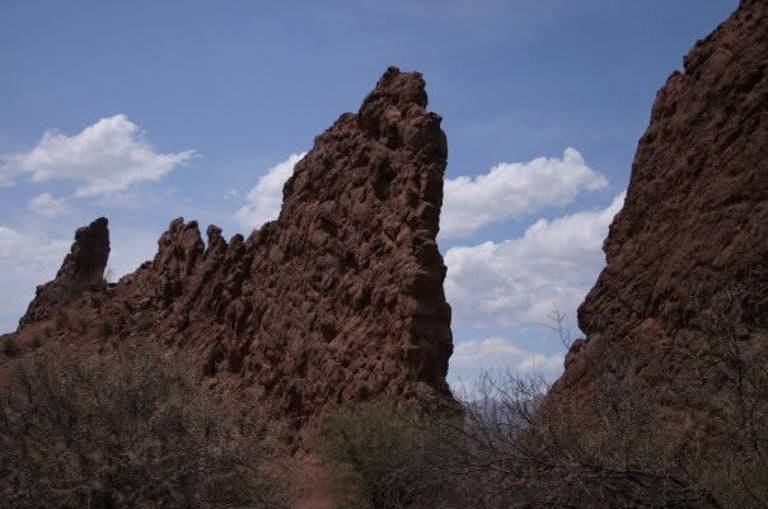
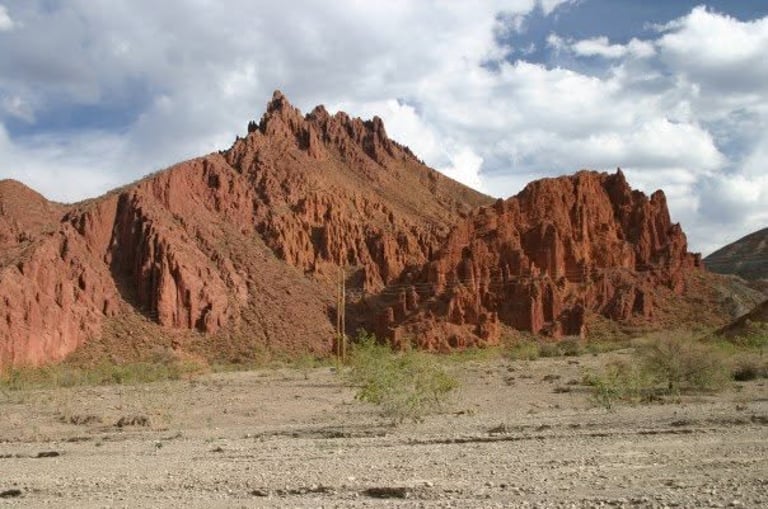
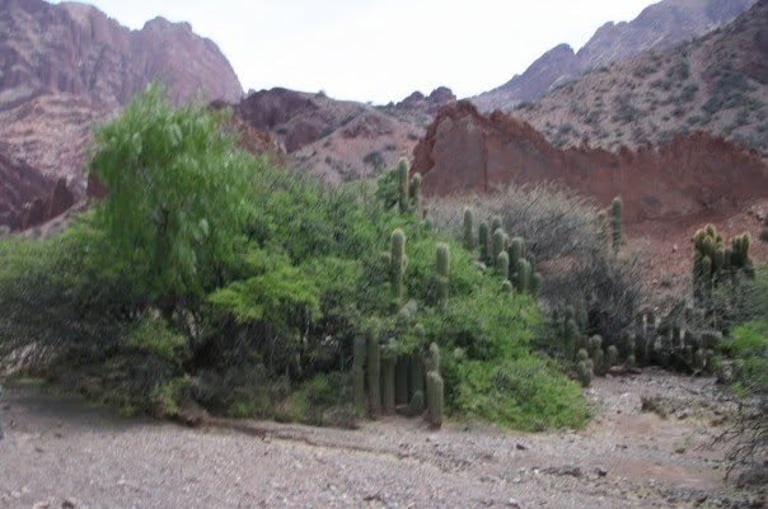
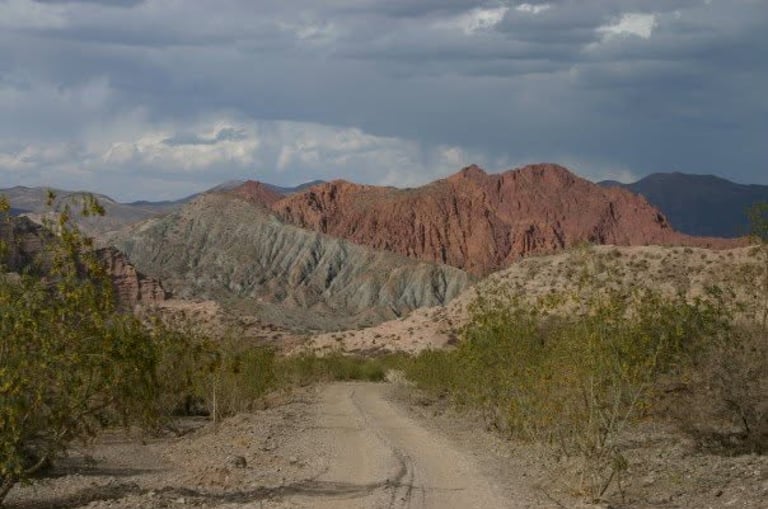
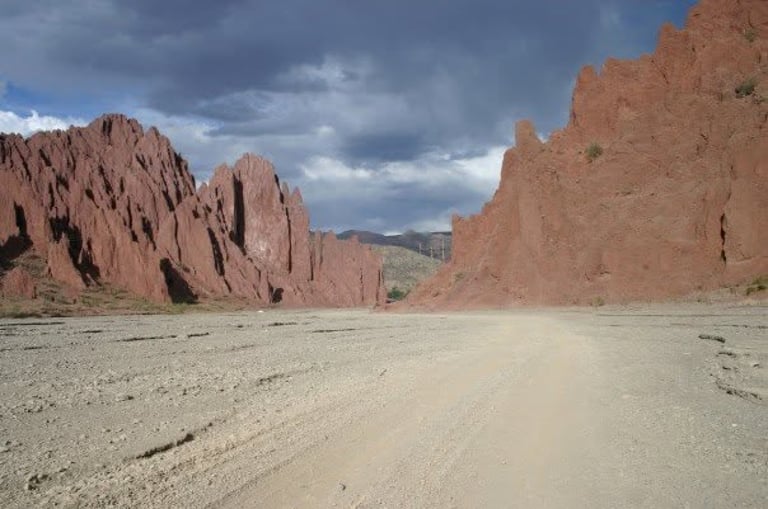
Photos from the Tupiza Triathlon
The second thing people come to Tupiza for is to join a tour going to Uyuni on a slightly different route than the one coming from the San Pedro side in Chile. However, if I was to recommend an itinerary to people who are wondering where they should take the Uyuni tour from, I'd say San Pedro in Chile is your better bet. There honestly isn't too much to see as you travel from Tupiza westwards, the scenery is a lot more mind-blowing from the San Pedro to Uyuni side. If you start in Tupiza, you just spend a LOT of time on very rough roads.
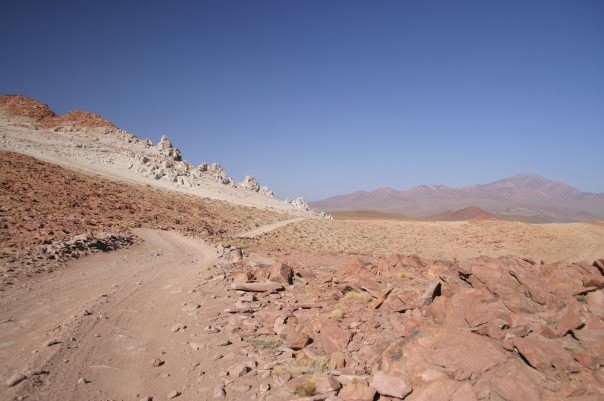
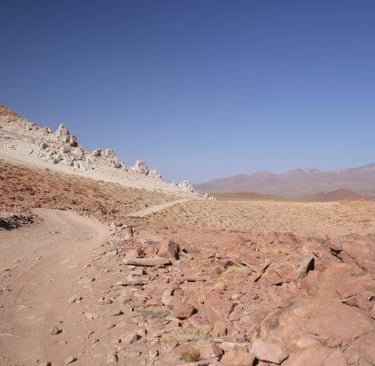
The road from Tupiza towards Uyuni
Cochabamba
Located at the boundary between the highlands and lowlands of Bolivia, apparently this city is known for its food culture, which is meant to be the best in Bolivia. It also serves as a gateway to the Toro Toro National Park. Go to Cochabamba if you want to skip the typical tourist traps, drink craft beer in sunny plazas, eat like royalty on a shoestring budget and see how middle-class urban Bolivians actually live.
I went there to see a friend of mine who was studying medicine there, but I also saw the main tourist attraction of the city - the Cristo de la Concordia, a colossal white statue of Jesus Christ that stands atop San Pedro Hill. At 34.2 meters tall (or over 40 meters if you count the pedestal), it is actually slightly taller than the famous Christ the Redeemer statue in Rio de Janeiro (and Cochabambans are very proud of this fact). You can take a scenic cable car (teleférico) up to the base for a sweeping panoramic view of the entire valley and lake.
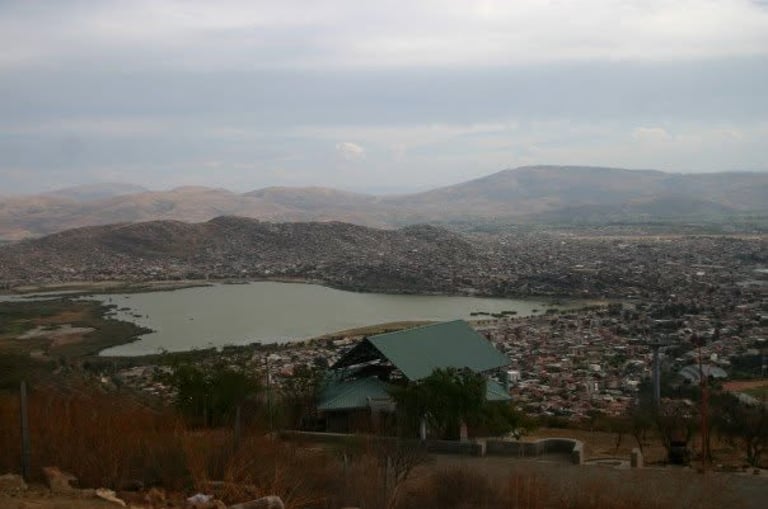
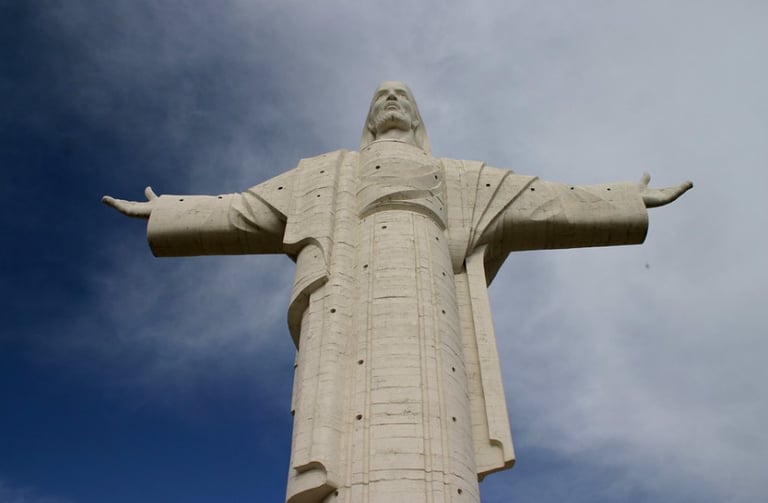
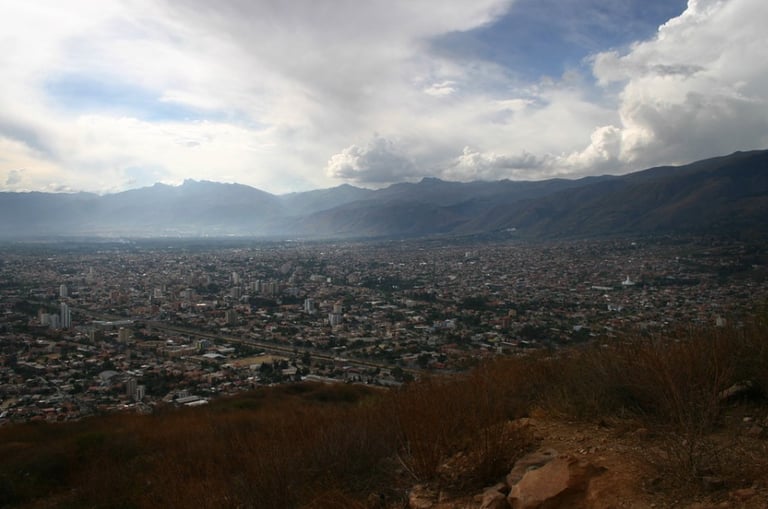
Cochabamba and the Cristo de la Concordia
Trinidad - A boat journey on a cargo riverboat to the Brazilian border
I had read about this journey in a travel guide and thought it was quite an intrepid trip but I needed to go to from Bolivia to Brazil through the Amazon and onwards to Colombia, as I was going to be meeting the girl I sponsored through Children International in Barranquillla, northeastern Colombia, some weeks later. Why not do it via boat travel?
I travelled 12 hours overnight in a bus from Rurrenabaque to Trinidad. As usual, the bus was horrendous, uncomfortable, old and about to fall apart, hot and stuffy, dusty, muddy and constantly vibrating but was still one of the better bus journeys I had been on in my time in Bolivia. The Bolivians also don't bother building bridges over rivers, but just ferry the buses and trucks over, but we had to use two of those on our way to Trinidad. The bus was supposed to have arrived in Trinidad at 12 but didn't arrive until 18, so I just stayed at a hotel called Monte Verde in town.
The next morning, I set out on a mototaxi to the riverbank to search for a boat that would be travelling to Guajyaramerin on the Bolivia-Brazil border in northern Bolivia. According to the Lonely Planet guide, I was meant to go to the port at Puerto Alacen, but there was just a single boat there that wouldn't depart until the Friday (and it was Monday). The guys on the boat suggested I'd go to the Puerto Varador port, so I went there with my mototaxi, a long journey and no ships there but another person there suggested I should be able to find boats at Puerto Geralda, which was back in the direction towards Trinidad, so off we went. There were lots of boats so I could practically pick a boat. I spoke to the captain on the ship La Pinta whose name was Jesus and he showed me the ship and offered to take me for 200 Bolivianos (£13 GBP back then), for which I'd get a space for my hammock and full board throughout the journey. The ship would leave the next day. It wasn't clear how long the journey would take - some people said 4 days, others 6 days.
This was my boat, a cargo boat called La Pinta, which was carrying fuel to the northern extremes of Bolivia:
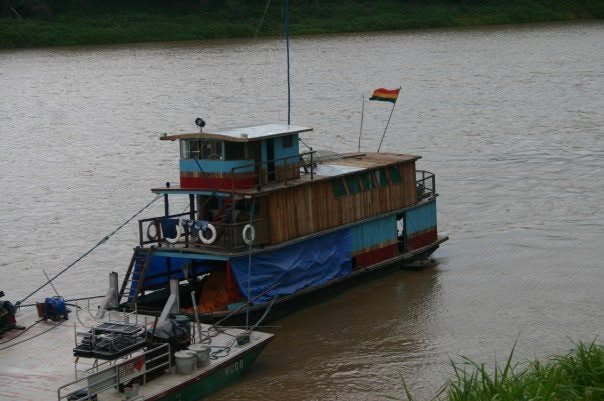
LA Pinta - The cargo boat that was taking me to the Brazil border with Bolivia
The boat was leaving the next day, so I went back into Trinidad and went shopping for a hammock, which would be my bed for the following days on the boat, as well as a rope to attach it to the boat.
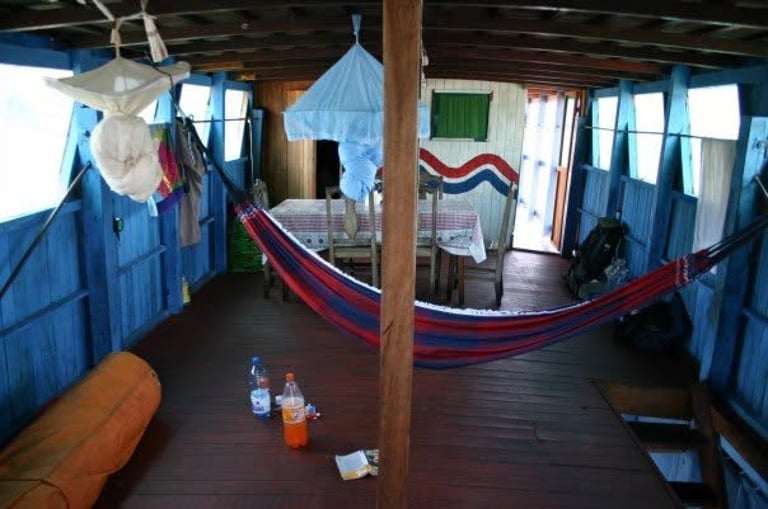
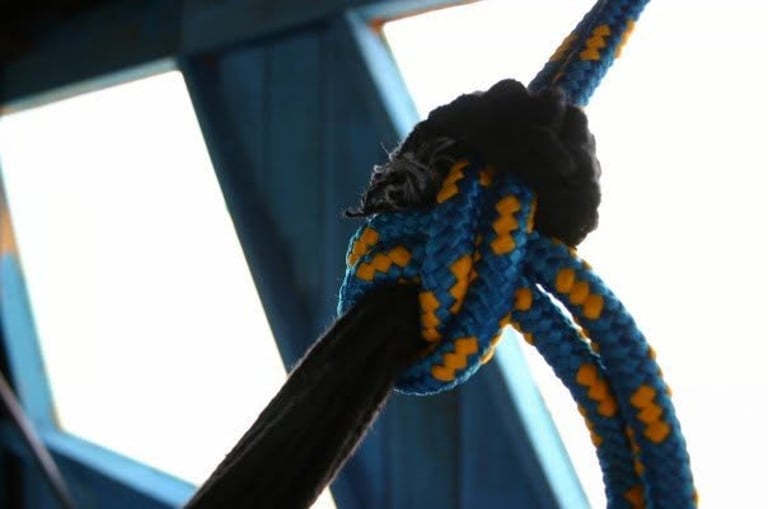
The hammock I bought in Trinidad installed on board La Pinta and the hammock knot the crew taught me to do
There were lots of other people on the boat as well working as the crew, but it was clearly a family affair. There were also animal cargo with us as well on the lower floor. Looking back at these pictures, it's crazy to think that all these people are 19 years older now - including myself! I definitely don't feel 19 years older than I was back then.
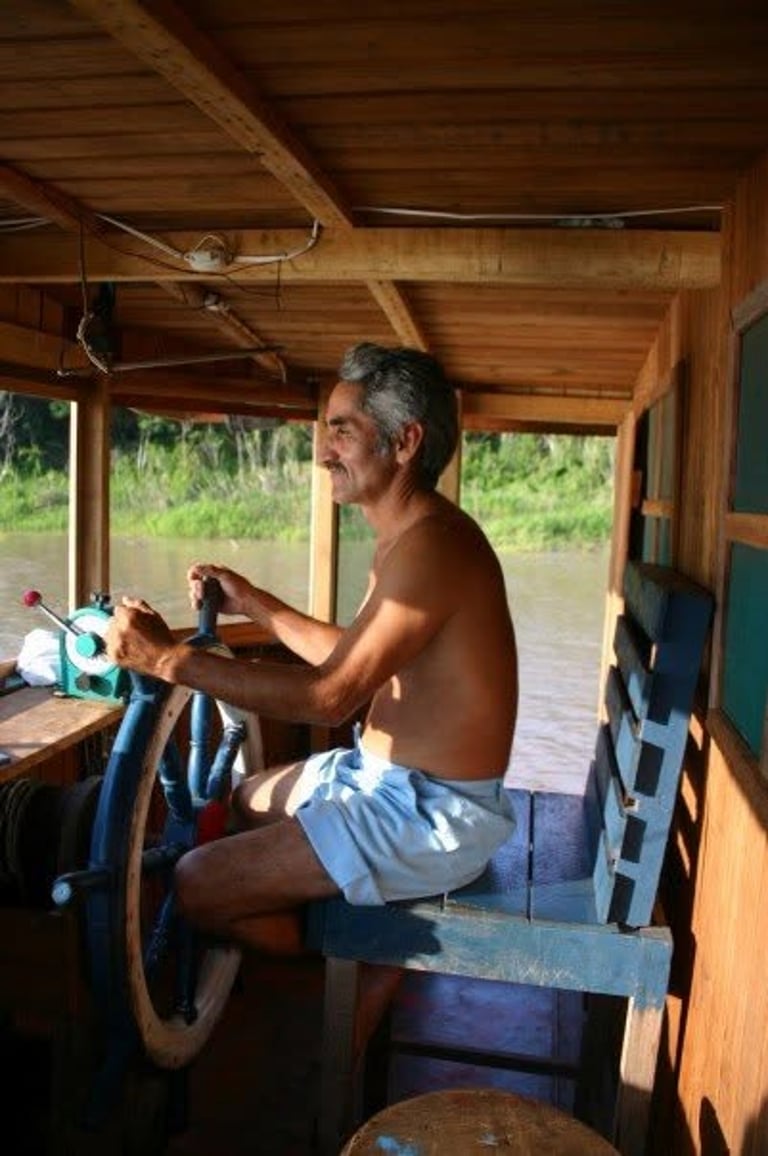
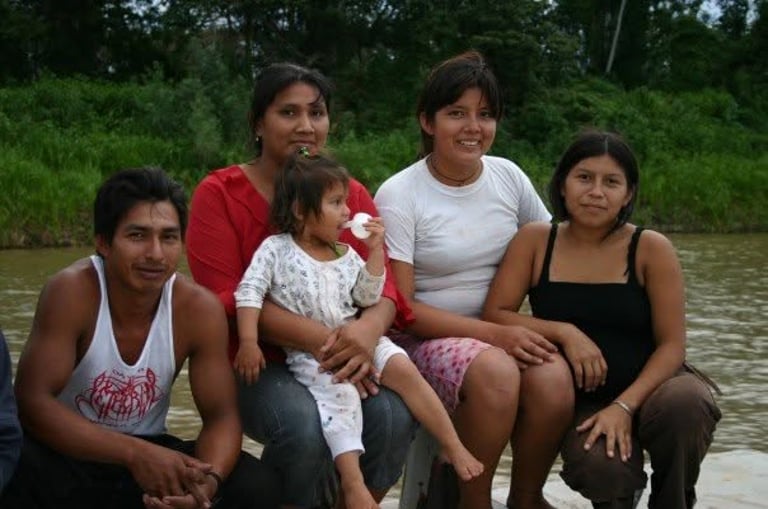
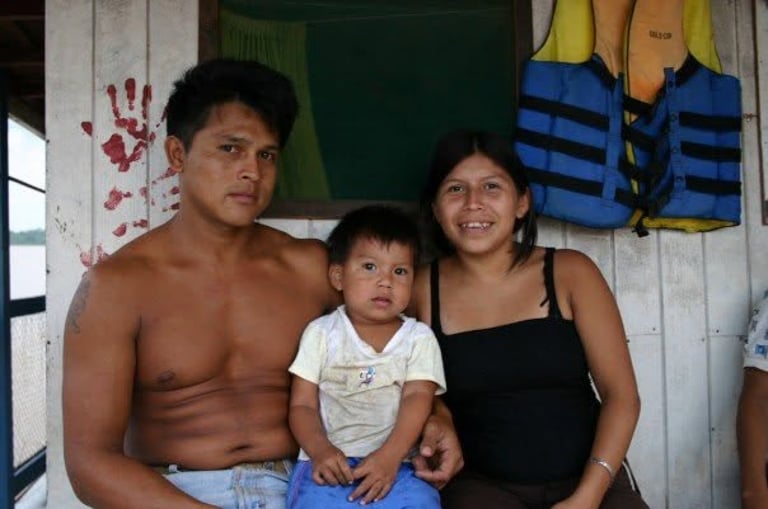
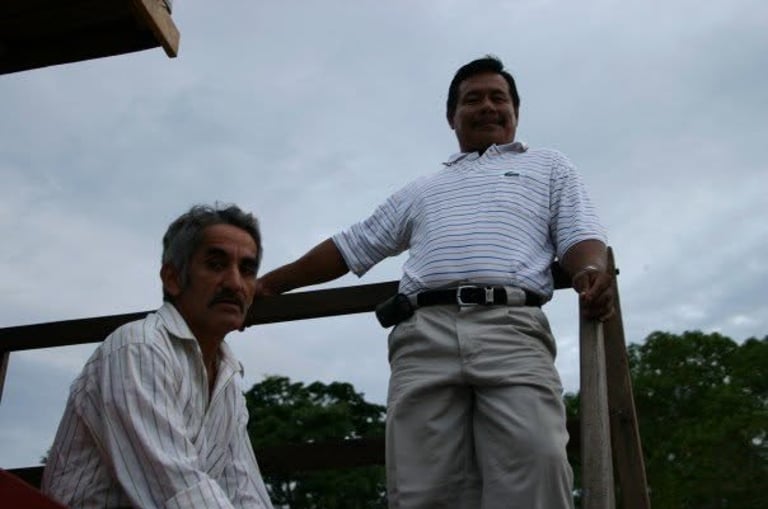
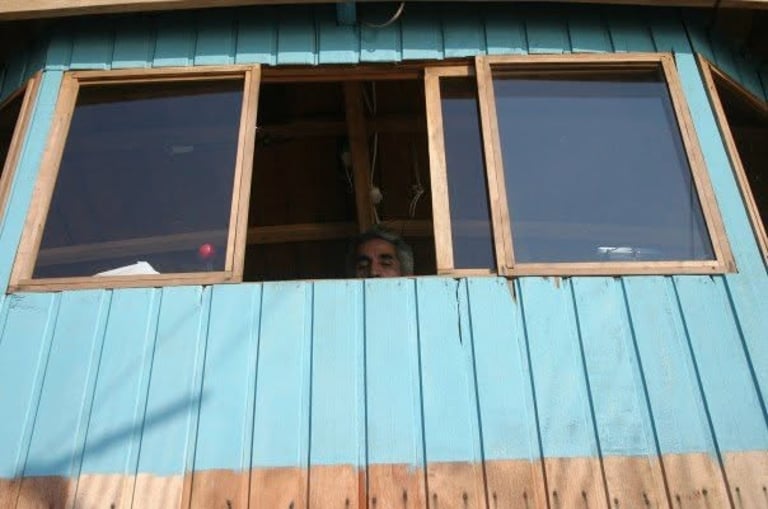
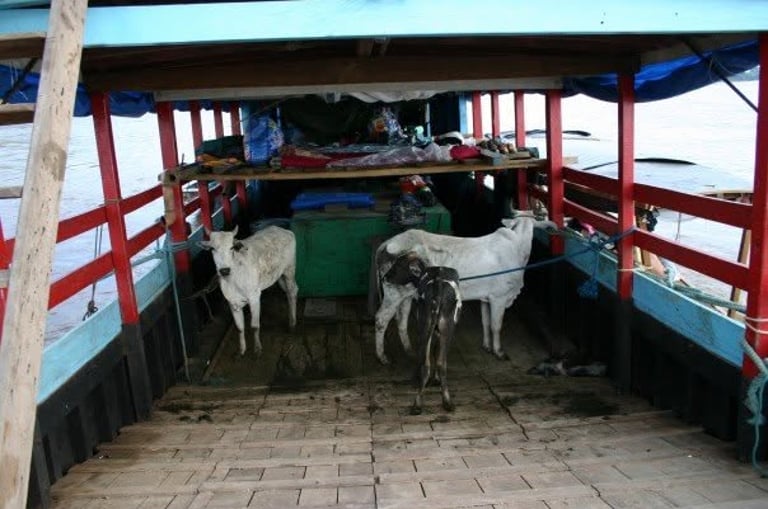
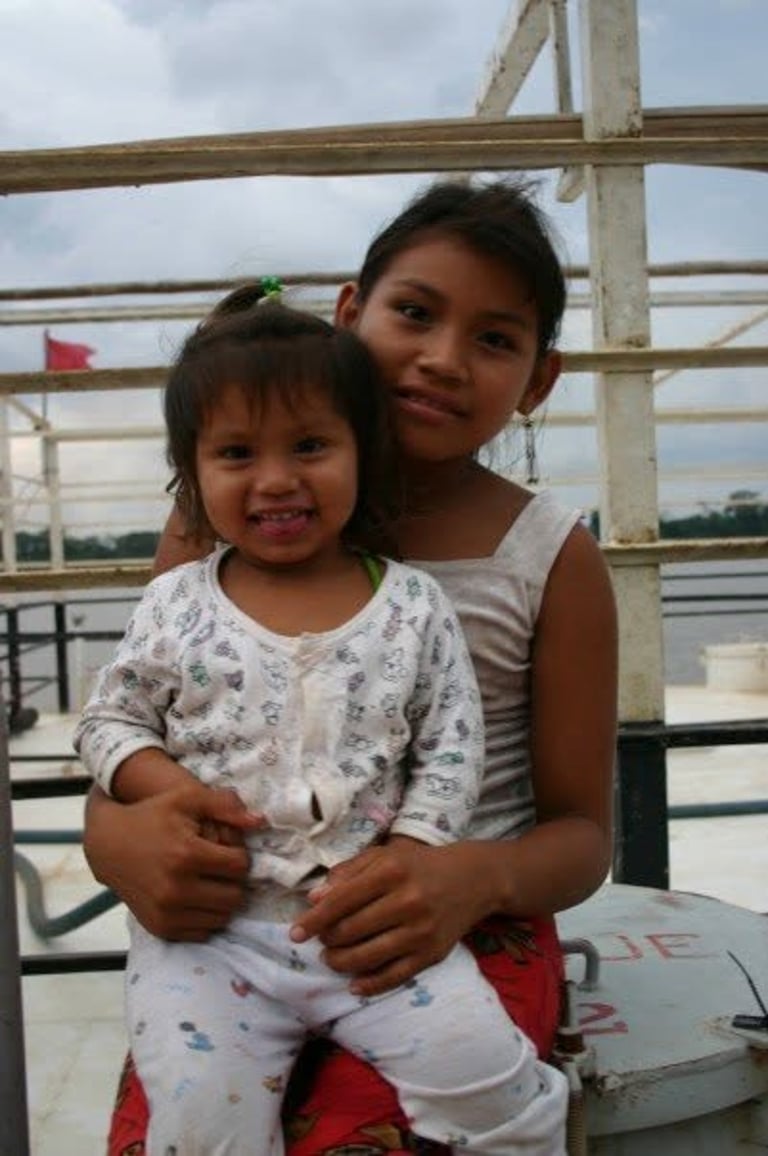
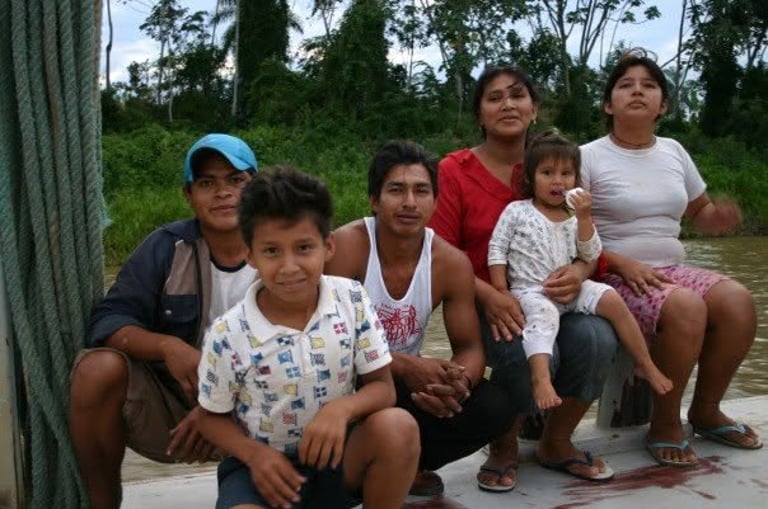
THe crew on La Pinta going from Trinidad to Guayaramerin
It was a very unique experience to be on the riverboat cruising towards the Brazilian border and it's something I'll never forget. However, I must say that it isn't the most efficient way to get from A to B - something I should have realised if I had just looked at a map, but Rio Mamore is a meandering river, meaning that it loops about in semi-circles all the way to the north. The route our boat took along Rio Mamoré is shown in cyan colour below, from Trinidad to Guayaramerin on the Bolivia-Brazil border.
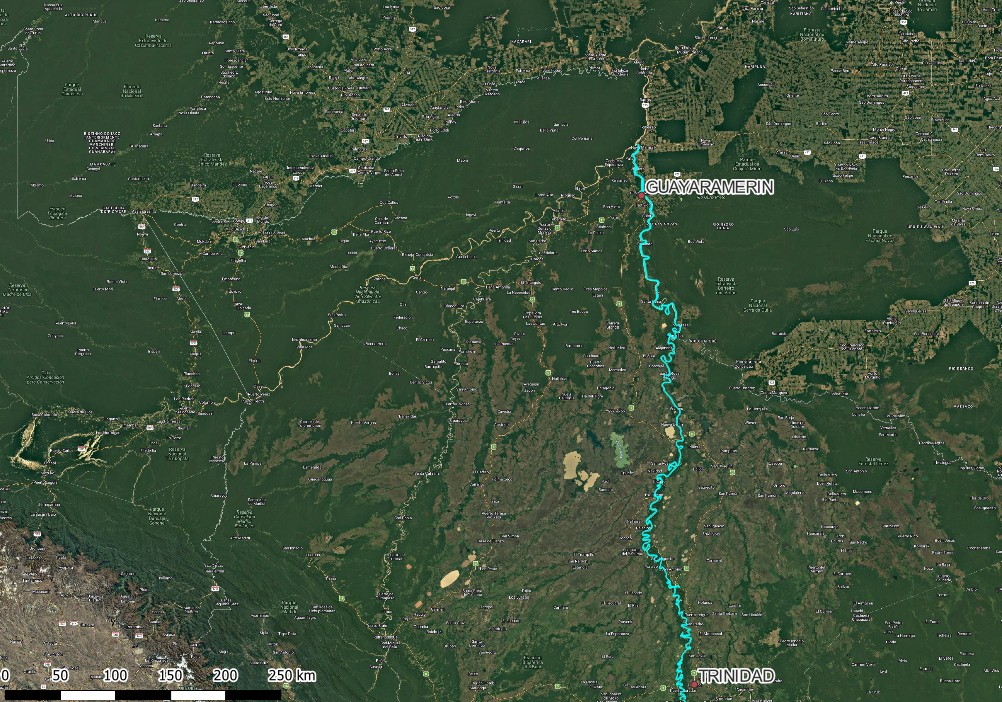
The river Rio Mamoré from Trinidad to Guayaramerin.
What is also particularly striking when looking at the above image is to see what the Brazilians have done to their rainforest. All that deforestation that hugs the Brazil - Bolivia border north of Guayaramerín shows the scale of the destruction of this once virgin forest, and you can see that the Bolivians have barely touched it on their side of the border (although they are guilty of massive amount of deforestation near Santa Cruz in the east of the country). This has been happening recently and at an alarming scale and speed, as you can see from the Google Earth Engine timelapse series below.
Timelapse of the Bolivian-Brazilian border between 1984 and 2022
But back to the boat journey through the Bolivian Amazon - the trip ended up taking 6 days in total and I spent my days looking out to the river, where there usually wasn't very much to see, as it's a sizeable river and we were typically too far from the banks to be able to see any wildlife on land, and spotting anything on the river needed eagle eyes.
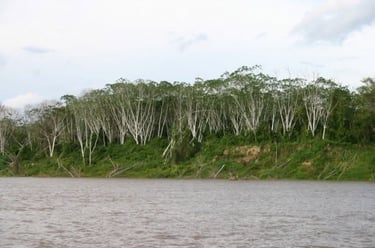
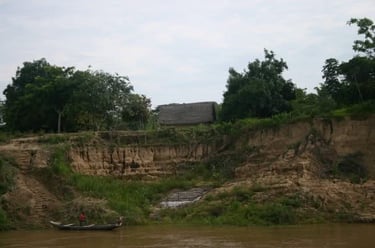
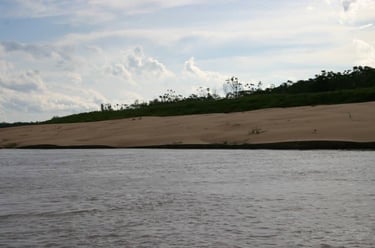
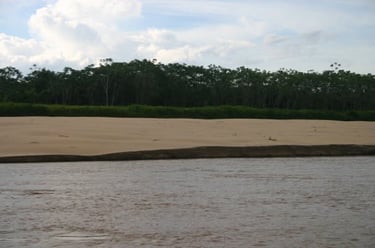
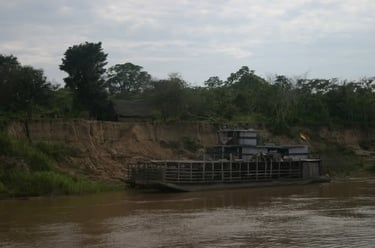
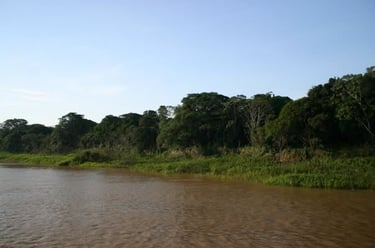
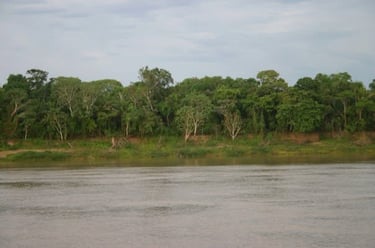
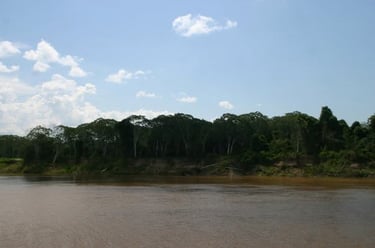
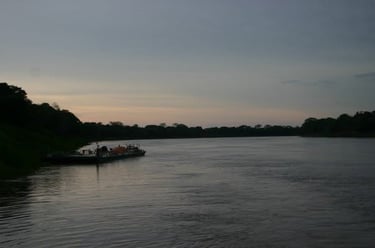
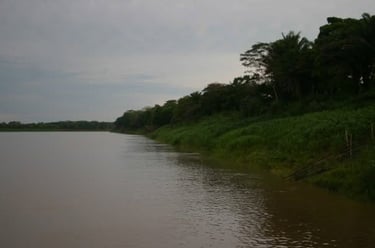
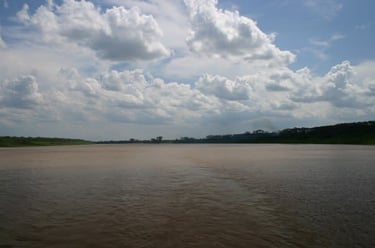
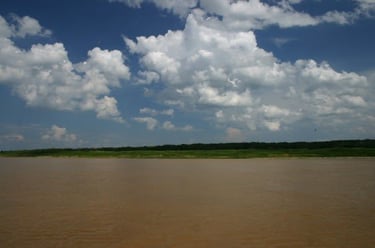
THe seemingly endless Rio Mamore
When I wasn't looking out at the river, I would spend my days reading or chatting to the crew on the boat.
Food was included in the price I paid for my transfer, but I ate the same things as the crew would, typically locally sourced ingredients like charqui, plantain, dried fish, turtles, turtle eggs, rice and locally sourced vegetables. The turtle eggs surprised me, because they are round and 95% yolk. The turtle meat was interesting as well, but it kind of just tasted like... don't know? A bit like a mixture of chicken and horsemeat maybe.
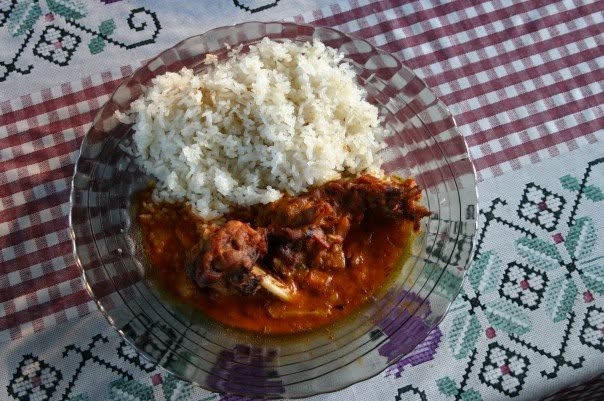
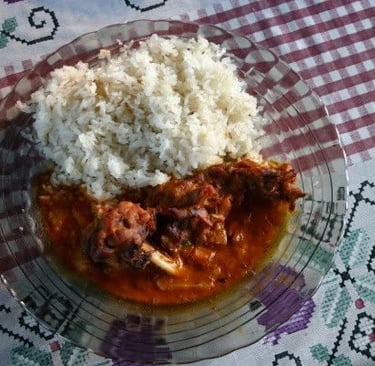
Freshwater turtle meat served on board La Pinta
Other things I needed to get used to on board was the toilet and shower facilities. To wash myself, I needed to stand at the back of the boat with a bucket and soap and scooped water out of the river, wearing underpants while washing all other bits, and then at the end the undies come off for a quick bottom wash. But as I'd be "showering" towards the end of the day as the sun was setting, I'd have to rush to not get completely eaten alive by mosquitoes which decended upon us at that time of day. I can't remember how toilet was done.... I think it was just a hole in a room and probably just got dropped into the river.... which people then wash themselves from.... Considered sufficient dilution, I guess?
Book Recommendations
Also, if you're the audiobook type like me, there are a couple of books that I've listened to that I absolutely loved that are based on true stories that occurred in Bolivia.
The first one is "Marching Powder" by Rusty Young, which is about this guy Thomas McFadden, a British drug smuggler who was busted at La Paz's airport in 1996 and incarcerated in Bolivia's notorious San Pedro Prison. Rather than a traditional jail, San Pedro functions as a surreal, self-governed micro-society where inmates must buy or rent their cells, cells feature varying degrees of luxury based on wealth, families live inside with the prisoners, and guards were bribed to look the other way while the inmates run a thriving internal economy, including manufacturing some of the purest cocaine in the country. McFadden survived his five-year sentence by running bizarre, illegal prison tours for backpackers, which is how he met Australian co-author Rusty Young, who stayed inside the prison for months to document this lawless, captivating underworld. The famous, illegal backpacking tours described in Marching Powder, where travelers bribed guards at the front gate to enter, view the cells, and sometimes even stay overnight, were completely shut down by the Bolivian government following an international media scandal. Today, guards strictly enforce the ban on foreign sightseers.
The second book is "Jungle" by Yossi Ghinsberg, a harrowing true-life survival memoir that details Israeli backpacker Yossi Ghinsberg's 1981 nightmare in an unexplored patch of the Bolivian Amazon. Lured into the deep rainforest by a mysterious Austrian guide promising lost tribes and gold, Ghinsberg and three other travelers soon find themselves hopelessly out of their depth. After the group splits up due to rising tensions, a rafting disaster separates Yossi from his remaining partner, leaving him entirely alone, without a knife or survival gear, in one of the most unforgiving environments on Earth. For three agonizing weeks, he endures severe starvation, flesh-eating parasites, near-fatal quicksand, and a terrifying jaguar encounter before a miraculous rescue party, led by his surviving friend and local villagers, plucks him from the brink of death.
Follow us on Social Media for travel updates and top tips!
© 2026. All rights reserved.



I can't recommend Pimsleur enough for learning a new language! If you don't believe me, try for your self - All Access FREE for 7 days on signup.


This website and domain is hosted by Hostinger and made easily with Hostinger website builder. Get yours from £1.99 GBP per month here!