Best of Peru (3 week itinerary)
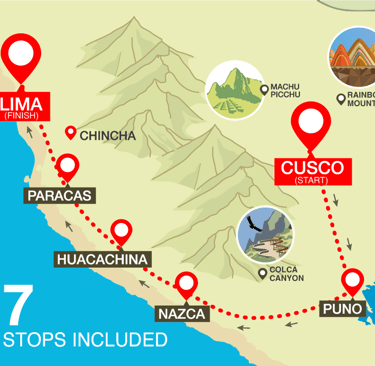
Follow our journey to Lima, Paracas, Huacachina, Ica, Nazca, Arequipa, the Colca Canyon, Puno, Lake Titicaca and the Floating Islands of the Uros, Ruta del Sol, Cusco, Urubamba, Ollantaytambo, Aguas Calientes, Moray and Maras Salt Mines, Pisac Sunday Markey, Vinicunca the Rainbow Mountain and of course last but not least Machu Picchu!
SOUTH AMERICATRAVEL
Introduction and table of contents
We travelled to Peru for 3 weeks in April and May 2026. I had been to Peru three times previously, but as a student with not much money to spend, so there were things I didn't get around doing, like the flight over the Nazca lines. I had also never been to Huacachina oasis or the Paracas National Reserve, so I had these still on my bucketlist to do. We were going to the Colca Canyon in Arequipa, but only as a daytour, as I had done the 2 day/1 night hike before, some 20 years ago. I just remember the actual walk at the bottom of the canyon not being that impressive - it's more impressive from above and it also means you don't need to climb back OUT of the deepest canyon in the world. So we opted for the daytour. Likewise, I had done the Inca Trail some 20 years ago or so, and while it is an incredible experience, waking up in the middle of the night walking in the dark and the rain to get to Machu Picchu for sunrise (when we actually just arrived in the clouds), it took a bit away from the experience of seeing Machu Picchu as I felt miserable. Therefore, I decided the next time I'd go to Peru, I'd just want to see Machu Picchu on a daytrip, which is what we did.
The trip I designed for us is essentially what is called "The Gringo Trail" in reverse, which takes in all the most famous attractions of Peru. I had been on the Gringo Trail before, and one thing I really liked about it is how you keep bumping into the same travellers all the time as you go from one destination to the next, because everyone is sort of doing the same trip, but just at their own pace.
This blog will cover our 3 week itinerary, our top tips and recommendations, how much we spent on the road, where we stayed and whether we recommend these places, as well as places we ate and drank, and whether we recommend these places.
This page is very large and is intended as a travel guide. To navigate, use the links below and to come back to table of contents, click the link at the bottom of each section to come back to the top of the page. Alternatively, you can obviously scroll through the whole thing at your own leisure :)
Note: There are affiliate links in this page based on our recommendations. You will not pay a different price for the same service as a result of clicking through these links.
Important and useful information
There are a few things that you'll want to look into for your trip to Peru. Click the links below to go to the relevant section.
Our 3 week itinerary
Below is our 3 week itinerary (including travel) for Peru, taking in all the most important sights along the way.
Day 1: Travel day from Edinburgh to Madrid
Day 2: Travel day from Madrid to Lima. (hotel near the airport)
Day 3: Flight from Lima to Cusco, Sacred Valley tour from Cusco, including stops at Chinchero, Moray and Maras (hotel in Urubamba)
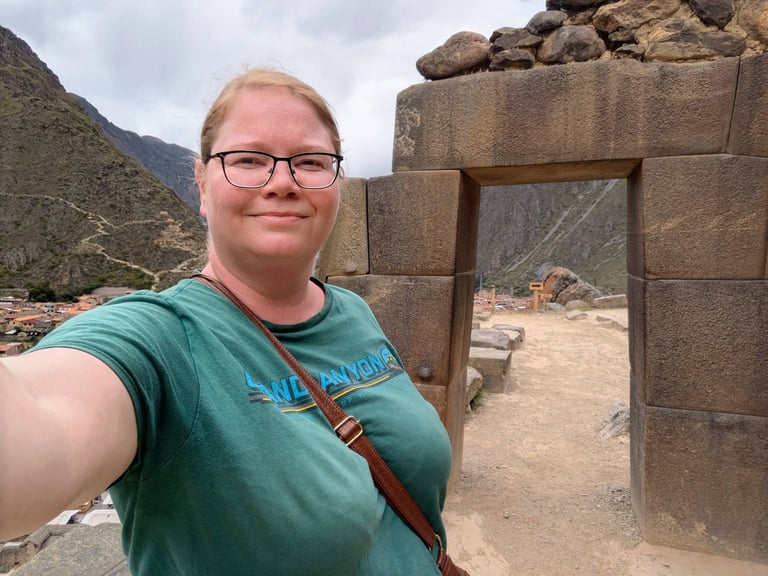
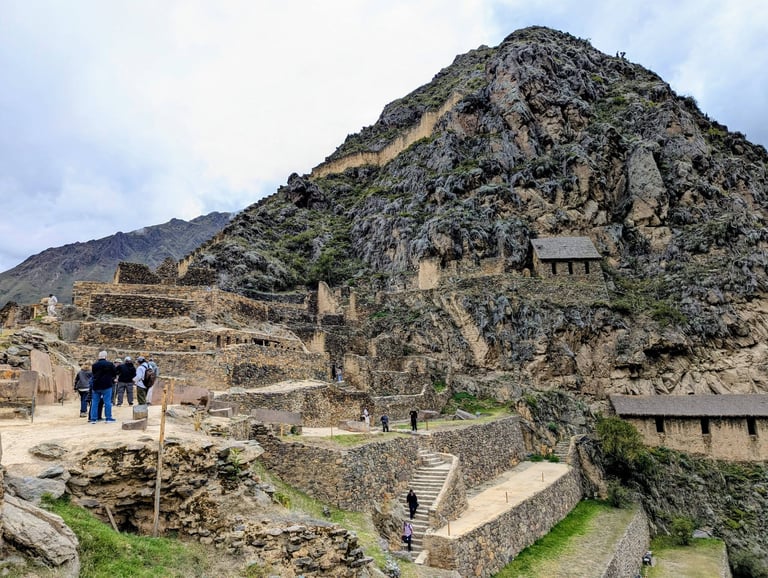
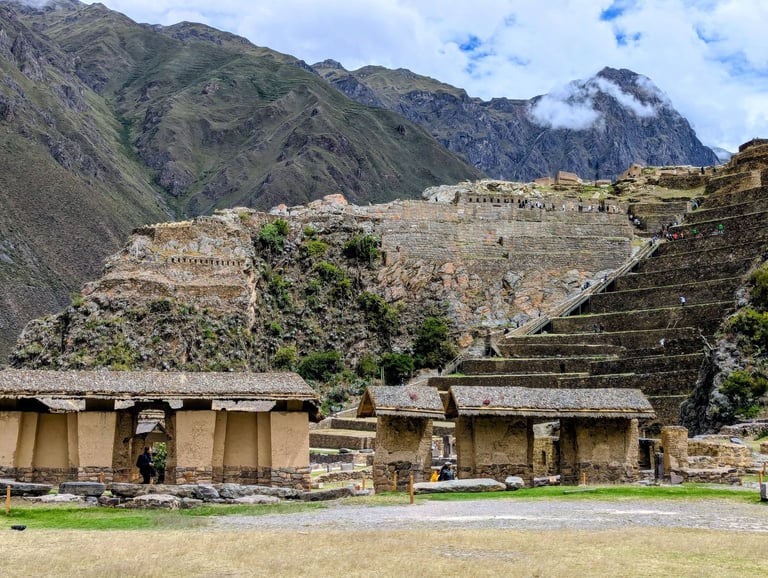
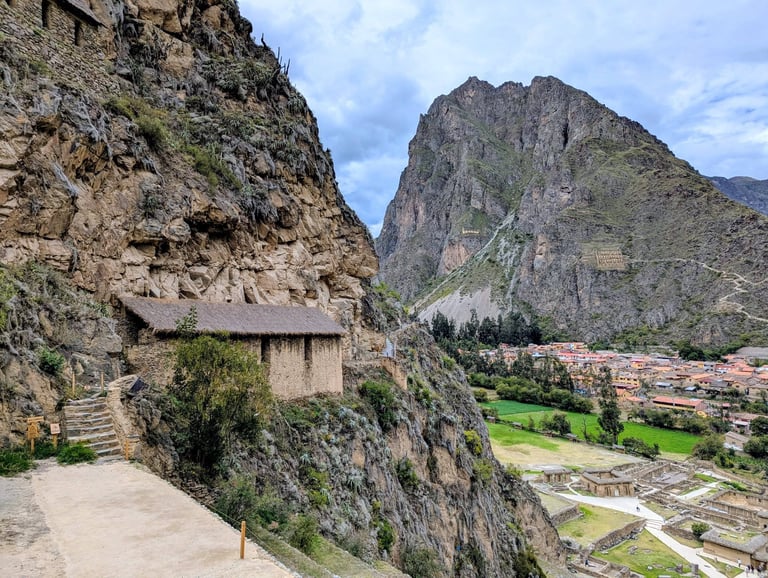
Day 4: Ollantaytambo Fortress and Pinkuylluna Granaries (hotel in Ollantaytambo)
Day 5: Machu Picchu and Aguas Calientes (hotel in Ollantaytambo)
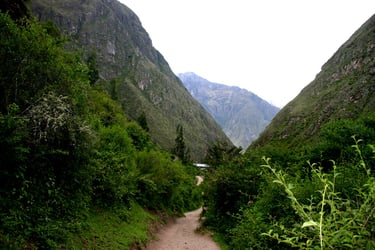
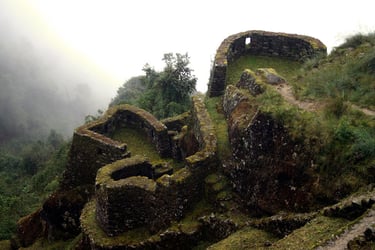
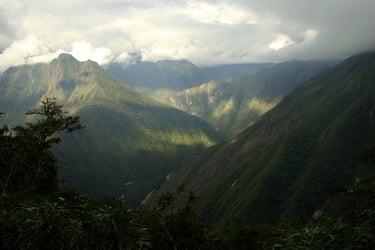
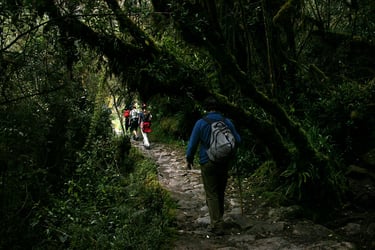
Blast from the past: The Inca Trail in 2007Day 6: Free Cusco Walking Tour (hotel in Cusco)
On a tangent: The price of goldDay 7: Museums, Massage and Chill in Cusco (hotel in Cusco)
Day 8: Pisac independent daytour (hotel in Cusco)
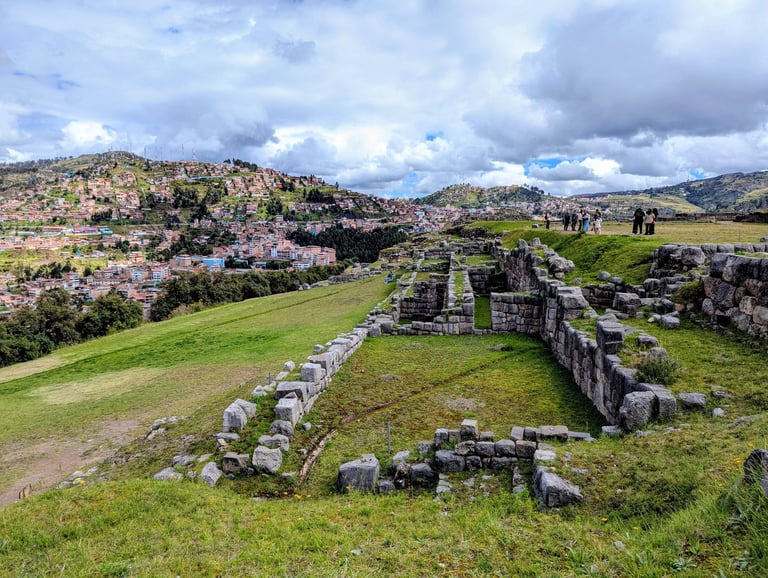
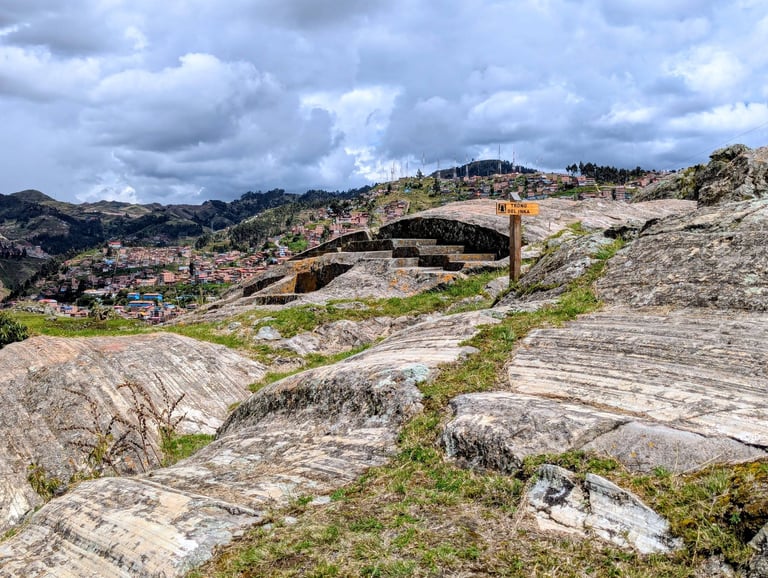
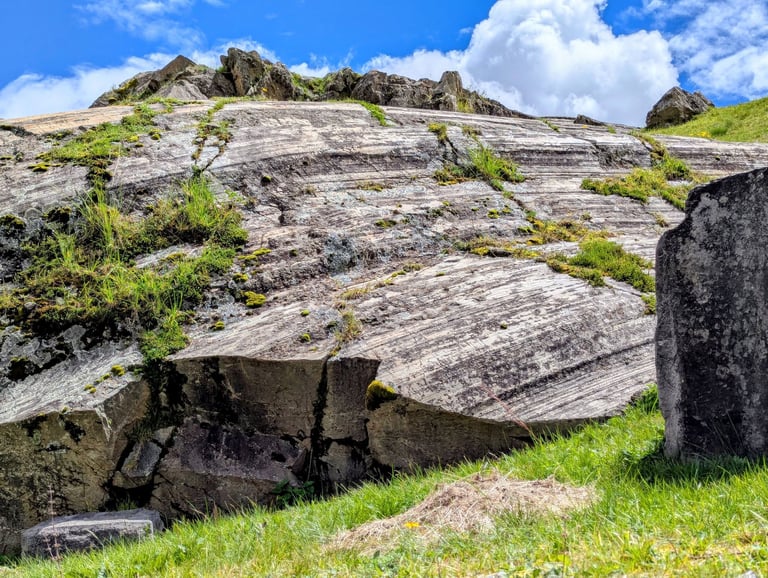
Day 9: Sacsayhuaman (hotel in Cusco)
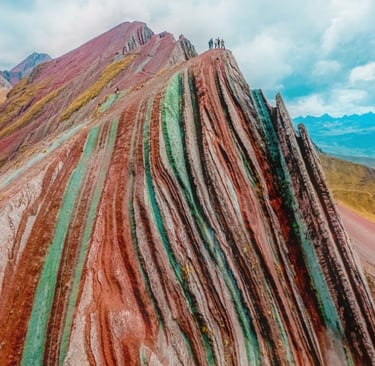
Off-piste: Rainbow Mountains of Peru
Off-piste: Ruta del Sol
Blast from the past: The Floating Islands in 2007Day 10: Flight from Cusco to Arequipa. Santa Catalina Monastery (hotel in Arequipa)
Blast from the past: Santa Catalina Monastery 19 years agoDay 11: Arequipa (hotel in Arequipa)
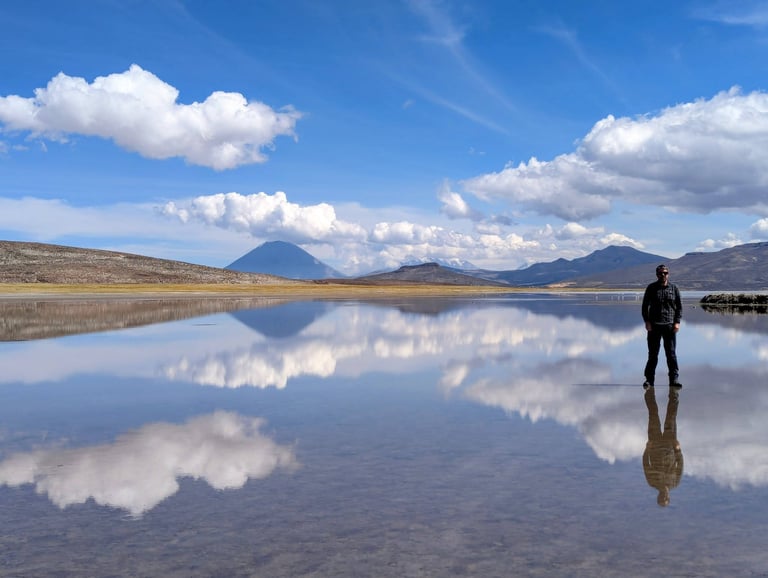
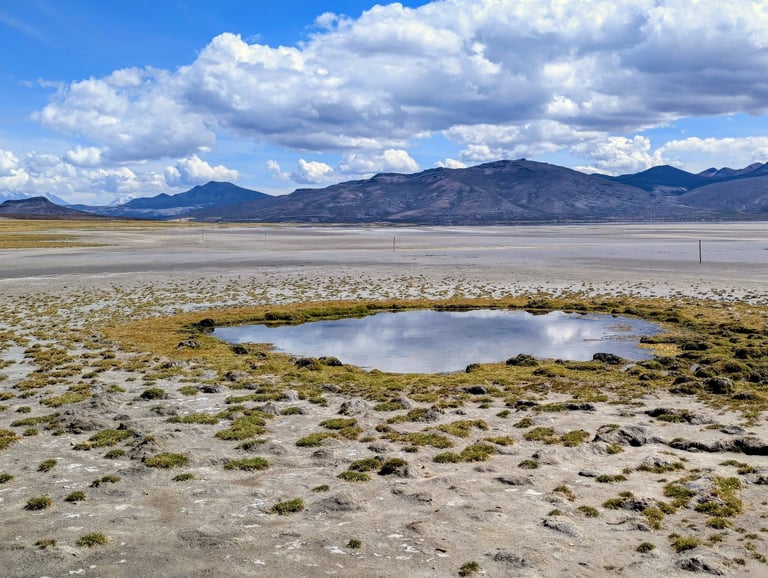
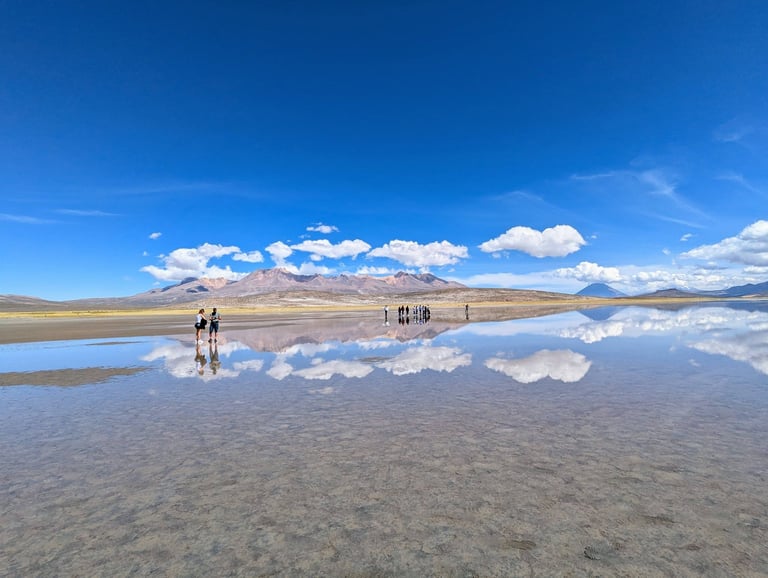
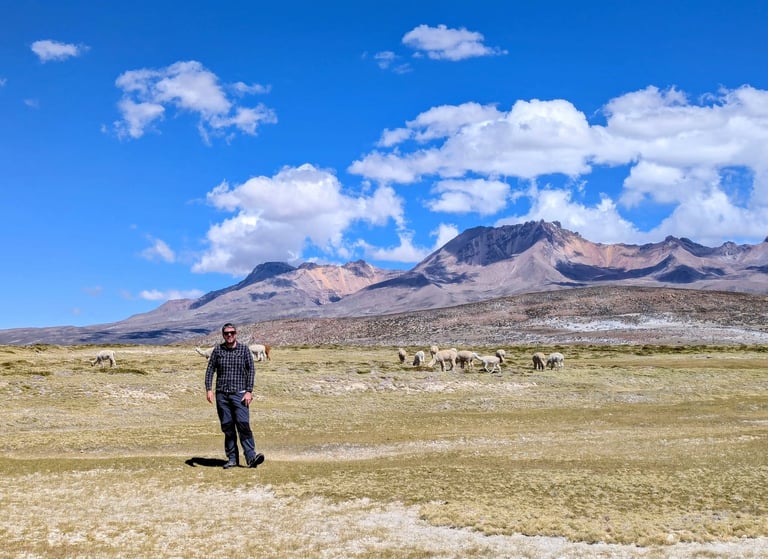
Day 12: Salinas and Aguada Blanca National Reserve organised daytour (hotel in Arequipa)
Day 13: Arequipa and the Sillar stone mines organised half-day tour (hotel in Arequipa)
Blast from the past: The 2 day/1 night hiking tour of the Colca Canyon in 2007Day 14: Arequipa (sleeping in a nightbus to Nazca)
Day 15: Nazca Lines from the air from Nazca airport (hotel in Nazca)
Day 16: Huacachina Oasis, Dune Buggy & Sandboarding tour at sunset (hotel in Huacachina)
Day 17: Islas Ballestas & Paracas National Reserve daytour (hotel in Huacachina)
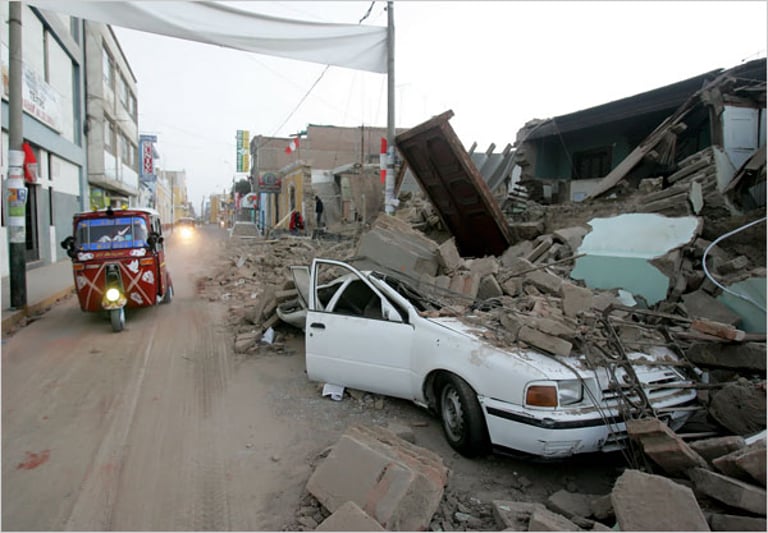
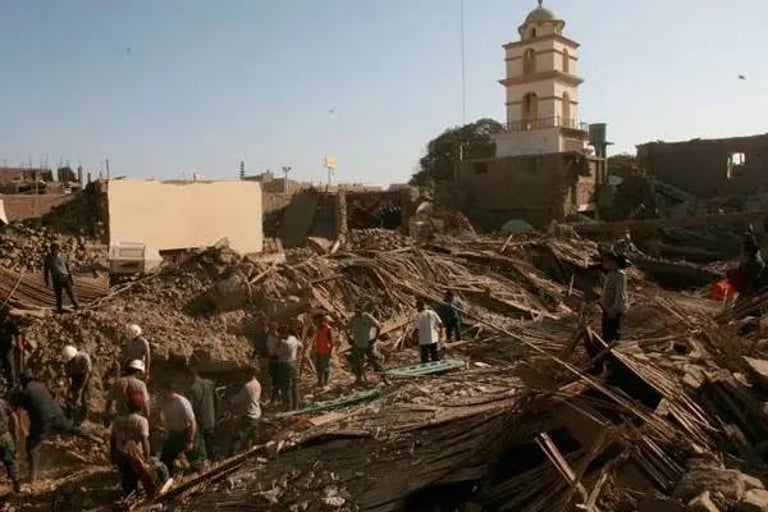
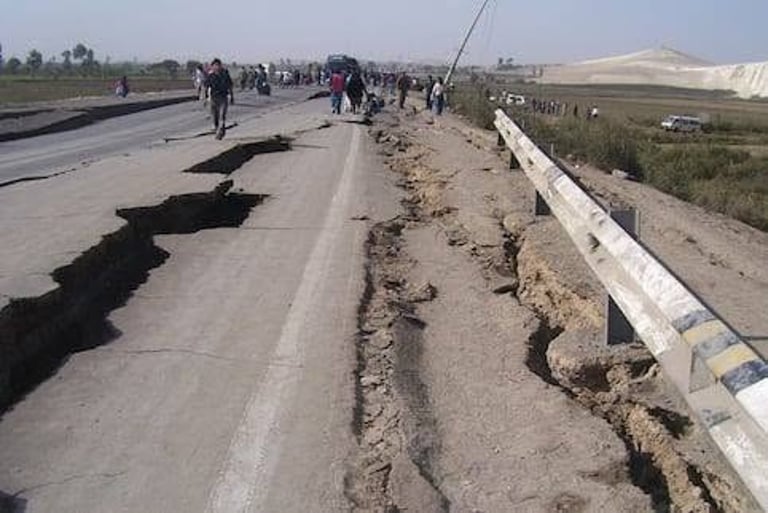
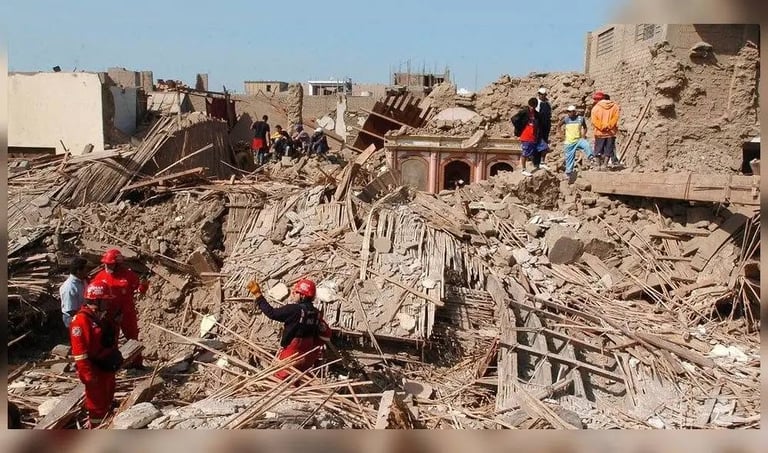
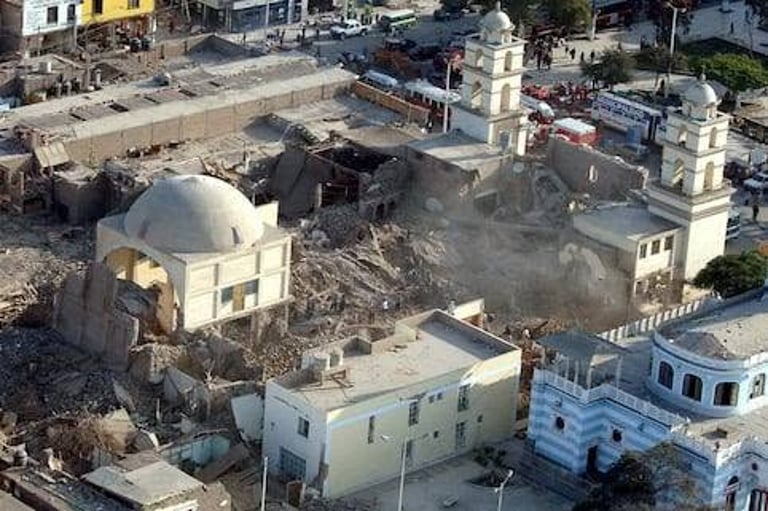
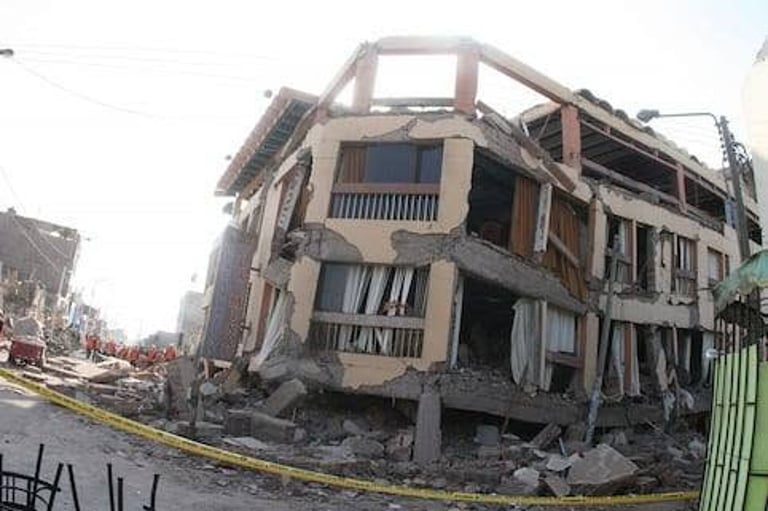
On a tangent: Remembering the Pisco 2007 EarthquakeDay 18: Travel day from Huacachina to Lima (hotel in Lima)
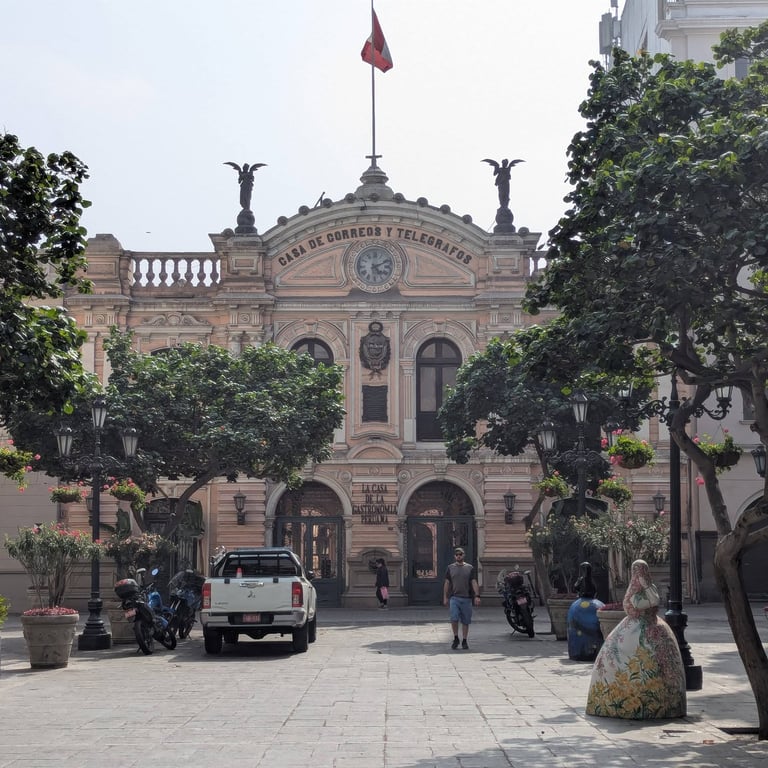
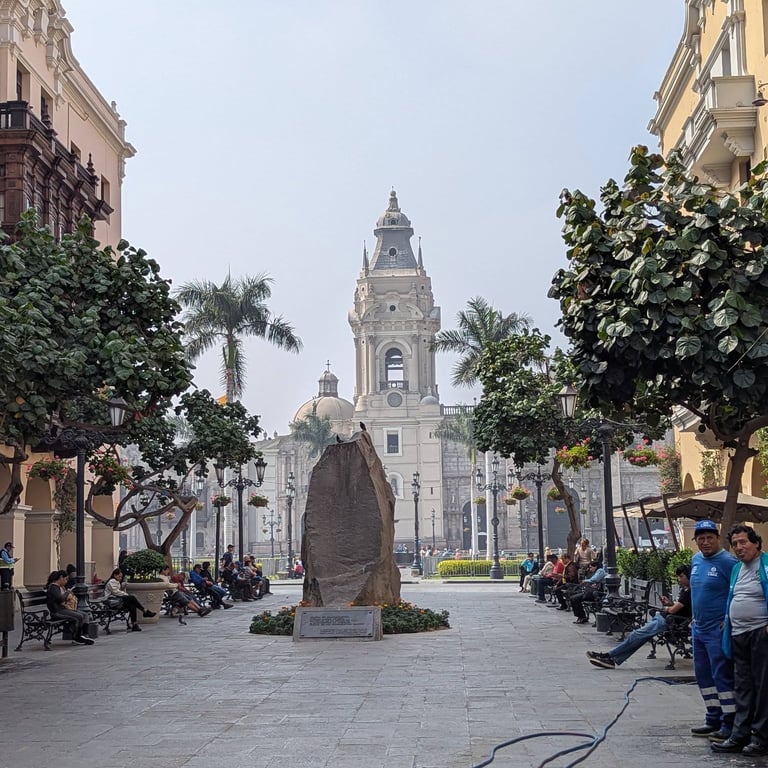
Day 19: Historic Centre of Lima, Catacombs of the San Francisco Convent and Miraflores Dentist (hotel in Lima)
Day 20: A day in Lima - Travel back from Lima to Madrid 19:40 in the evening.




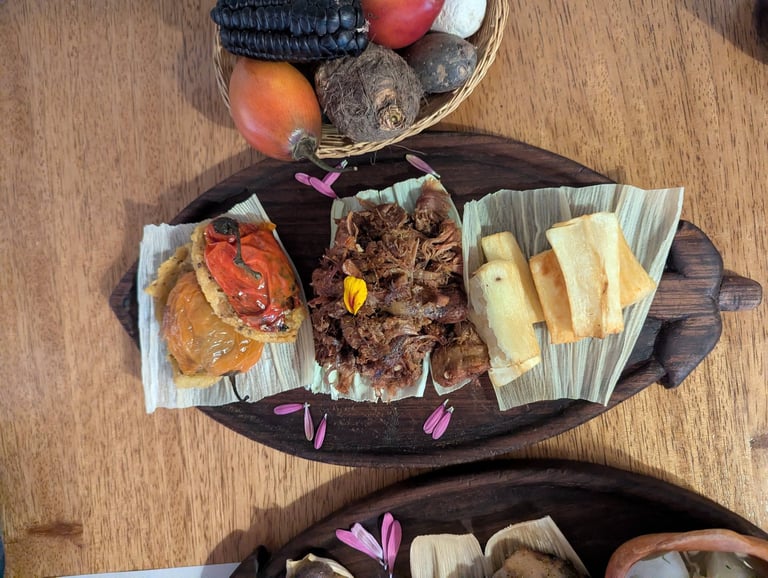
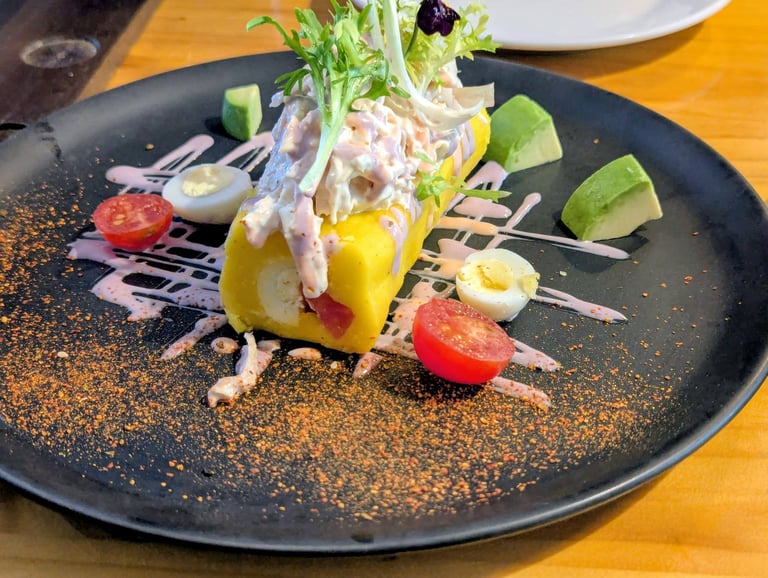



















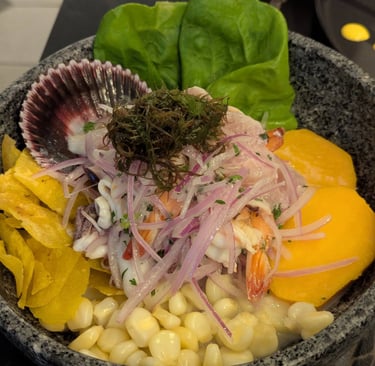
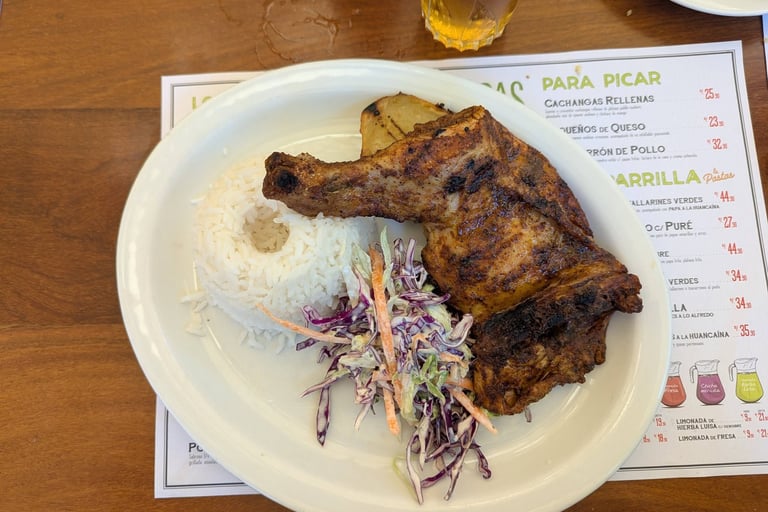
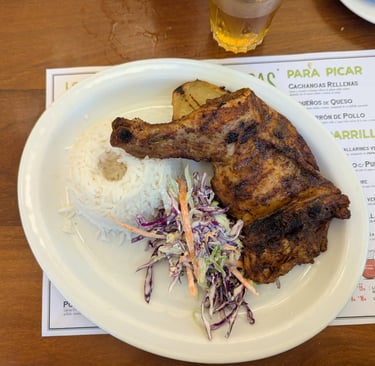
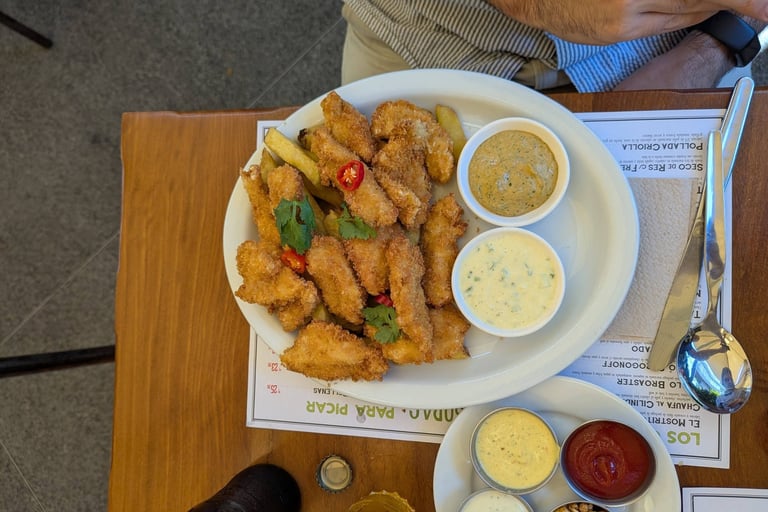
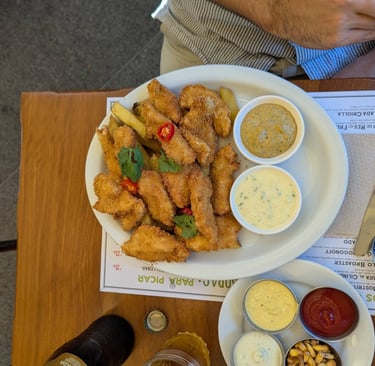
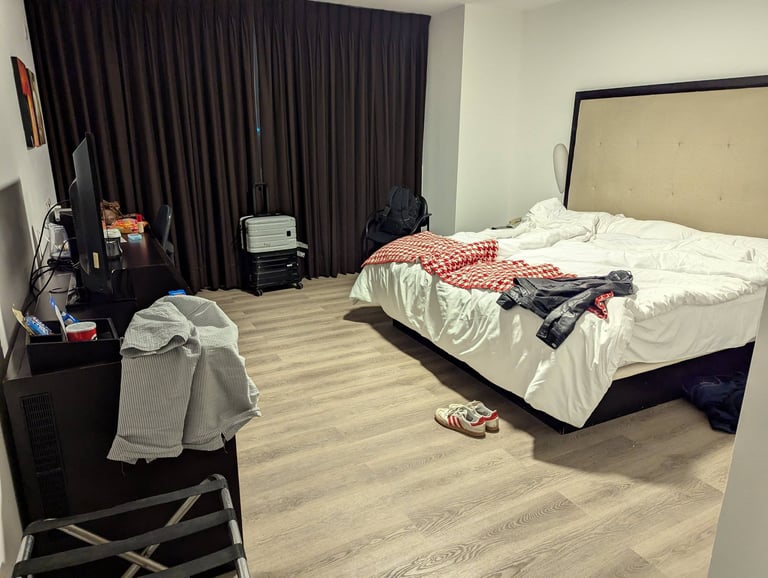
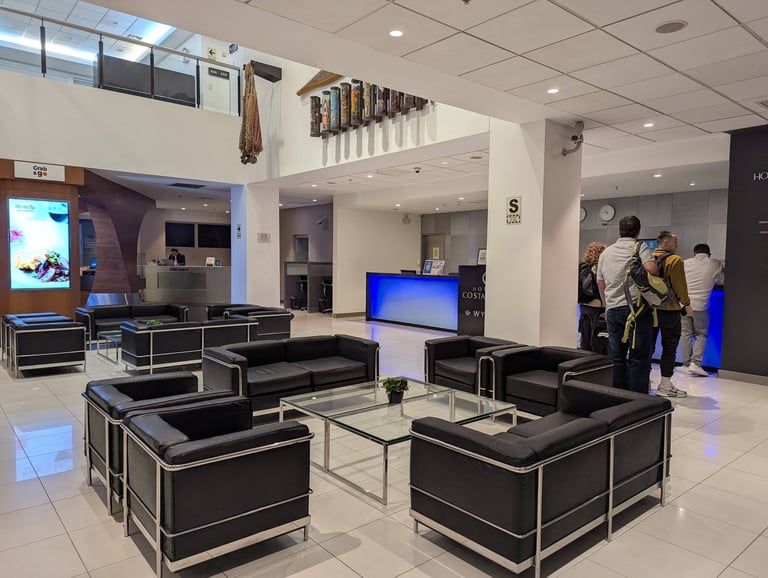
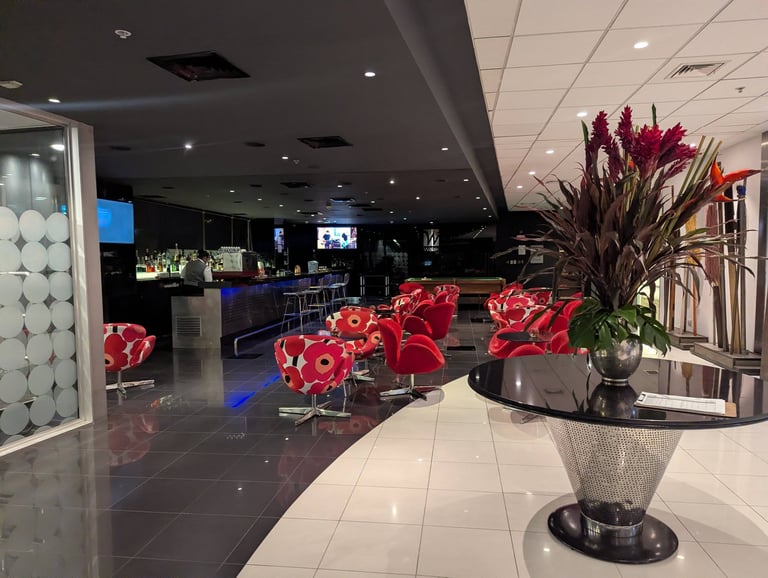
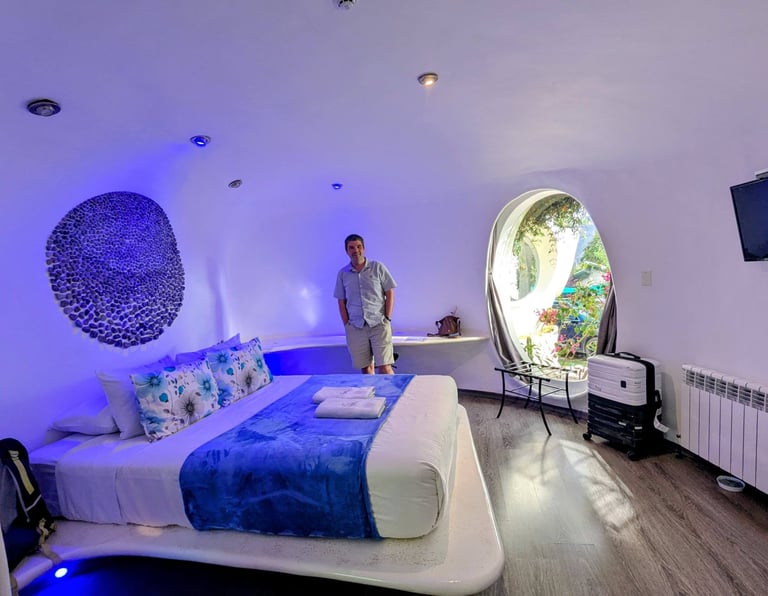
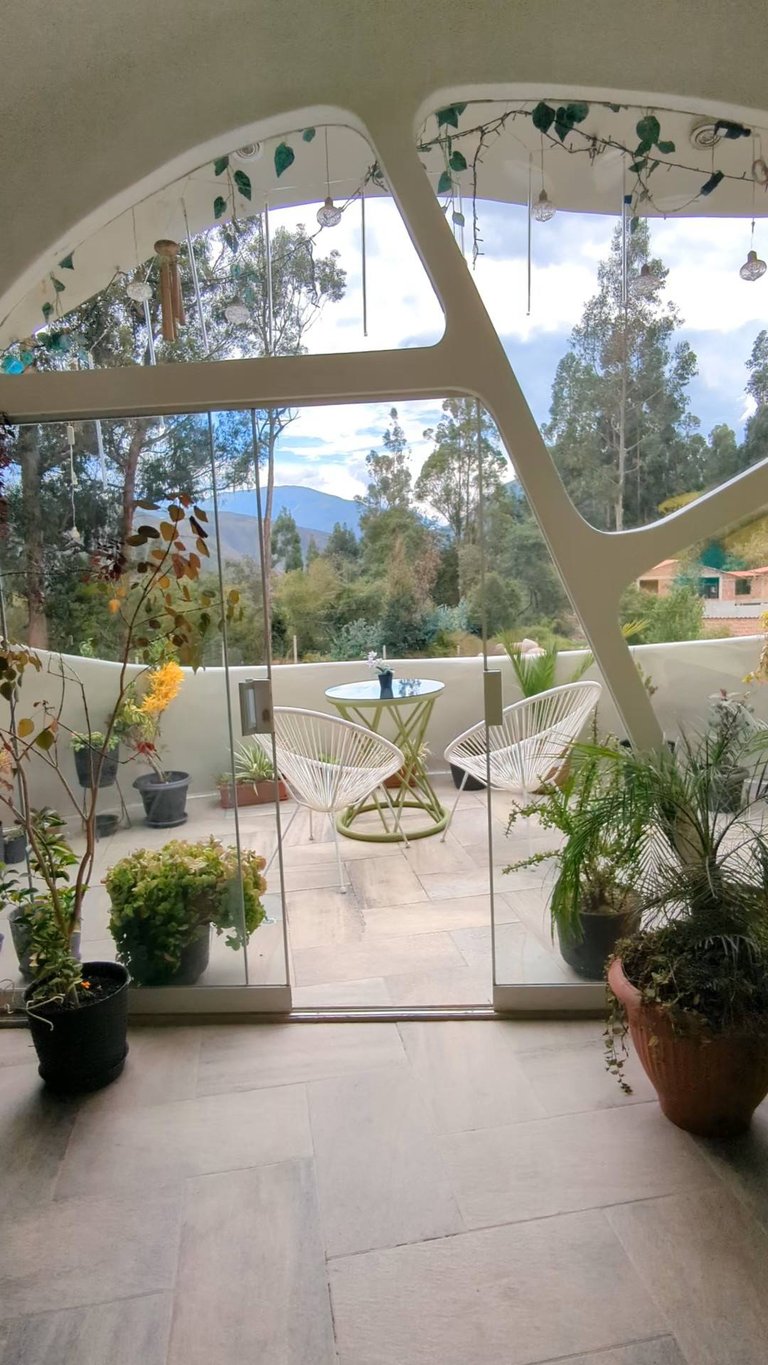
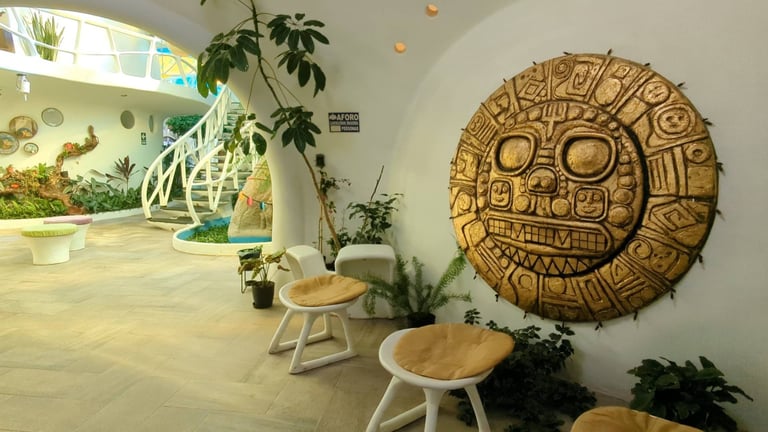
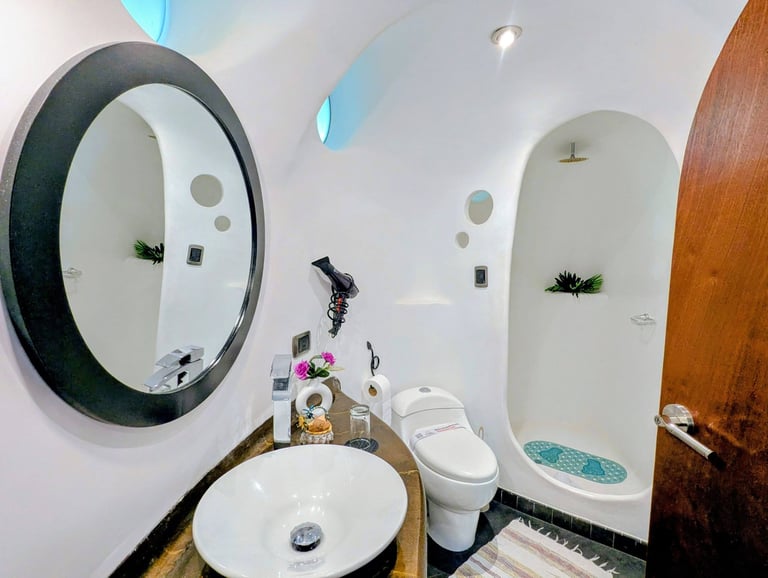
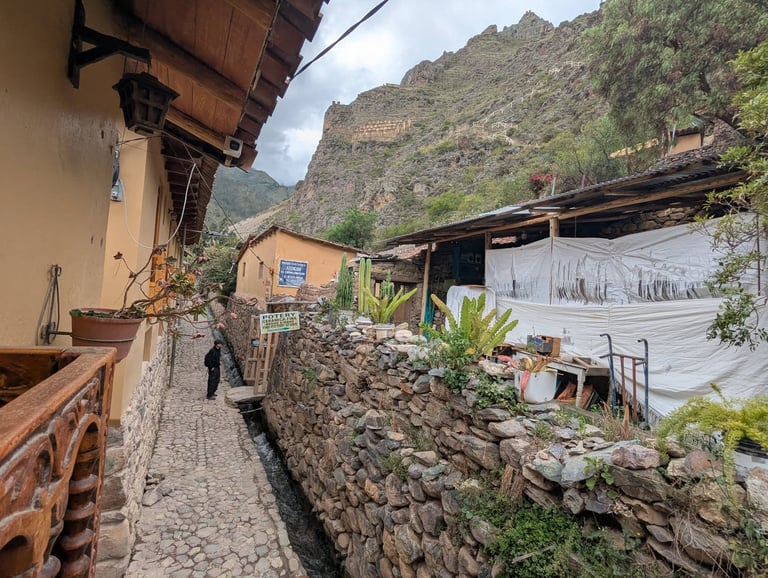
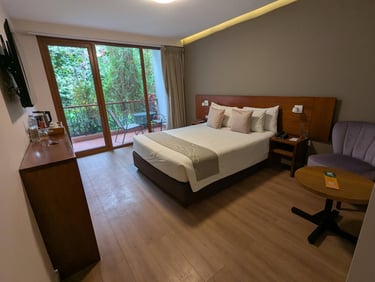
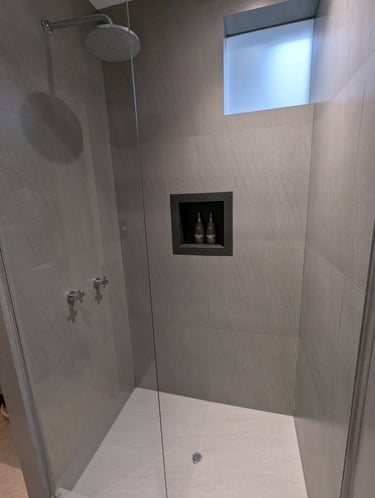
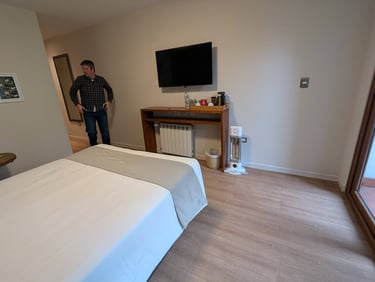


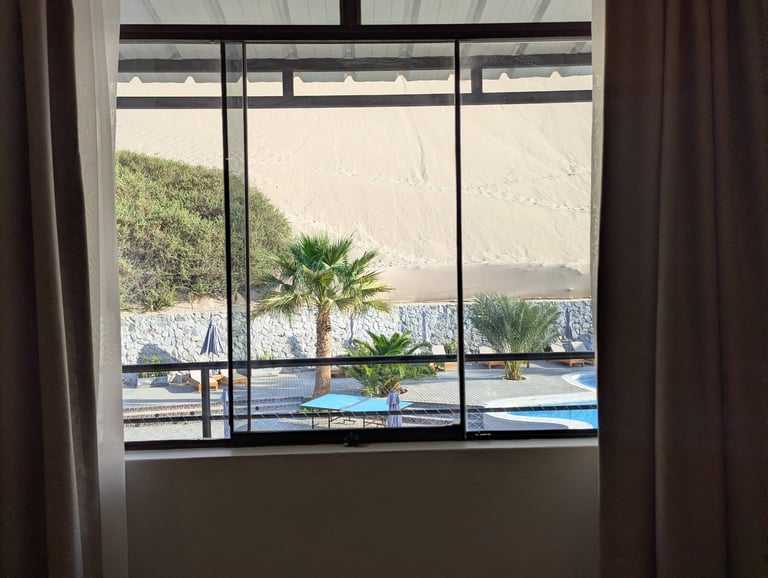
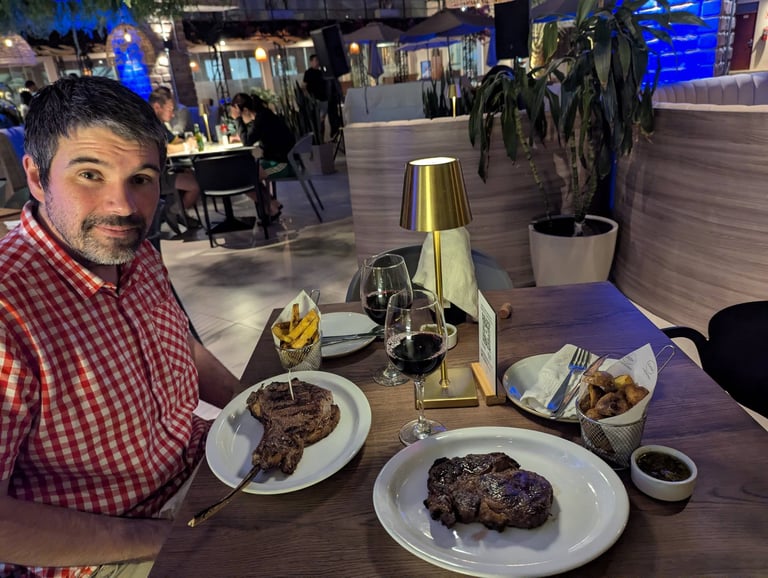
Day 1 & 2: Travel and arrival in Lima
Arriving in Lima
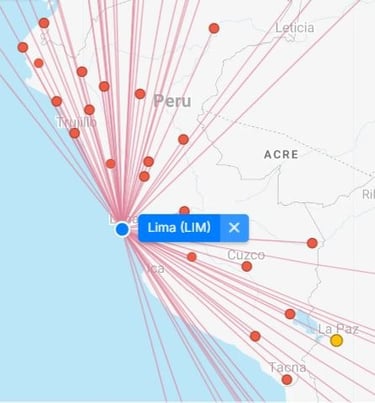
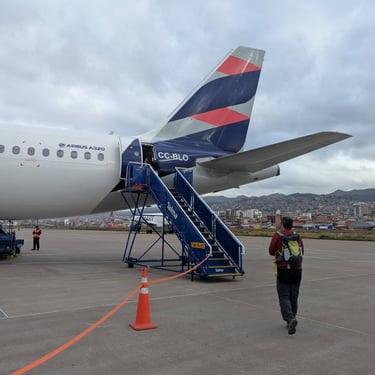
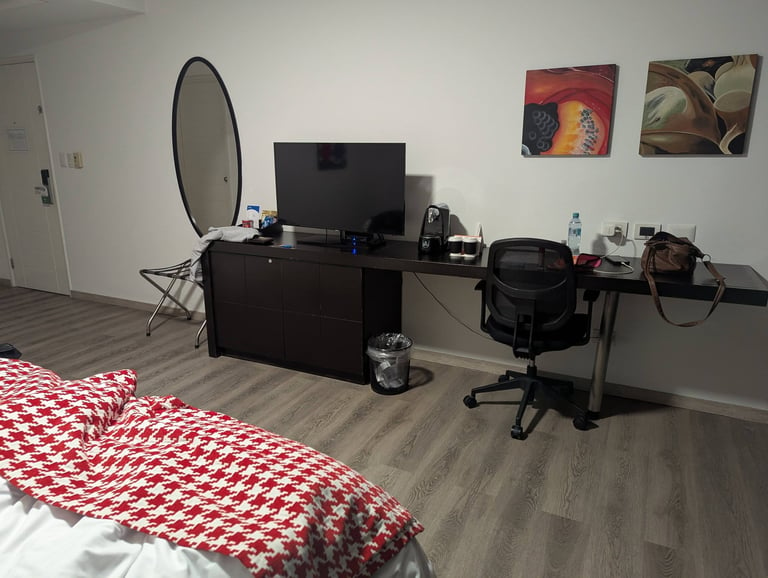
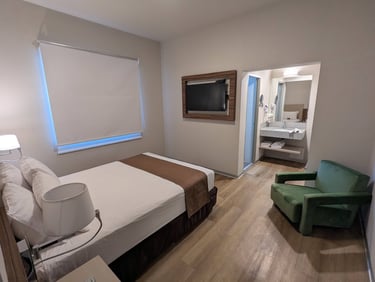
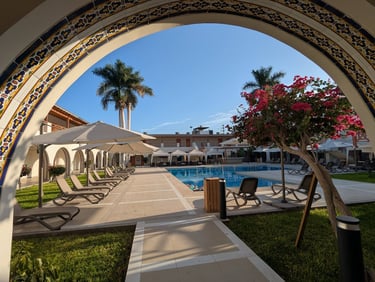
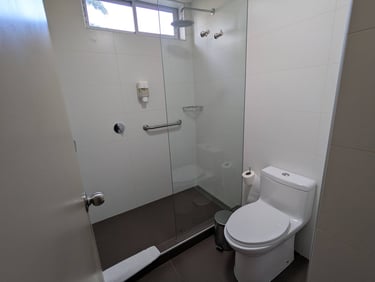
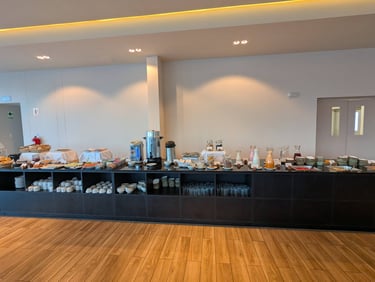
We arrived in Madrid on 16th April and then in Lima on Iberia from Madrid at 6pm on the 17th of April. However, we were due to travel to Cusco with LATAM immediately the next day and therefore only stayed at one of the airport hotels. We did however spend a day and a half in Lima at the end of our trip.
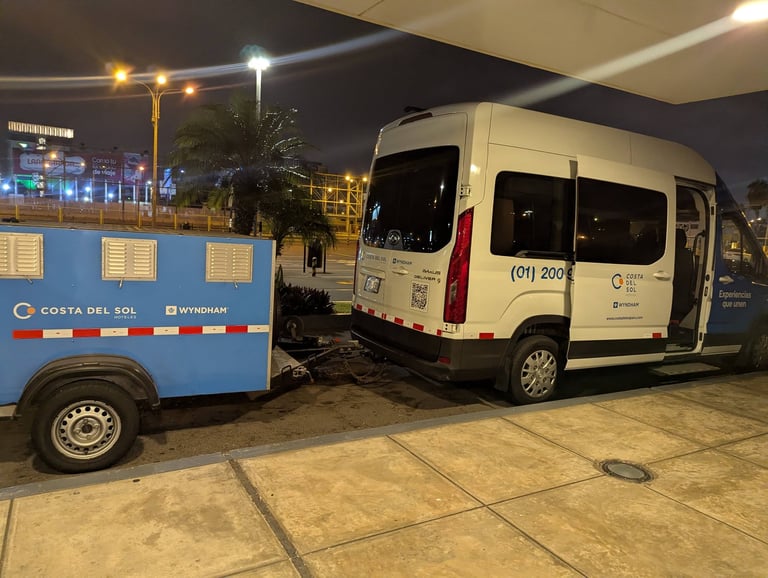
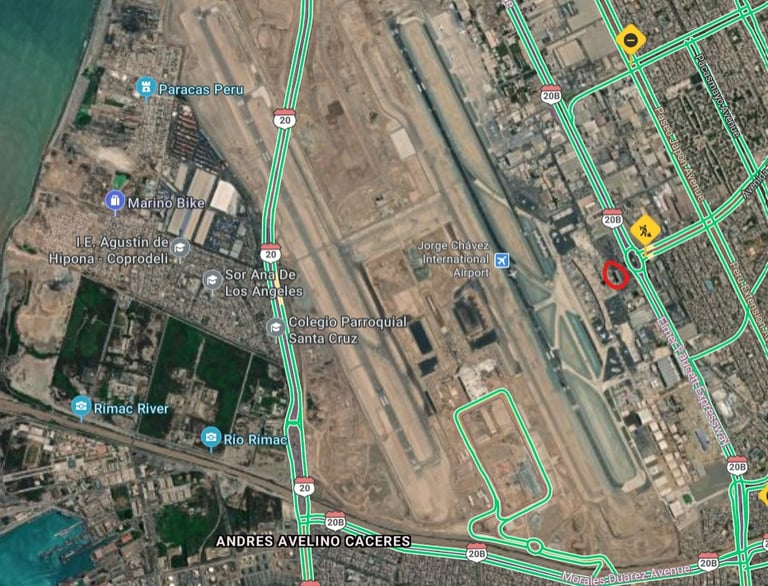
The Lima International Airport has been renewed and is now called New Jorge Chavez International Airport. It is located roughly in the same location as the old airport and looking at its location on a map, it can be quite confusing as it is not clear from Google Maps which building is the old one and which is the new one. Given that we were arriving so late and going to Cusco the next day by flight, it made sense to stay somewhere near the airport, so we booked ourselves a room at the Wyndham Costa del Sol, which appeared to be very close to the airport and had a free shuttle. The location ofthe hotel is where I have drawn a red circle, just to the east of the runway:
Day 3, 4 & 5 - The Sacred Valley
Getting there
I have been to Cusco twice before but never really spent any time in the Sacred Valley, which is why I wanted to make sure we went there this time. We flew into Cusco from Lima and then took a pre-booked Taxidatum from Cusco Airport straight to our epic Urubamba accommodation.
Sacred Valley Itinerary
Our Sacred Valley itinerary consisted of the following:
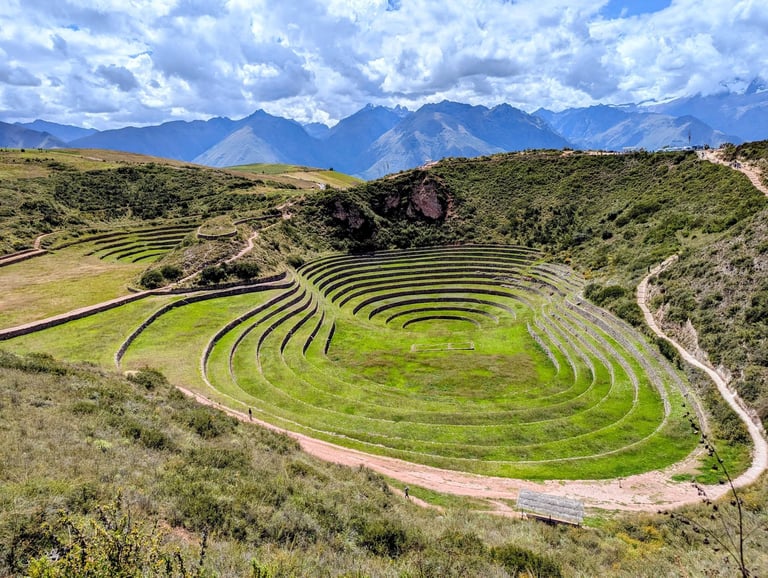
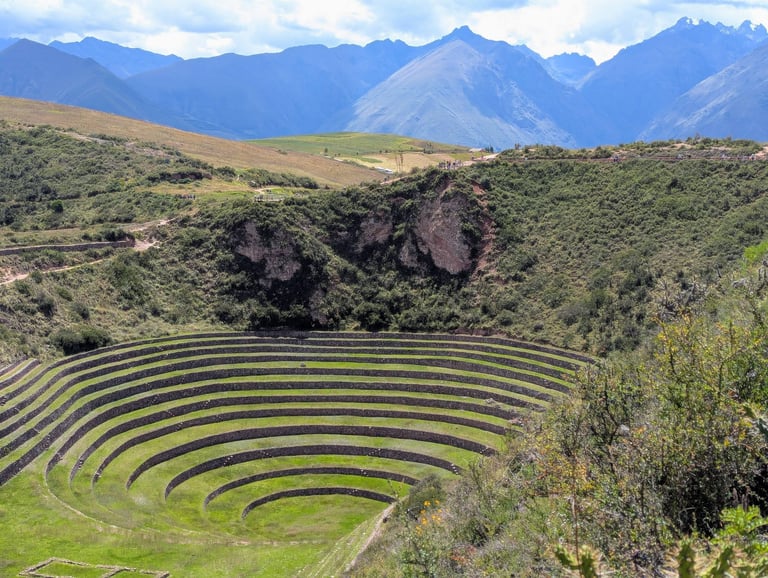
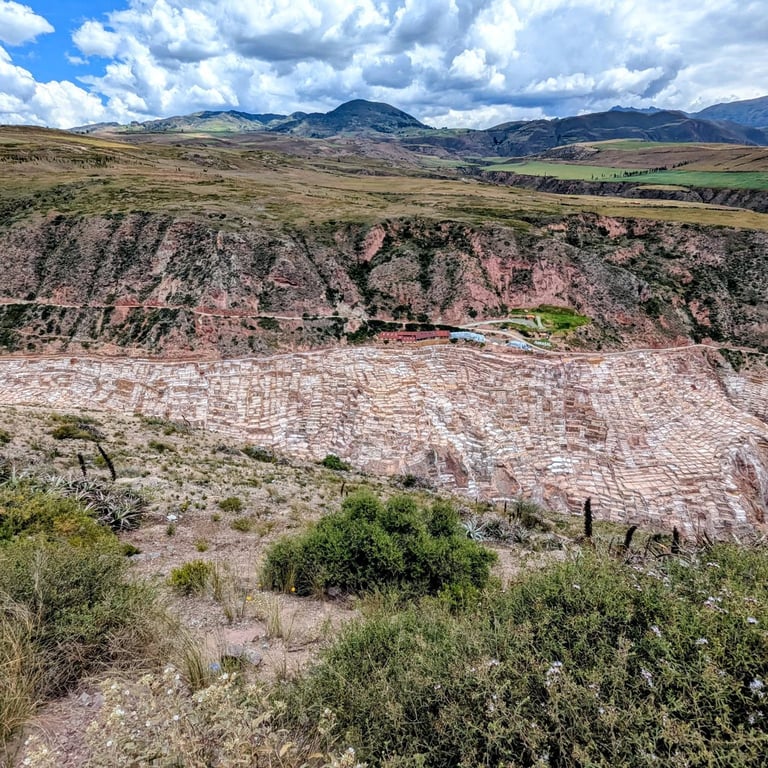
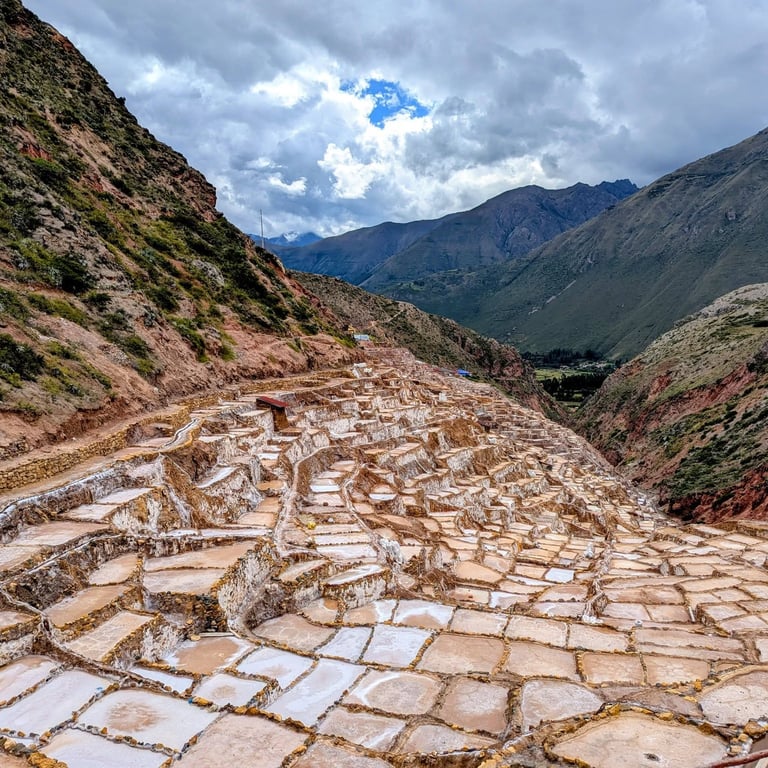
Day 3: Get to our Urubamba accommodation from Cusco airport via the sights of Chinchero, Moray and Maras (Taxidatum half-day trip), then just chill for the rest of the day.
Day 4: Arranged a taxi from our Urubamba accommodation to Ollantaytambo, see Ollantaytambo Inca Fortress and Pinkuylluna Incan Granaries, both in Ollantaytambo village within walking distance of our hotel.
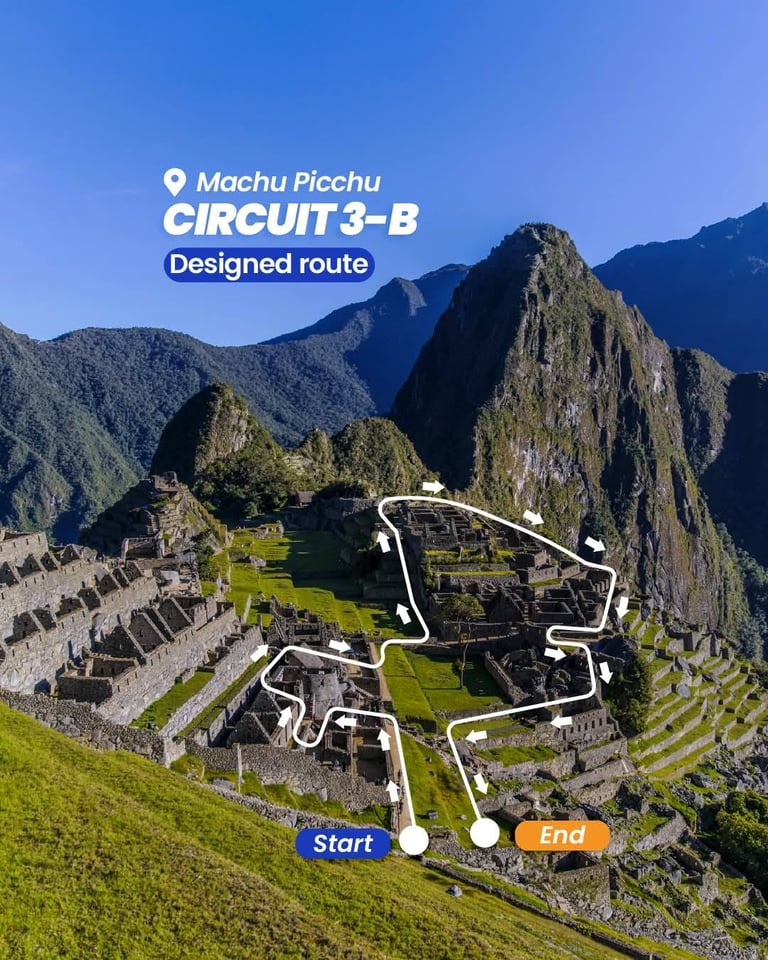
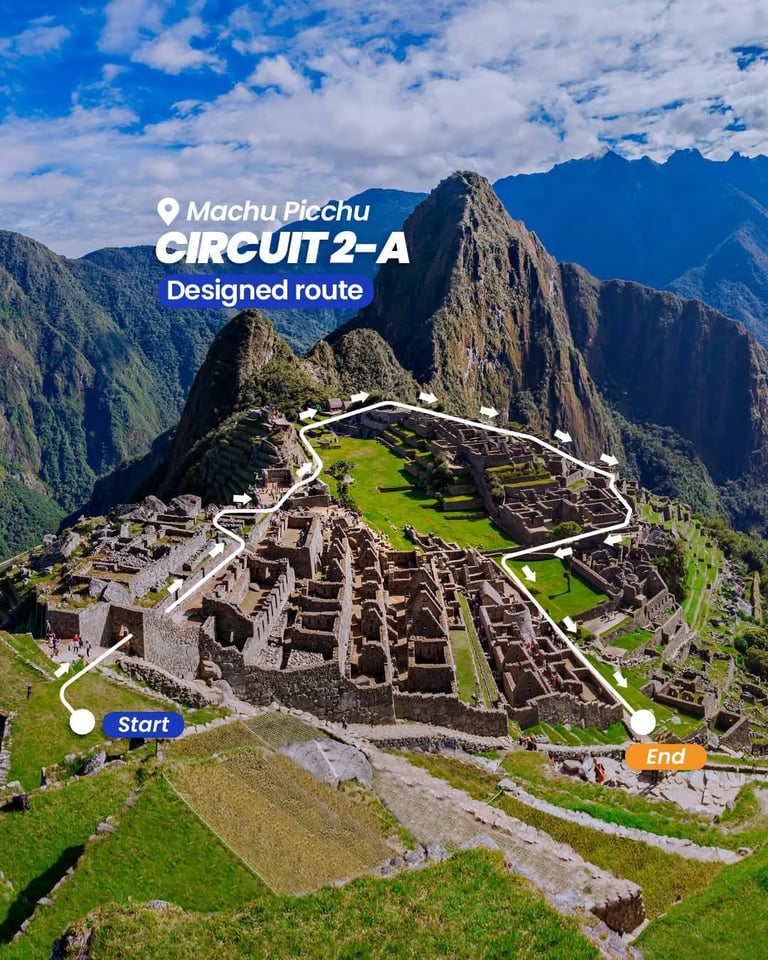
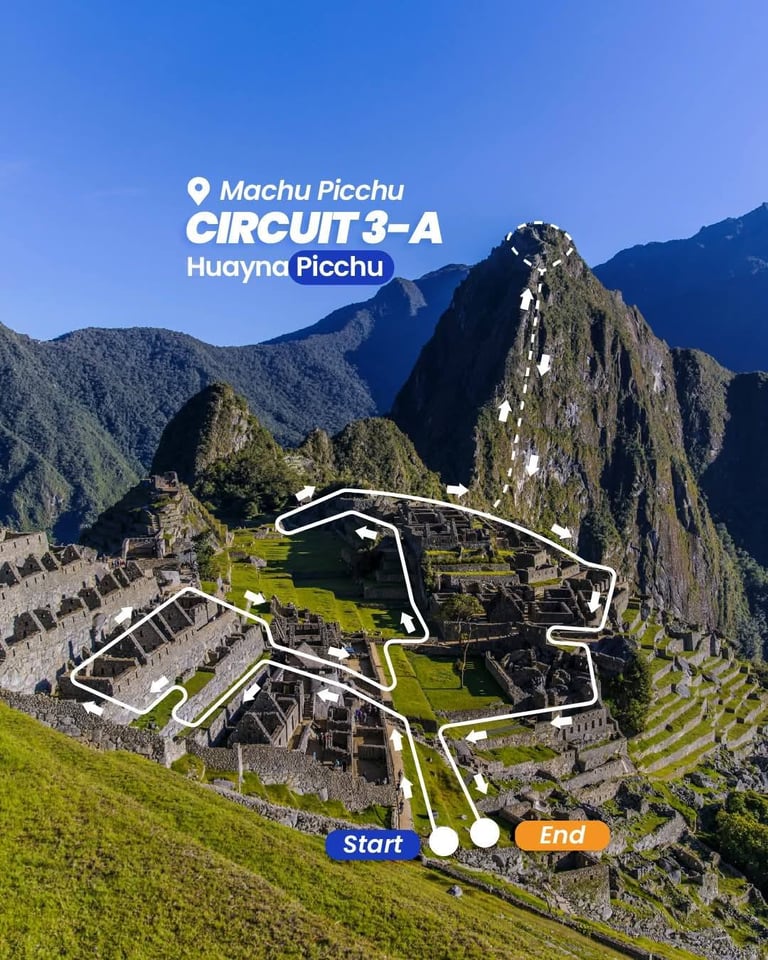
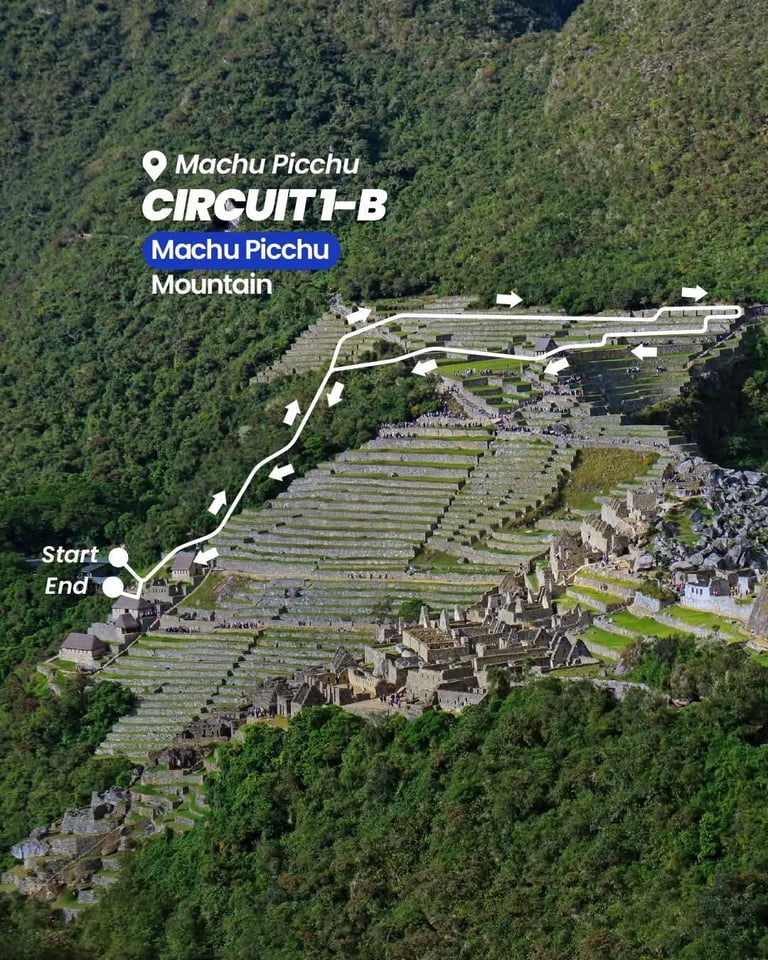
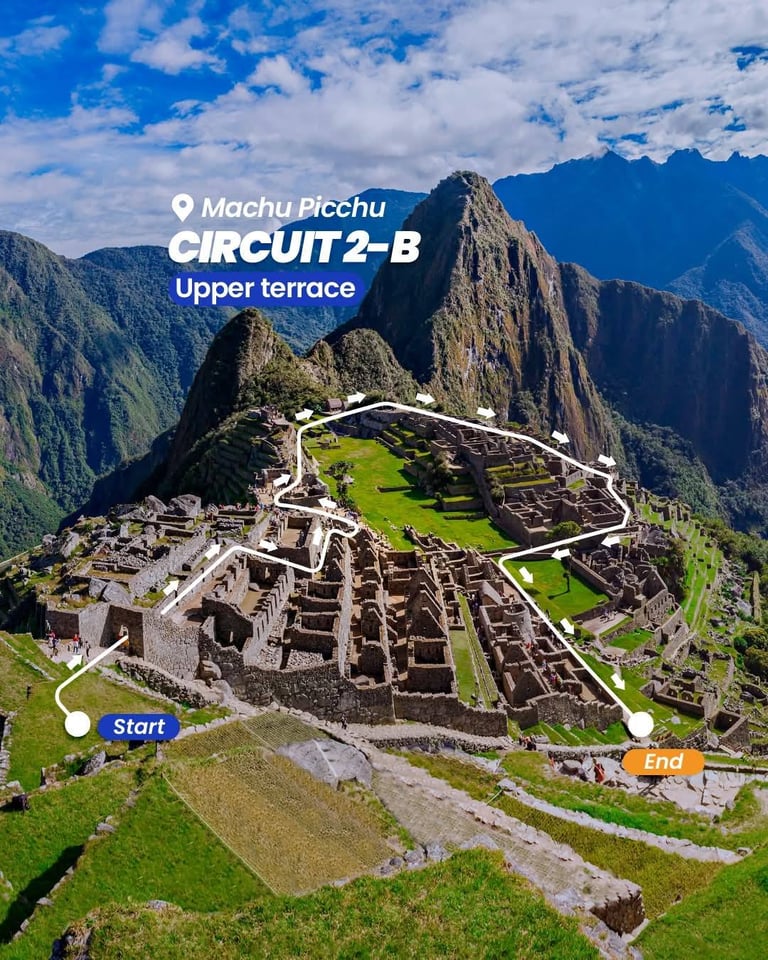
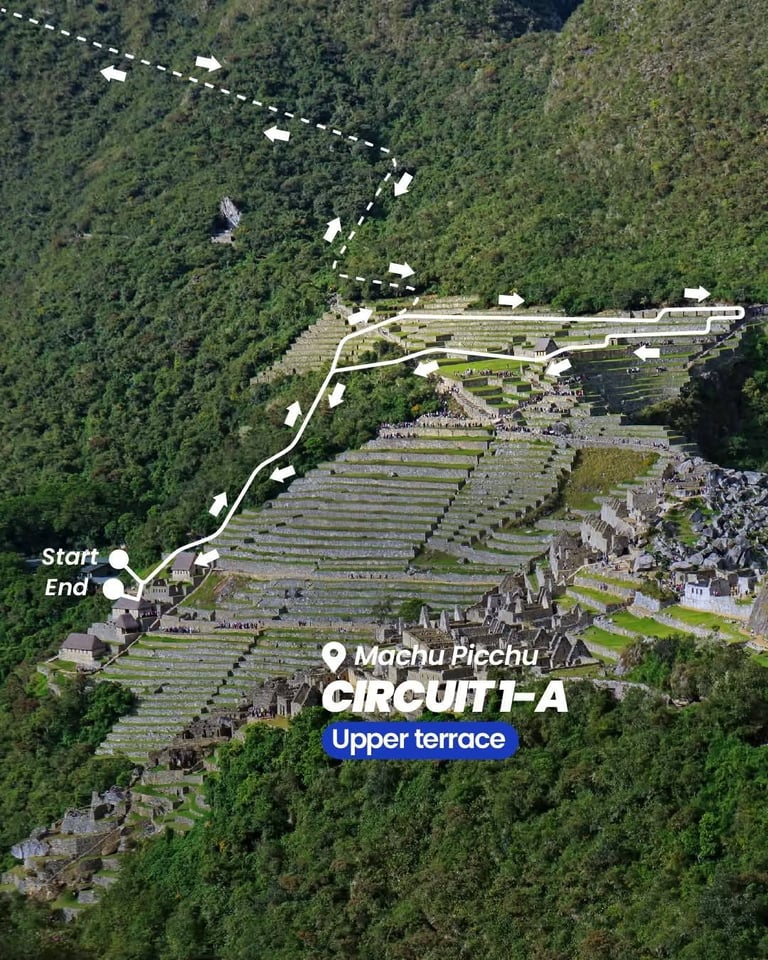
Day 5: Take the train from Ollantaytambo to Aguas Calientes and a bus to Machu Picchu. Did Circuit 2A (which we had booked back in January). Travelled back to Aguas Calientes, chilled out there for a bit, explored the town (it's in an exquisite setting) before taking the train back to Ollantaytambo in the evening.
I considered having us stay in Aguas Calientes as well, as when I was there the last time I just remember its surroundings being so extraordinarily beautiful. However, it made more sense to stay in Ollantaytambo for 2 nights, as this allowed us to just leave all of our stuff at the hotel while we went to visit Machu Picchu, not needing to move between accommodation or mess about with finding a place for our luggage.
The Sacred Valley Tour Alternative
If you have less time, or want more convenience, you can consider seeing the Sacred Valley by a tour from Cusco that would take you to Chichero, Moray, Maras, Ollantaytambo ruins and then drop you off at Ollantaytambo station, where you could either catch your onward train to Aguas Calientes in the evening, to be ready to take on Machu Picchu early the next day, or stay in Ollantaytambo for the night. The tour is very highly rated on GetYourGuide (4.8 stars out of 677 reviews at the time of writing) and only costs £28 GBP per person for the full 9 hour tour, which is not bad at all, given how much you see and for the sheer convenience.
Day 4 & 5 - Ollantaytambo
I had read so many positive reviews online about staying in Ollantaytambo, and a friend of mines who had recently been also re-iterated that I really should make sure we spend some time there, so I decided we would. I originally wanted to stay in Aguas Calientes, because I just remember seeing it back in 2007 and it looking soooooo pretty, that I wanted to stay there next time I was in Peru. For convenience sake, we stayed in Ollantaytambo 2 nights instead, rather than staying 1 in Urubamba, 1 in Ollantaytambo and 1 in Aguas Calientes. However, I wanted to make sure we had some time to walk around Aguas Calientes and soak up the atmosphere after seeing Machu Picchu, so I booked the later train out of there back to Ollantaytambo (though this did end up back-firing).
Getting there
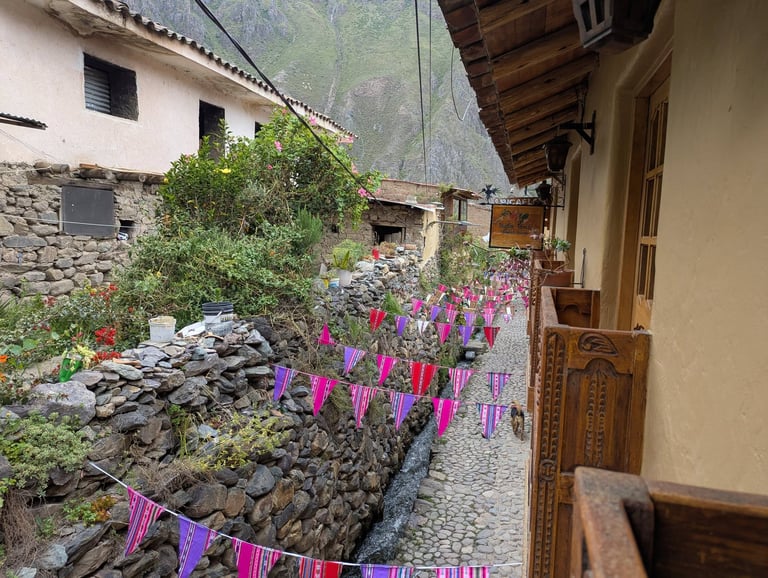
We travelled from Urubamba to Ollantaytambo in the morning, with a taxi ride arranged by our hotel in Urubamba. The 30min taxi ride cost us $17 USD, however it could only get us as far as the main square in Ollantaytambo, as the streets are so narrow that cars can't drive them. This is a consideration if you have a lot of luggage that isn't on your back (i.e. backpack), as the streets in the village are all cobble stone streets which suitcases do not like.
Where to stay
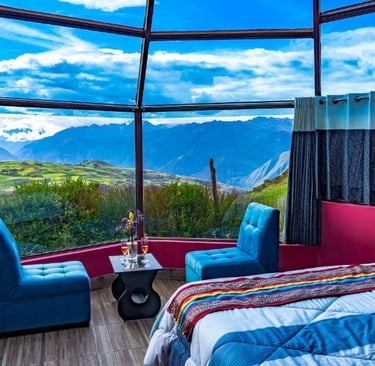
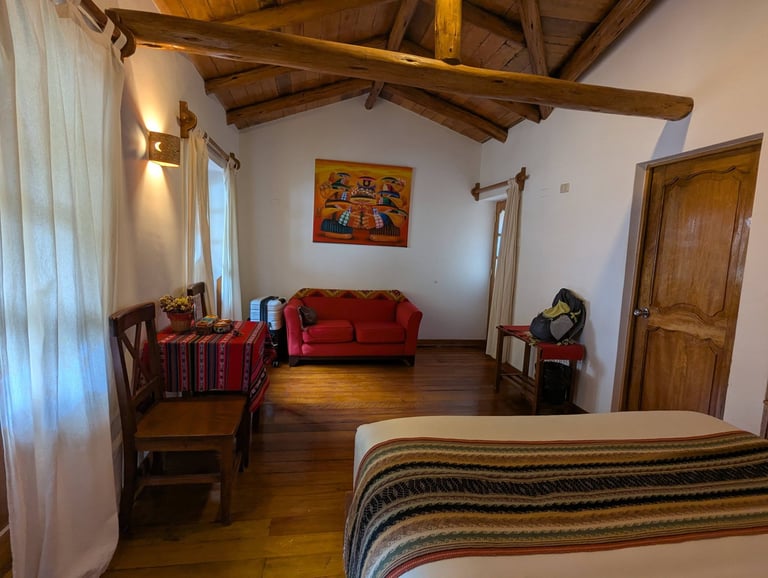
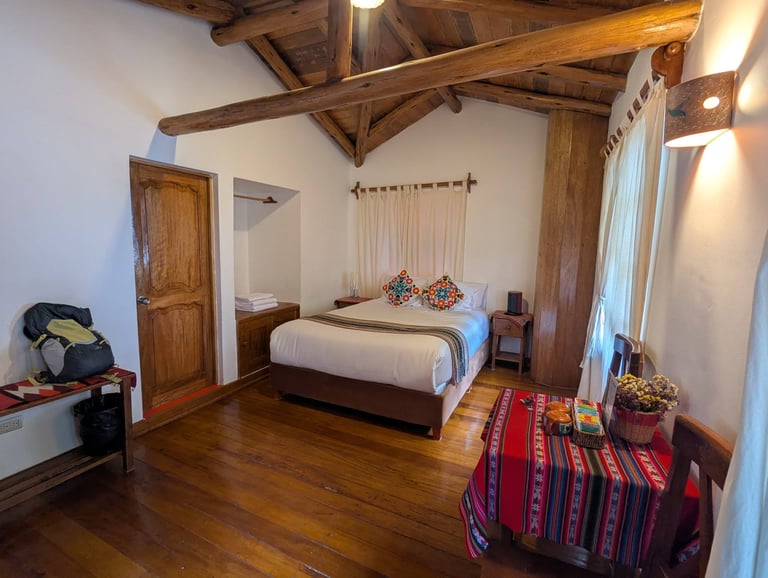
We ended up staying 2 nights at B&B Picaflor Tambo on Calle Lares in Ollantaytambo for 2 nights, costing us £56 per night. The host was so kind to let us check in early when we arrived in the morning - we didn't even have to ask for it! We just asked if we could store our luggage until it was time to check in. Our review of the place, as well as photographs, can be found in the section on "Places we stayed" on this page.
Where to eat
We only had food at one place in Ollantaytambo over the 2 nights we had there, which was at Chuncho on the main square, as we were in Aguas Calientes and Machu Picchu the entirety of the second day. Though we did grab a breakfast sandwich at the Inca Rail cafe before jumping on the train (they have tasty sandwiches that are surprisingly cheap for compared to the excessive price of the train ticket!). Our review of Chuncho can be found in the section on "Peruvian food" on this page.
Things to do
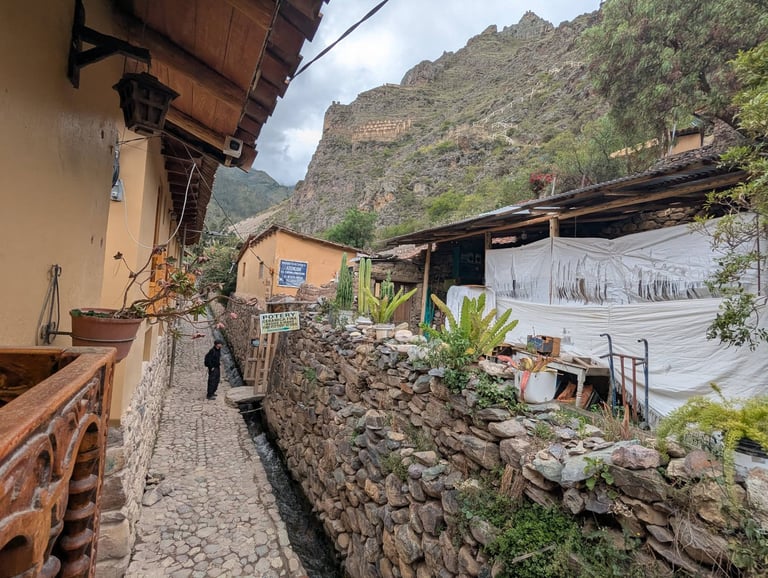
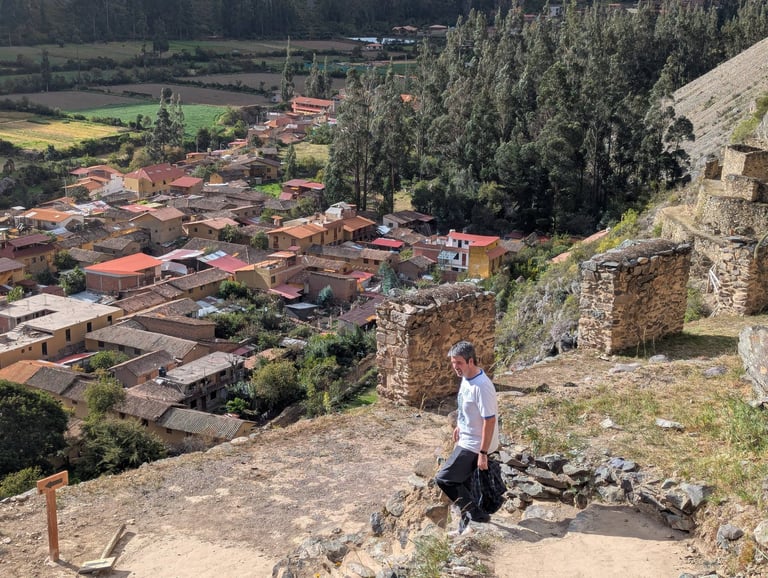
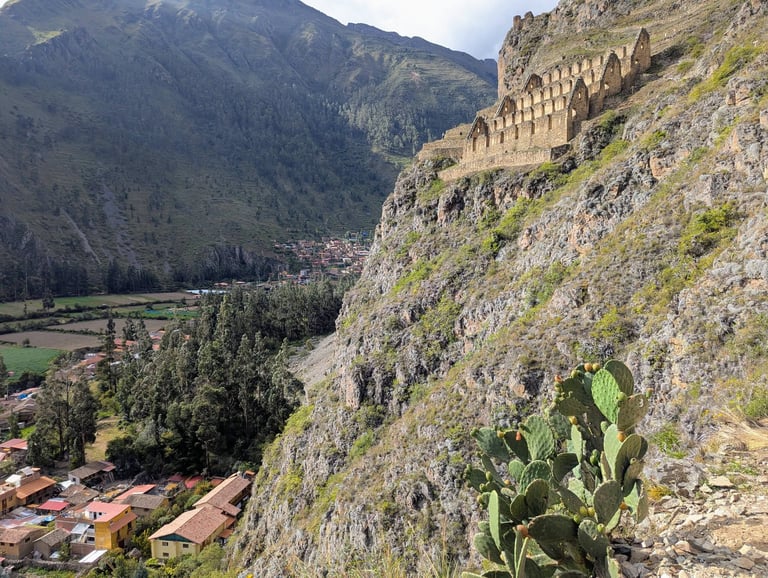
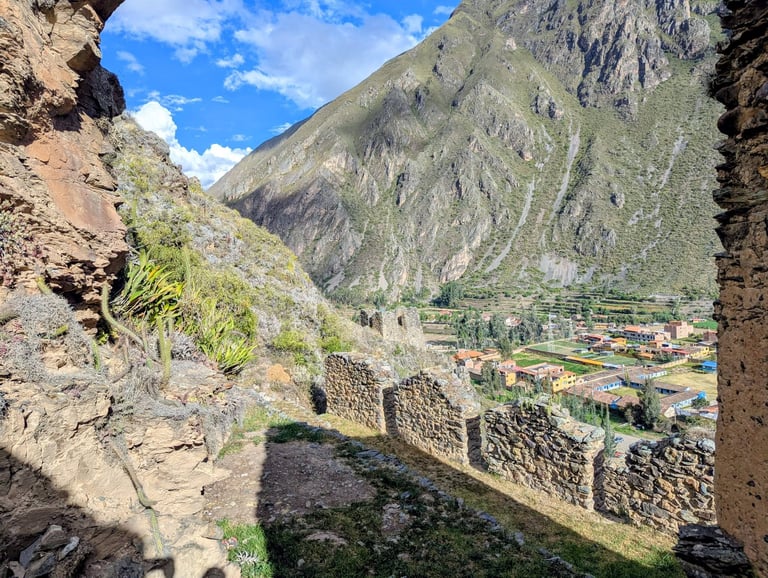
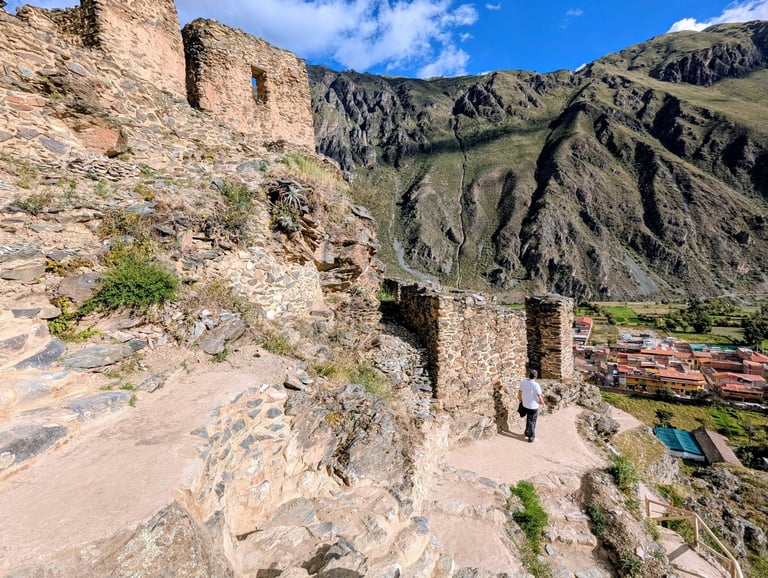
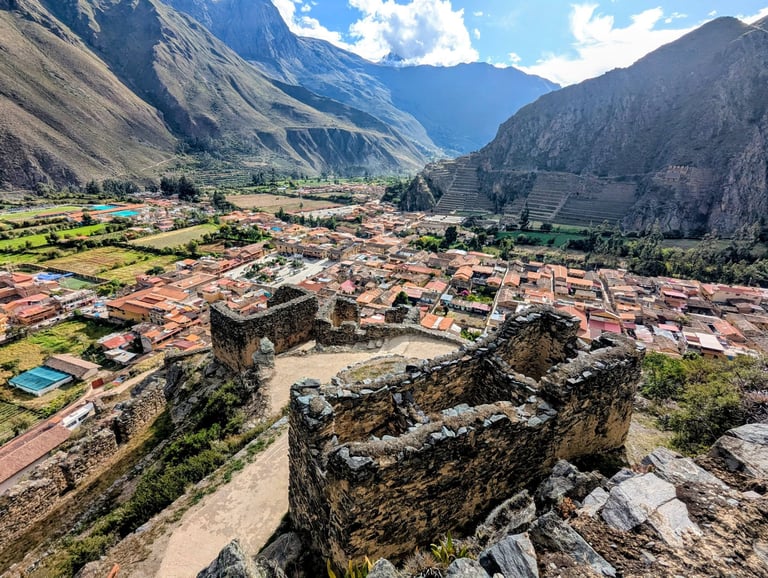
For a village this small, there's lots to do. We didn't have too much time here, so all we did was walk around the village, visit the Ollantaytambo Fortress and the Pinkuylluna Granaries, both of which are found on the slopes surrounding the village. Then a daytrip to Machu Picchu is an obvious one!
However, had we had more time in Ollantaytambo, we would have also done the walk to the Inti Punktu Sun Gate + Inka Quarries of Cachiqata, which is about 7 hours return journey from Ollantaytambo. We would have also done the highly-recommended trip to Pumamarka ruins, which is just a 15 minute taxi ride from town and then people like to walk the extremely scenic way back to Ollantaytambo, which takes about 2 hours.
There's lots of other walks too - if you have the time and are into walking, it's worth downloading the AllTrails and/or Wikiloc apps for routes!
Day 5 - Aguas Calientes
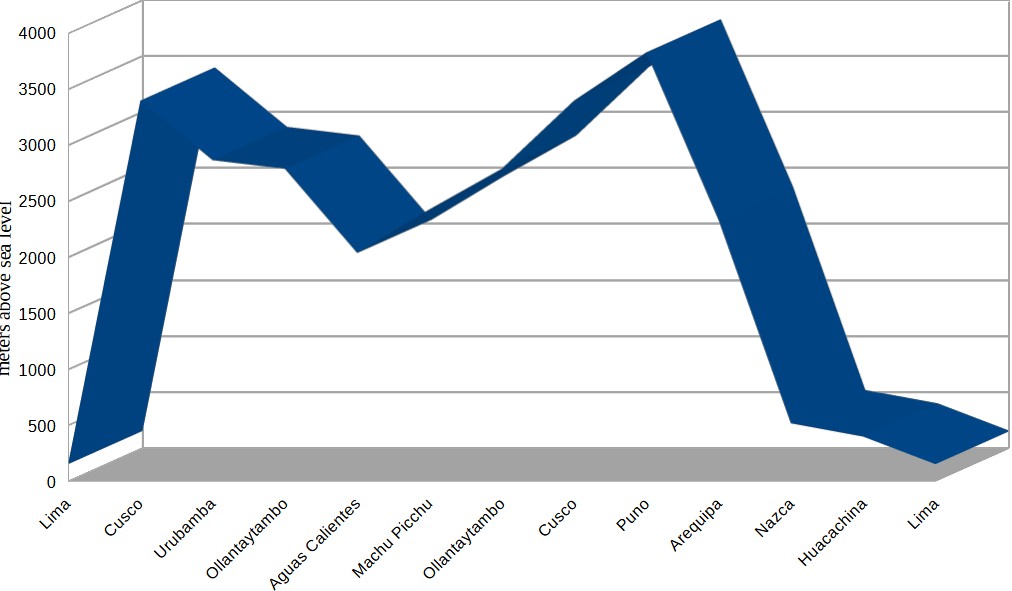
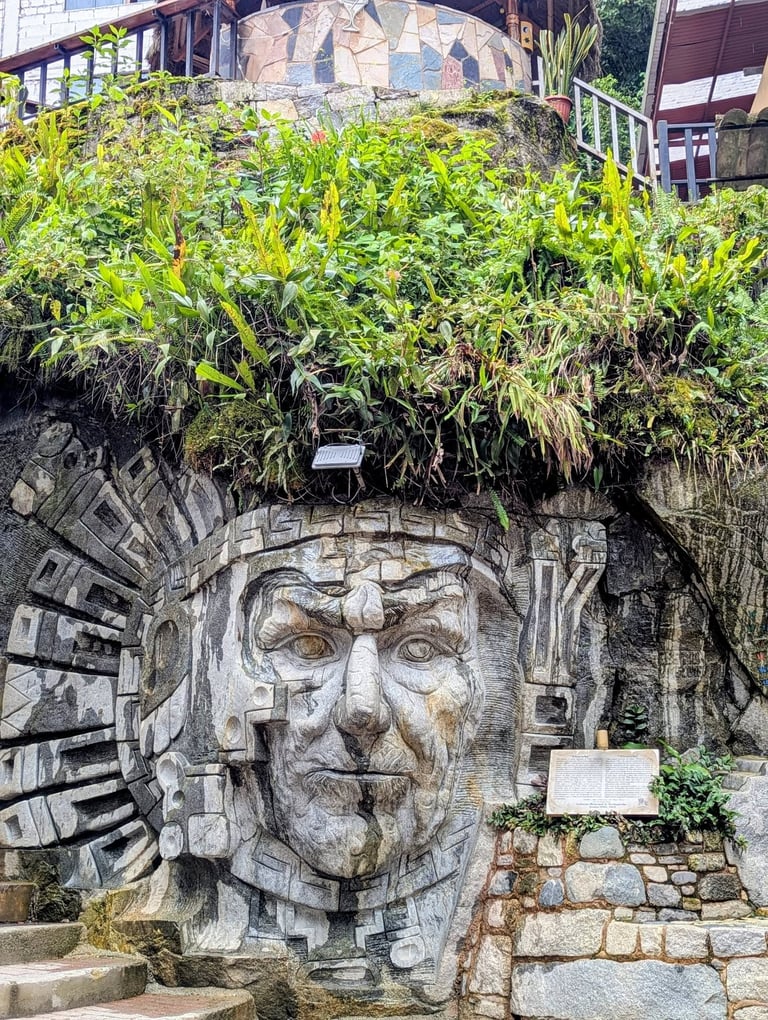
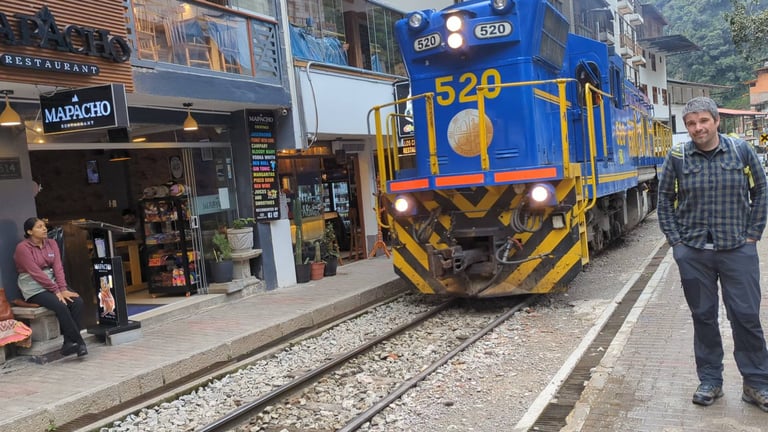
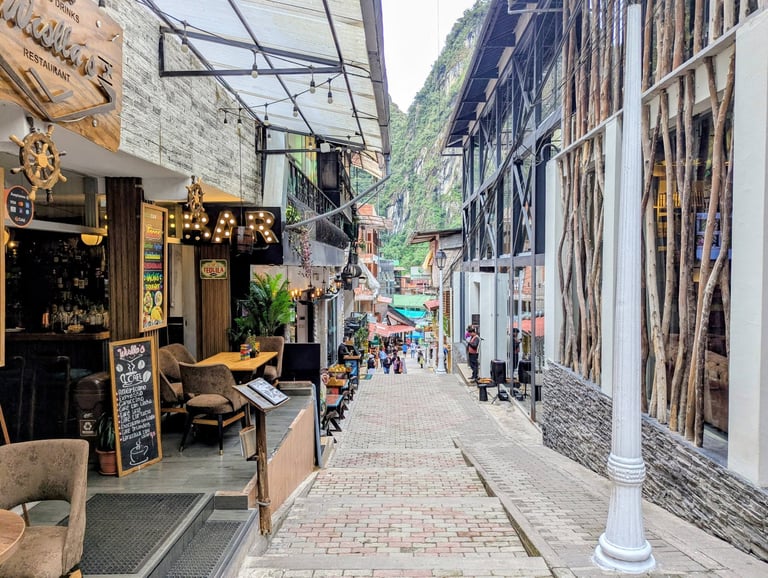
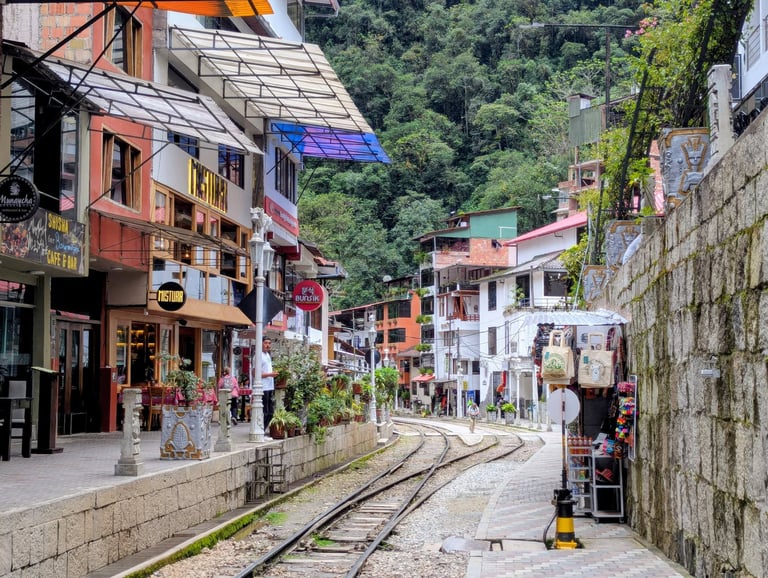
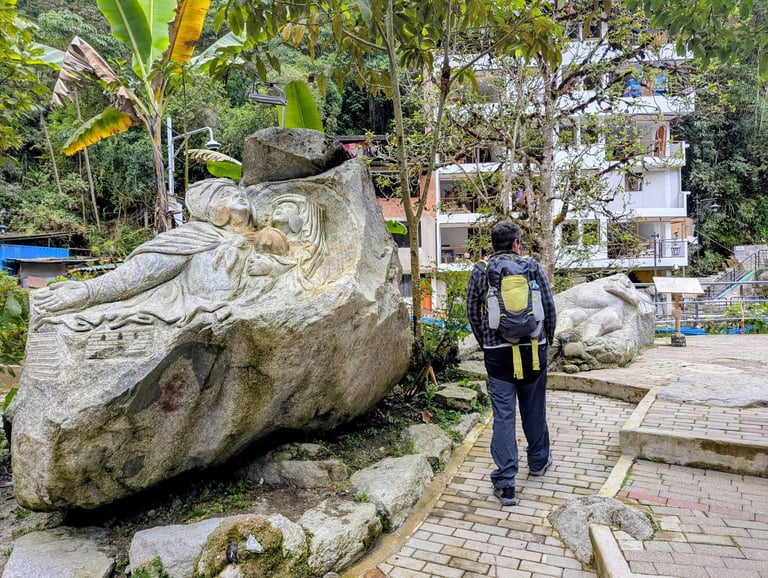
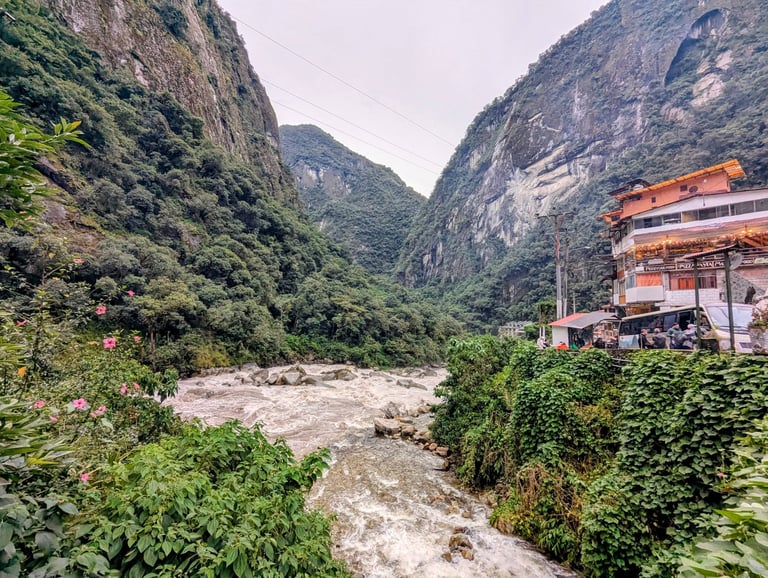
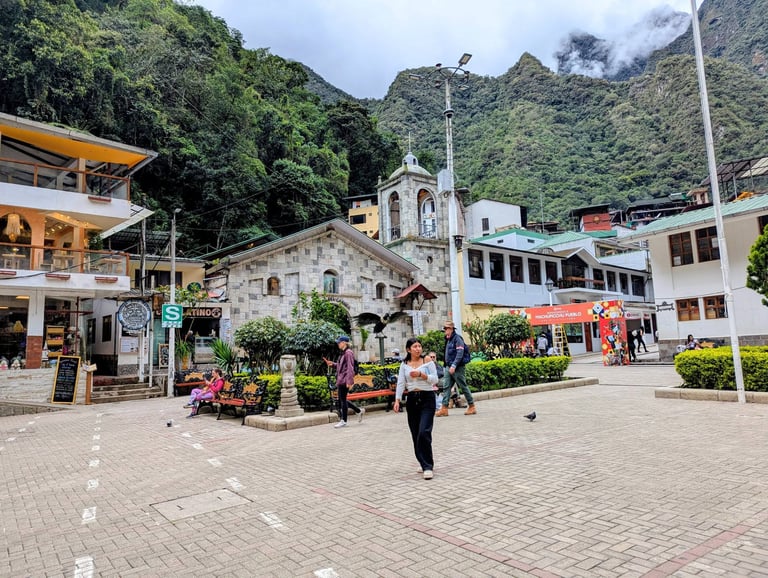
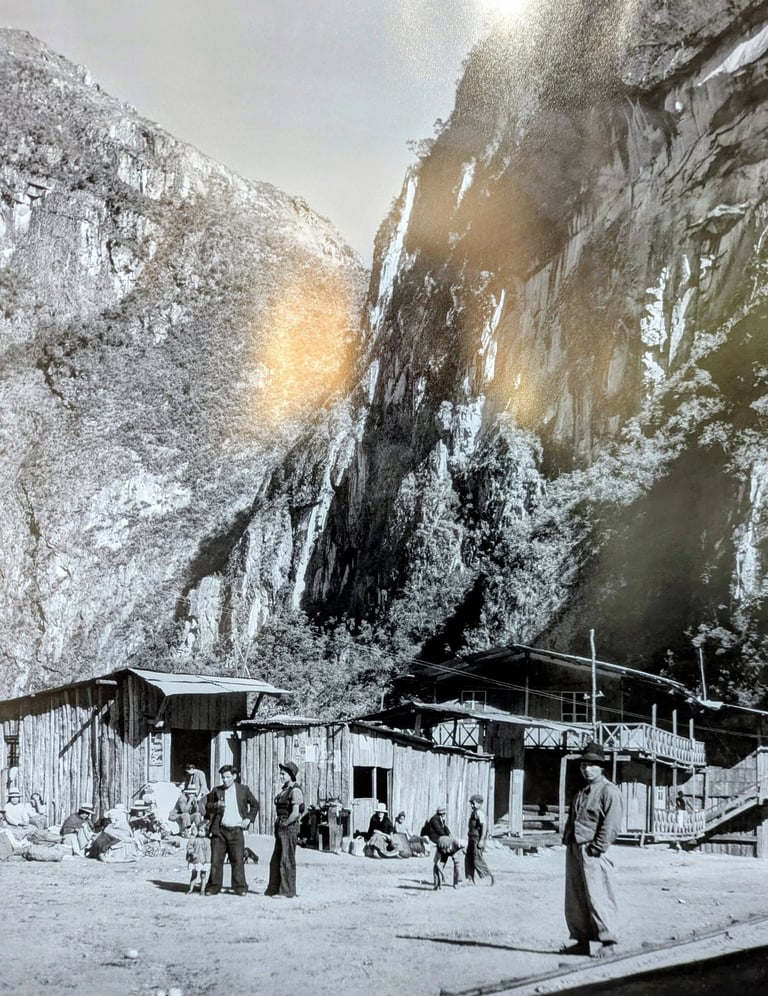
On our 3rd day at high altitude, we went to the town of Aguas Calientes, also called Machupicchu Pueblo (as it is the town at the base of Machu Picchu). It is a unique mountain town nestled in a dramatic cloud forest canyon at 2040m above sea level. What makes it truly special is its remote location - accessible only by train or multi-day trek - which gives it an almost mystical, cut-off-from-the-world atmosphere. The town is literally built into the steep mountainside along the rushing Urubamba River, with narrow streets, colorful buildings clinging to the slopes, and the constant sound of rushing water. The setting is incredibly lush and green, surrounded by towering peaks often shrouded in mist, creating an almost fairy-tale environment that feels worlds away from modern civilization.
Beyond its role as the Machu Picchu gateway, which was the whole reason why we were there, Aguas Calientes offers several worthwhile activities. The town's namesake hot springs (aguas calientes means "hot waters") provide a perfect way to soothe tired muscles after hiking, though they're quite basic, often crowded and I personally question the hygene status of the waters. The colorful Mercado de Artesanías offers local crafts and souvenirs, but the market is pretty massive and you can easily lose an hour walking around looking at pretty souvenirs to take home. Short distance outside of town, you can visit a "butter fly zoo" called Mariposario de Machu Picchu and a short distance further along, there's the Manuel Chávez Ballón Museum , which provides context about Machu Picchu's discovery and archaeology. The town also serves as a base for exploring the surrounding cloud forest ecosystem, which is incredibly biodiverse with orchids, hummingbirds and other exotic wildlife.
Many visitors, such as ourselves, enjoy simply wandering the atmospheric streets, sampling local cuisine at one of the many restaurants, or relaxing with a coffee while watching the mist roll through the mountains. I also ready that the evening atmosphere is particularly magical when day-trippers have departed and the town takes on a quieter, more intimate character with locals and overnight visitors sharing the space.
Getting to Aguas Calientes
The only way to get to Aguas Calientes is by train. The most common and practical route from Urubamba to Aguas Calientes involves taking a taxi or bus from Urubamba to Ollantaytambo train station, then boarding the train to Aguas Calientes. The drive from Cusco to Ollantaytambo takes about 30-45 minutes through the Sacred Valley (unless you turn the transfer into a half a day tour as we did), and from there you'll catch one of the tourist trains operated by PeruRail or Inca Rail. The scenic train journey takes approximately 1.5-2 hours as it winds through dramatic mountain landscapes and cloud forest.
There are different classes of train service available, from the basic Expedition/Voyager trains to the more luxurious Vistadome and Sacred Valley trains, with prices varying significantly. The Inca Rail's Voyager cost $57 USD for the first train of the day at 06:40am. Peru Rail's first journey of the day is at 05:05am arriving in Aguas Calientes at 06:37am costing $60 USD but Machu Picchu opens at 06:00am. It's essential to book train tickets well in advance, especially during peak season (May-September), as they often sell out. The entire journey from Urubamba to Aguas Calientes typically takes 2.5-3 hours total, and most travelers stay overnight in Aguas Calientes to catch the early morning bus or hike up to Machu Picchu the next day.
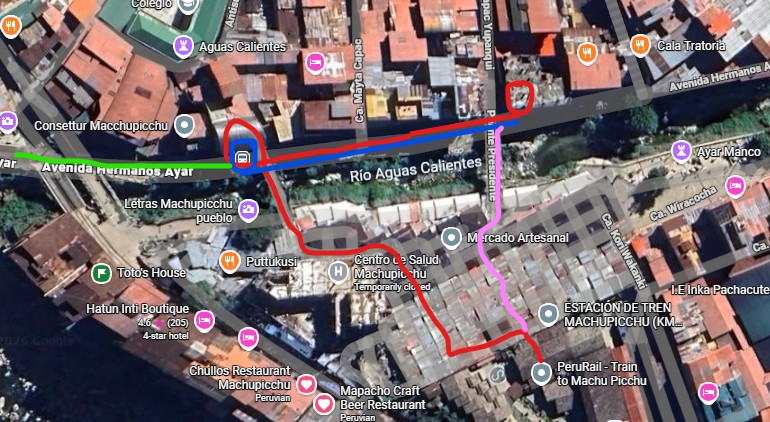
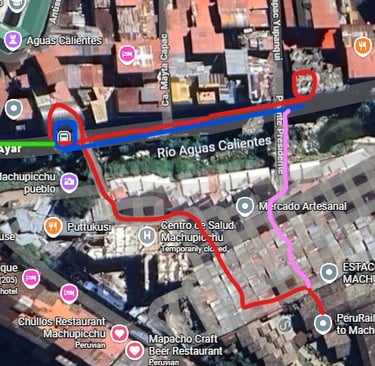
Both PeruRail or Inca Rail arrive at the same station, and as you come out of the station, you're thrown immediately into a maze of "Mercado Artesanal" or handicraft market. We tried to follow the signs to get out, which landed us at Puente Sinchi Roca bridge, which is higher than the town but there's a staircase to take you down to ground level (route shown in red in map below). We saw no signs as to where we were supposed to go to buy the bus tickets, so I asked a local and he pointed us east in the direction of Consettur Bus Ticket office just north of Puente Presidente Bridge. We had to wade through the crowds of people queueing to get on the bus to take them to Machu Picchu. We walked to the ticket office where there was no wait for tickets, purchased them with a card and then walked back west (blue line on map below) to take the bus (shown in blue circle). Even though the queue was huge, it moved incredibly quickly. We were then on our way to Machu Picchu shortly (green line). It might be possible to take a shorter route from the train station to the bus ticket office (pink line below) but I haven't ground-proofed it.

We opted for the Train + Bus option to get to Machu Picchu due to both time constraints and the fact that Thru had already done the Inca Trail before, but if you're looking at doing the Inca Trail, here are a few options:
Day 5 - Machu Picchu
We travelled to Machu Picchu this time with a train + bus combo; from Ollantaytambo to Aguas Calientes today with the Inca Rail train, then on a bus that took us up the hill to the absolutely SPECTACULAR Machu Picchu, one of the New 7 Wonders of the World. We decided we'd go to Machu Picchu early on in the trip, just in case we hit some bumps in the road to get there (as happens in Peru, with strikes, road closures, debris flows, etc etc).
Site setting
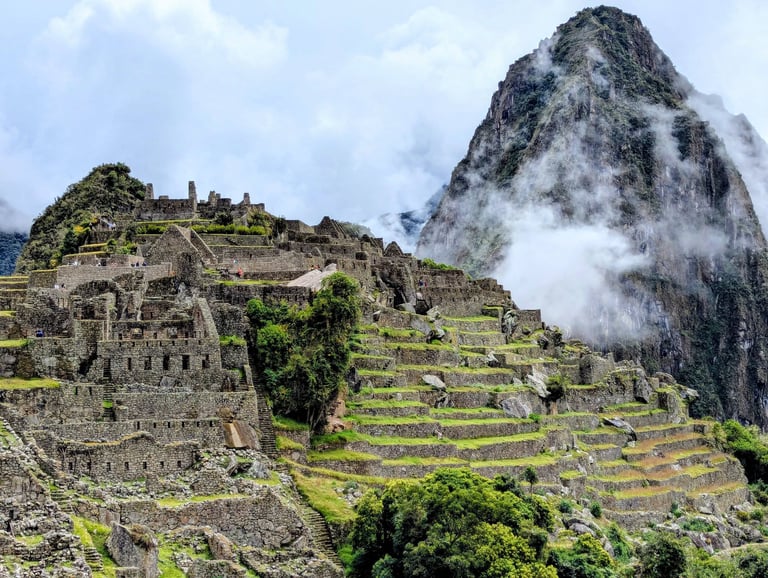
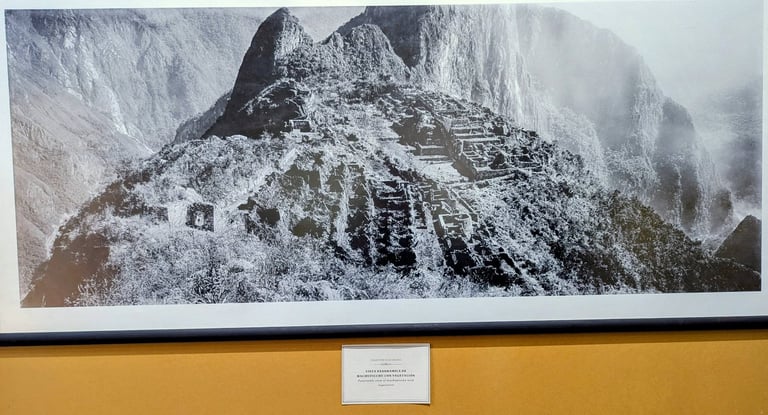
Built at 2,430 m on a narrow ridge above the Urubamba River, Machu Picchu’s location was chosen because of its geology. The bedrock of Machu Picchu is granite and other intrusive igneous rocks and dating from the Triassic, with additional Mesozoic and Cenozoic intrusions. Granite is hard, fracture-prone, excellent for precise stone-cutting and fairly resistant to weathering. This is why Machu Picchu’s stonework is so crisp and durable.
One of the most important geological discoveries is that Machu Picchu sits at the intersection of two major fault systems, with one trending NE–SW and the other trending NW–SE. Geologists mapped these fractures using satellite imagery and field measurements. Faulting carved steep valleys around it, so very clearly visible from Machu Picchu, producing this incredibly dramatic scenery. The Urubamba River eroded deeply along structural weaknesses. The result is a knife‑edge ridge, visually stunning.
The reason why Machu Picchu was built exactly where it is, is because of the fault intersections. These faults created abundant fractured stone but the Incas could quarry stone directly from natural breaks, reducing labour dramatically. They also provided natural drainage, acting as water pathways, preventing waterlogging and landslides in a region with intense rainfall. The Incas understood the geology exceptionally well and used it to their advantage in engineering. They used the entire city as a quarry where natural outcrops were incorporated directly into temples, similar to what was done during the construction of the Pyramids of Giza in Ancient Egypt. The Incas also built terraces as retaining structures. Which stabilised slopes and improved drainage. They aligned structures with fractures, reducing the need for cutting and improved seismic resistance.
The re-discovery of Machu Picchu
The abandonment of Machu Picchu remains one of its greatest mysteries. Most evidence suggests the site was deserted around 1572, roughly 40 years after the Spanish conquest of the Inca Empire began. Unlike many other Inca settlements that were destroyed or occupied by Spanish colonizers, Machu Picchu appears to have been deliberately evacuated and left intact. Theories for its abandonment include the death of Pachacuti, civil war within the Inca Empire, the devastating effects of European diseases, or strategic withdrawal as Spanish forces advanced. The remote location and difficult access meant that Spanish conquistadors never discovered the site, allowing it to remain hidden in the cloud forest.
For nearly 400 years, Machu Picchu was known only to local Quechua people who lived in the region, though the site was largely overgrown with vegetation. The so-called "rediscovery" came in 1911 when American historian and explorer Hiram Bingham was guided to the ruins by local residents, particularly a young Quechua boy named Anacleto Alvarez. Bingham's photographs and writings brought international attention to the site, though he initially believed he had found Vilcabamba, the legendary "lost city" of the Incas. His subsequent expeditions, funded by Yale University and National Geographic, began the process of clearing vegetation and documenting the ruins.
In the modern era, Machu Picchu has become Peru's most famous tourist destination and a symbol of Inca civilization. UNESCO designated it a World Heritage Site in 1983, recognizing both its cultural significance and unique biodiversity. The site faces ongoing challenges from tourism pressure, with daily visitor limits now in place to protect the fragile ruins. Archaeological work continues to reveal new insights about Inca society, while debates persist over artifact ownership, with Peru successfully securing the return of thousands of artifacts taken by Bingham's expeditions. Today, Machu Picchu stands as one of the New Seven Wonders of the World, attracting over a million visitors annually who come to experience this extraordinary testament to Inca achievement.
Visiting Machu Picchu
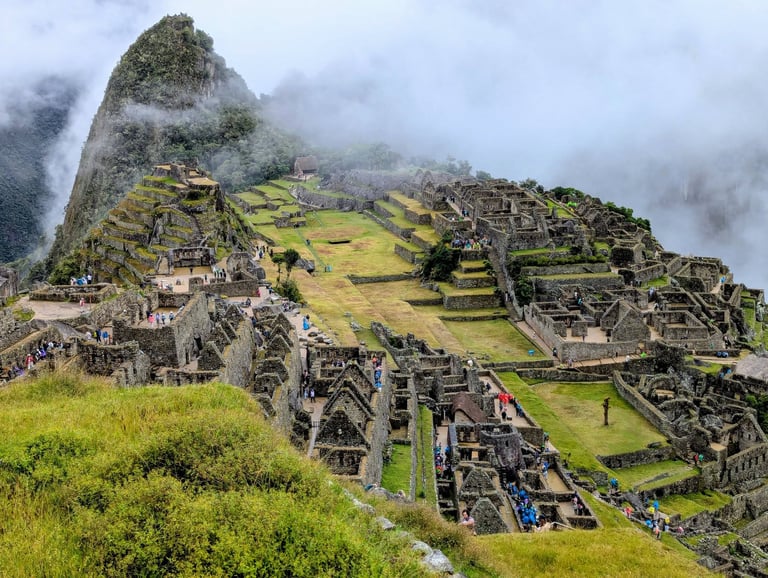
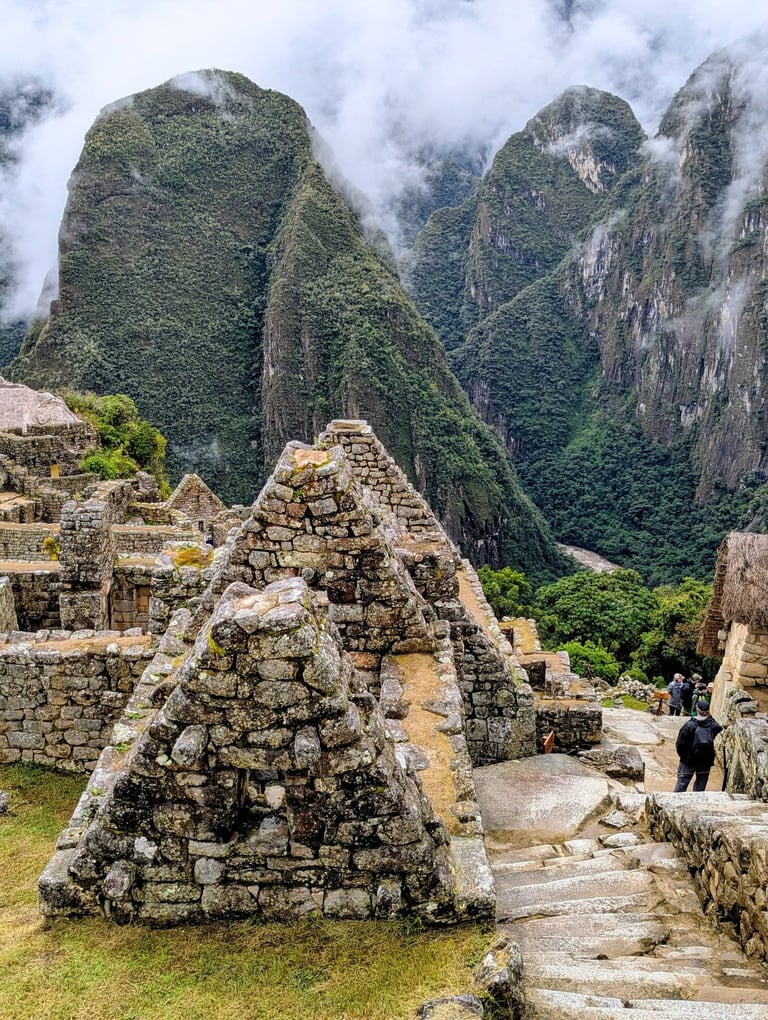
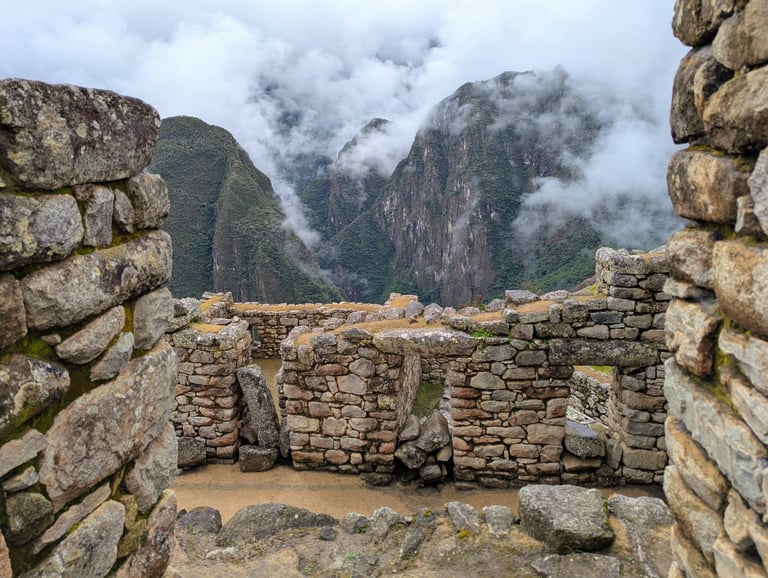
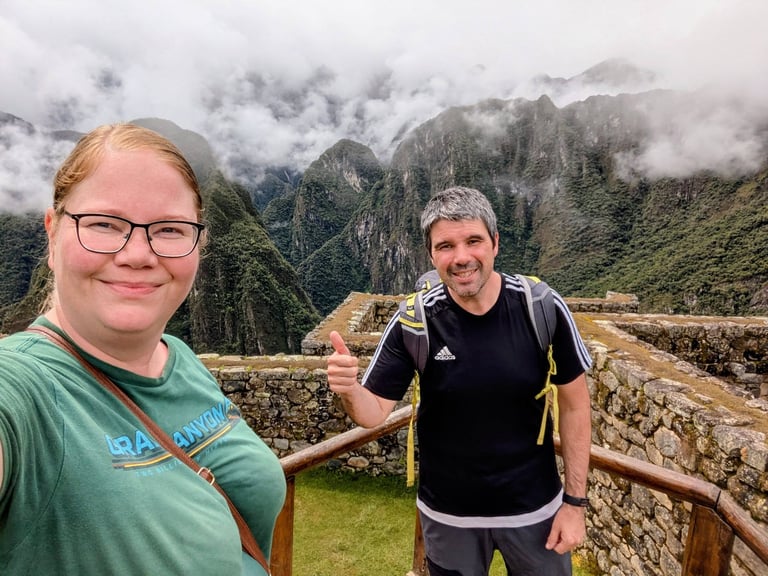
I was pretty excited to see Machu Picchu again, some 19 years later! Last time I was there, I did the Inca Trail which was cool but it was in the wet season and by the time I got to Machu Picchu, I was feeling pretty miserable. This time I decided I'd stay dry and comfortable taking the bus up instead. I deliberately chose the 10am slot for Route 2B to get some of the morning light, but less chance of clouds blocking the views. And while we did have some clouds, I must say, they just added to the incredible dramatic effect - or you be the judge! Photos from our 10 am entry late April 2026 trip to Machu Picchu below. To get the full details on how to plan your trip to Machu Picchu (and how to not mess it up), have a look at the section above.
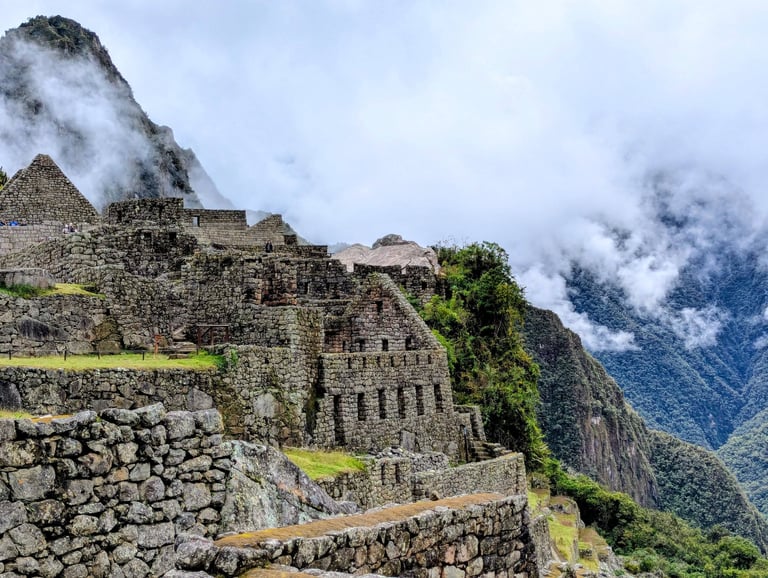
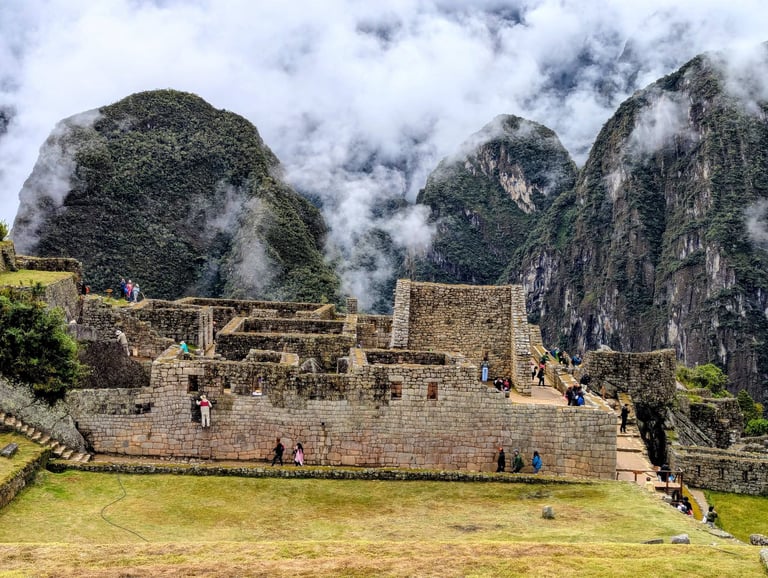
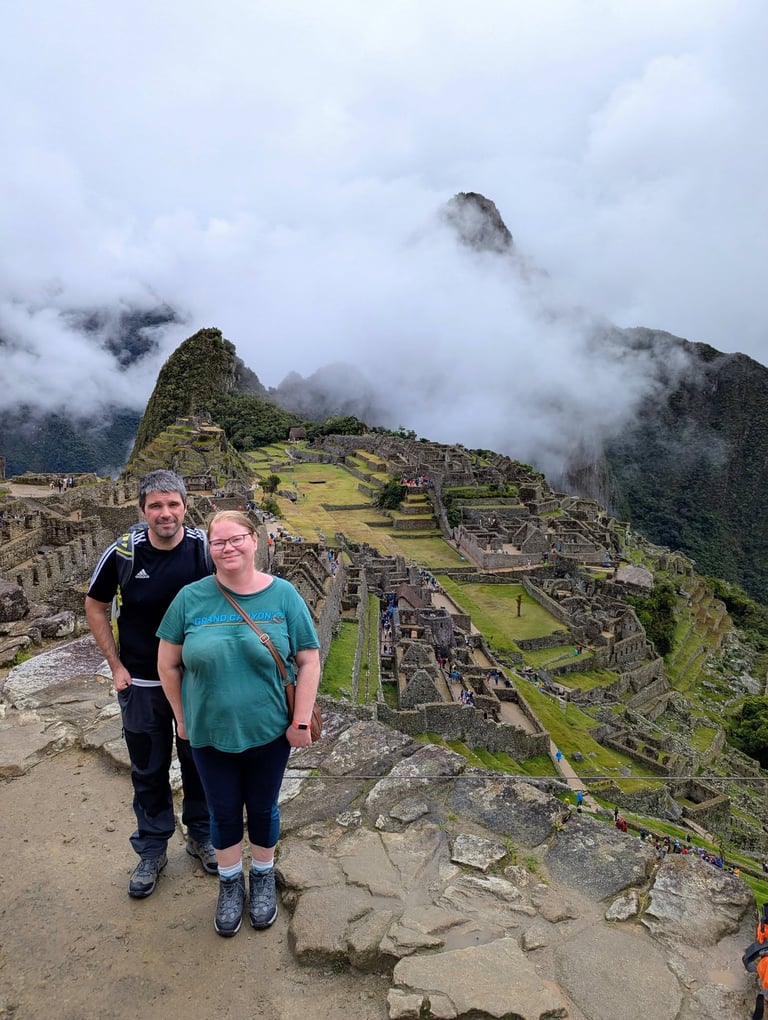
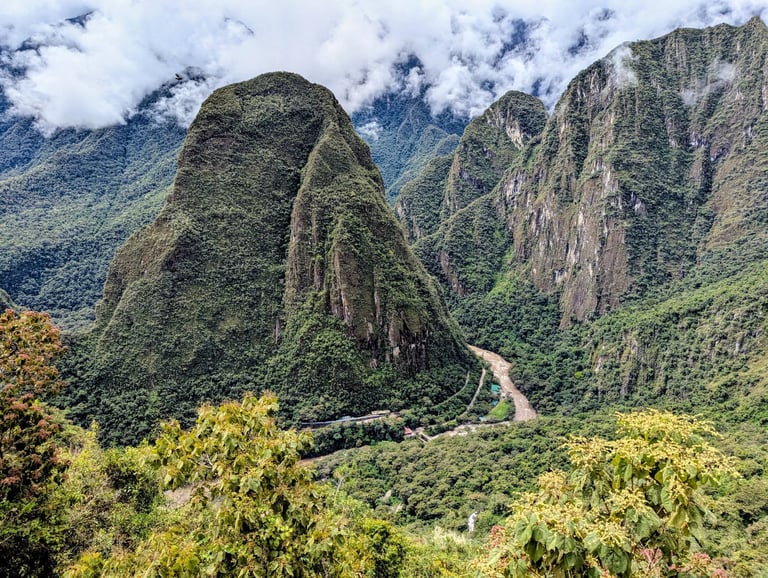
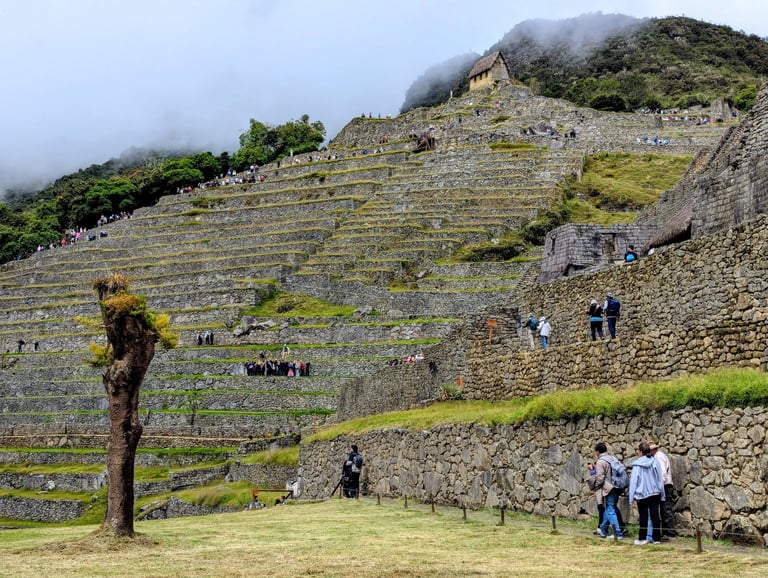
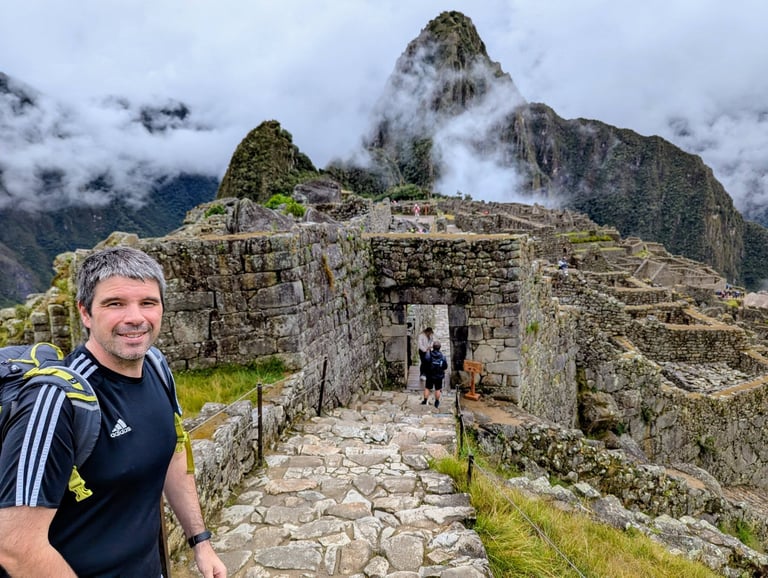
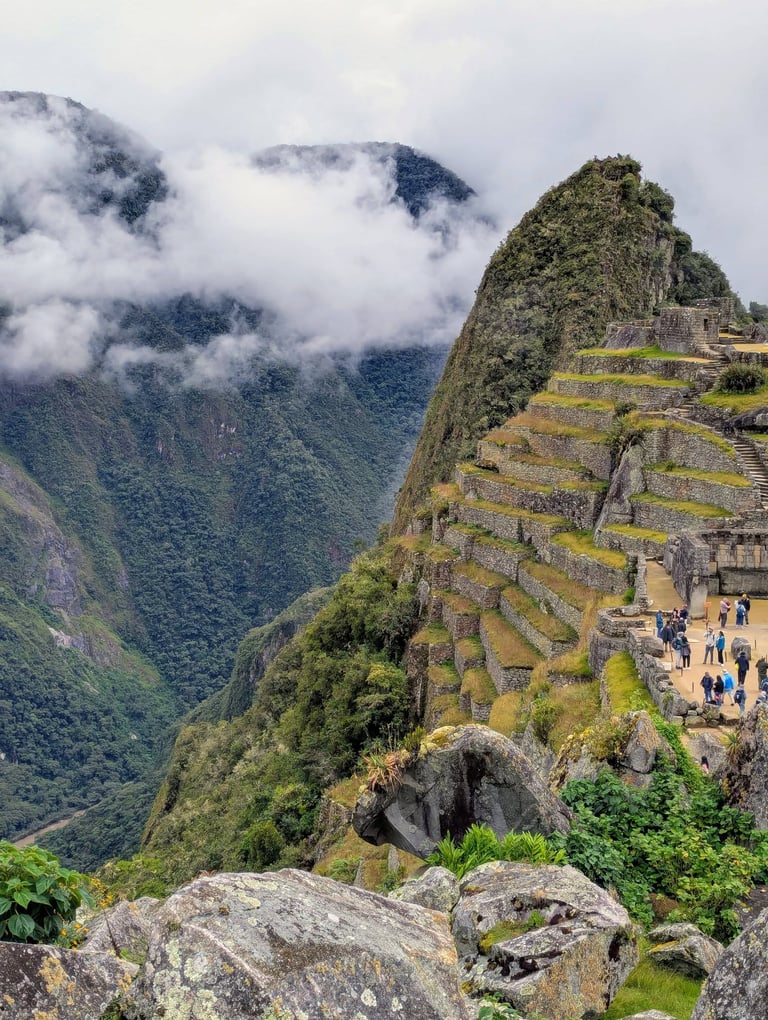

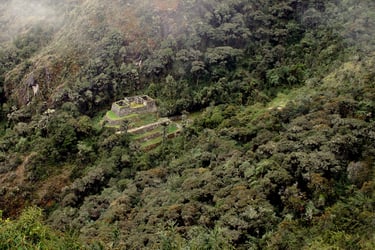
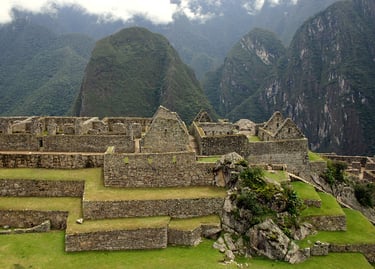
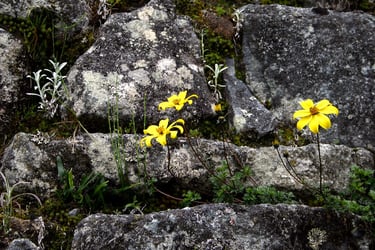
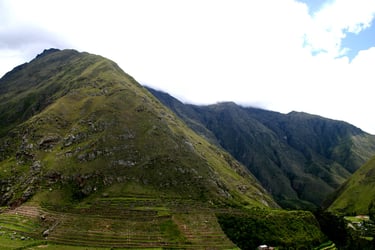
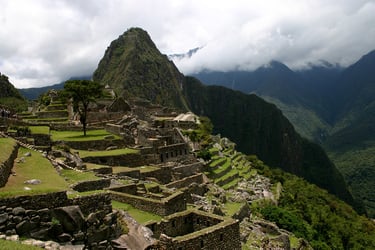
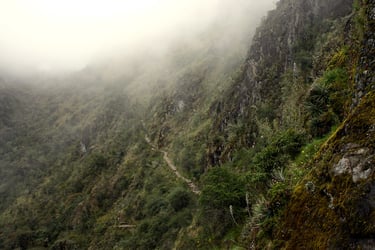
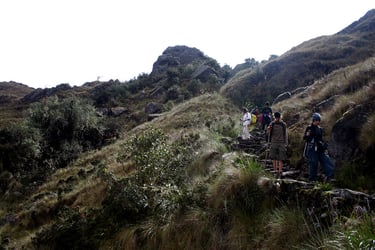
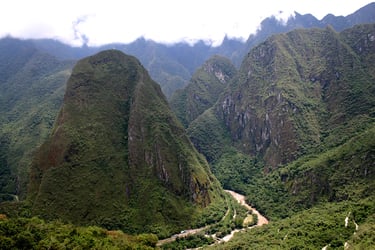
Days 6 to 9 - Cusco
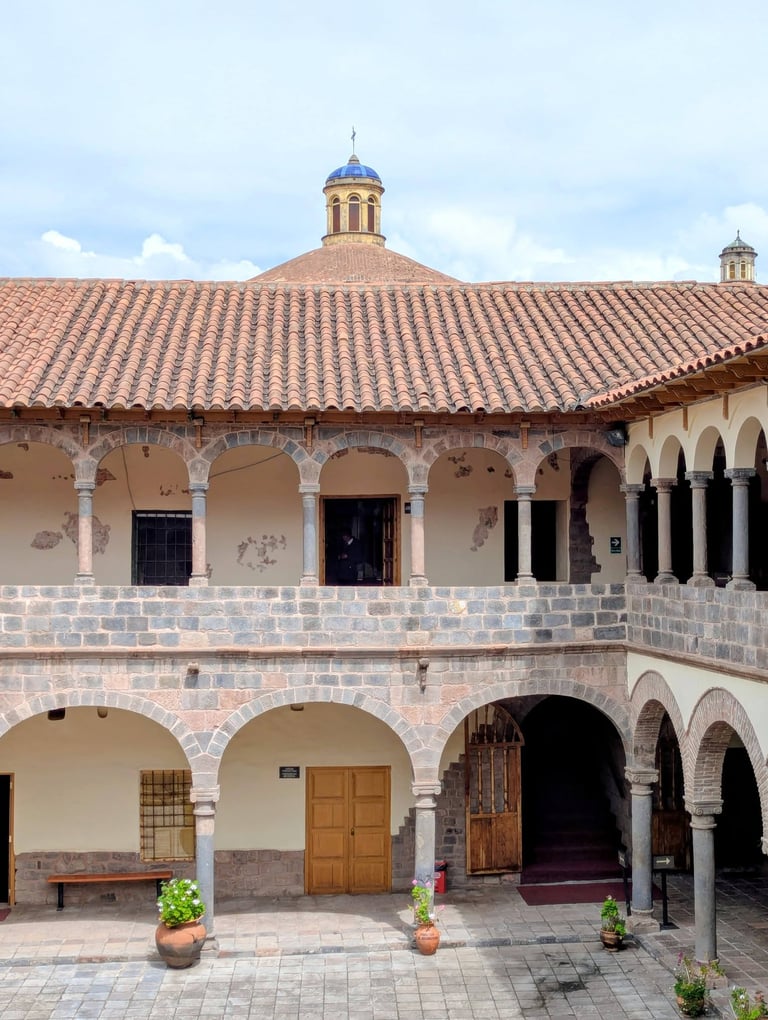
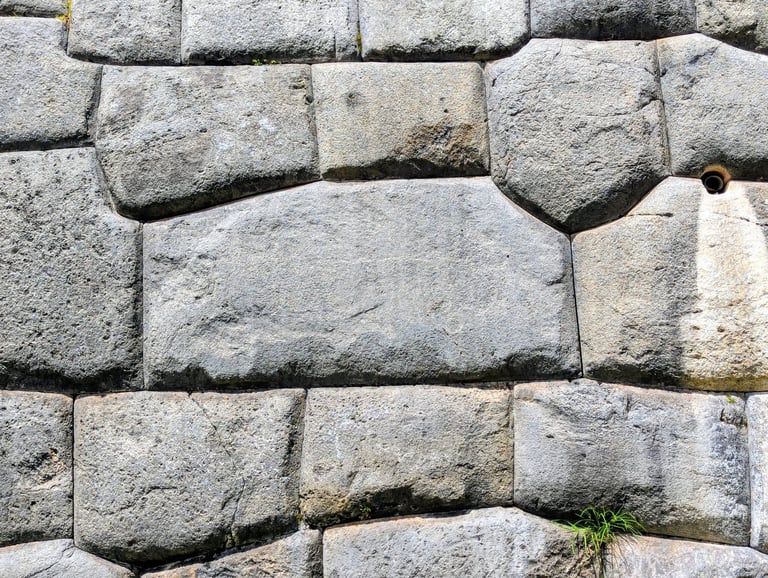
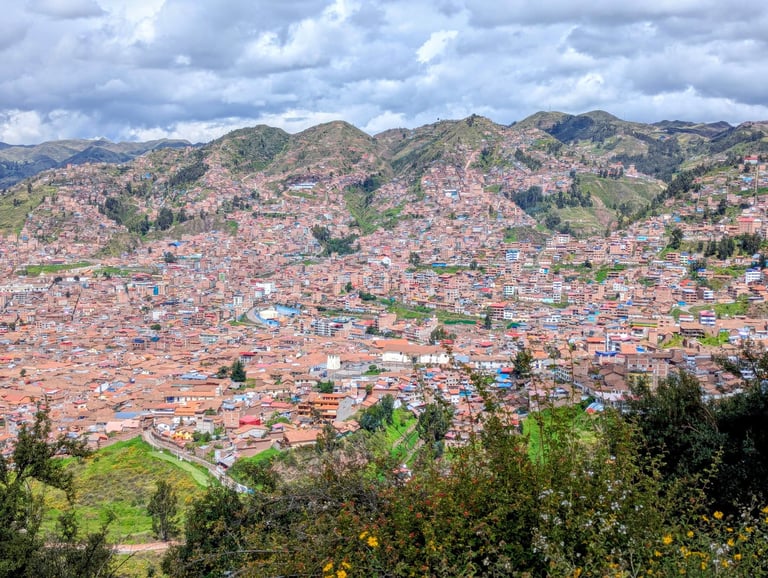
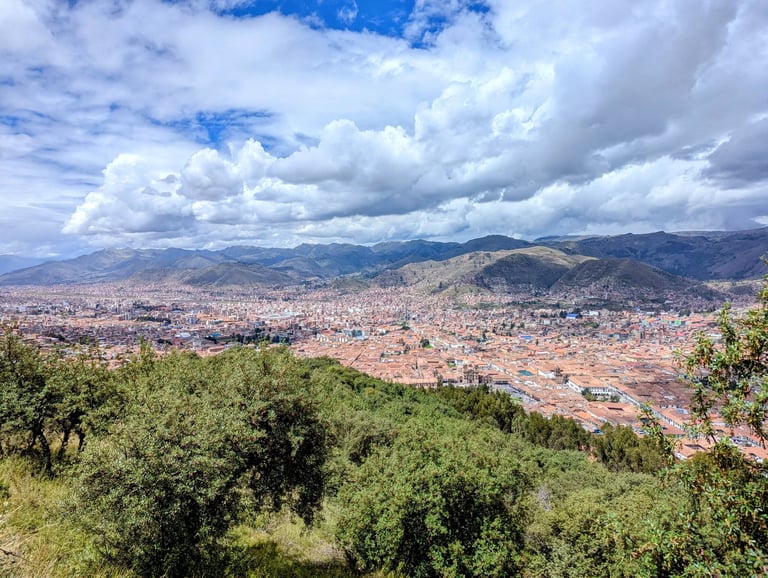
We went to Cusco after our two nights in Ollantaytambo. Cusco is the ancient capital of the Inca Empire and sits at a breathtaking (literally) 3,300-3,400 m above sea level in the Peruvian Andes. This UNESCO World Heritage city is famous for being the gateway to Machu Picchu, but it's a remarkable destination in its own right. The city showcases an extraordinary blend of Inca and Spanish colonial architecture, with massive stone foundations built by the Incas supporting Spanish churches and mansions. The precision of Inca stonework is legendary - their walls fit together so perfectly that you can't slip a knife blade between the stones, and many have survived centuries of earthquakes that damaged later colonial structures.
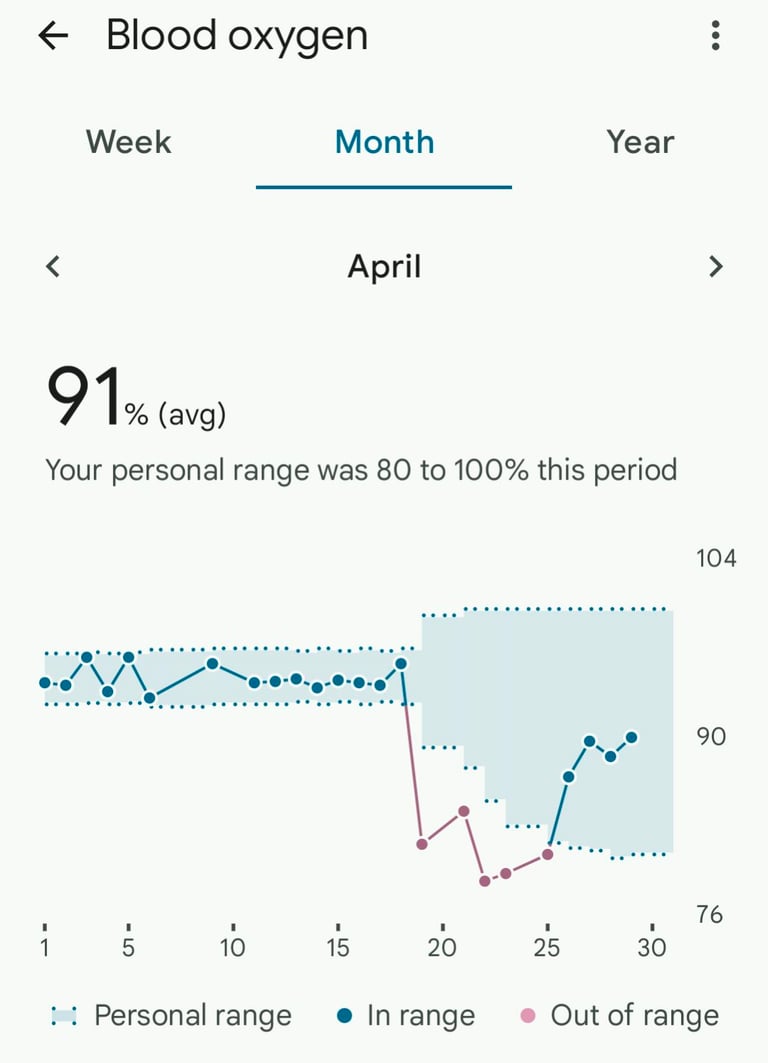
The city pulses with indigenous culture, particularly in the vibrant San Pedro Market where locals sell everything from exotic fruits and traditional textiles to guinea pig (a local delicacy). Cusco's cobble stone streets wind through neighborhoods like San Blas, known for its artisan workshops and narrow passages. Travelers should plan to arrive at least a day or two before trekking to higher altitudes, as the elevation can cause altitude sickness. The city serves as the starting point for the famous Inca Trail to Machu Picchu, but also offers incredible day trips and multi-day trip to the Sacred Valley and beyond, including the colorful salt terraces of Maras, the circular agricultural terraces of Moray, Pisac archaeological site and artisan market, the many rainbow mountains of the Andes and the Amazon rainforest, to mention a few.
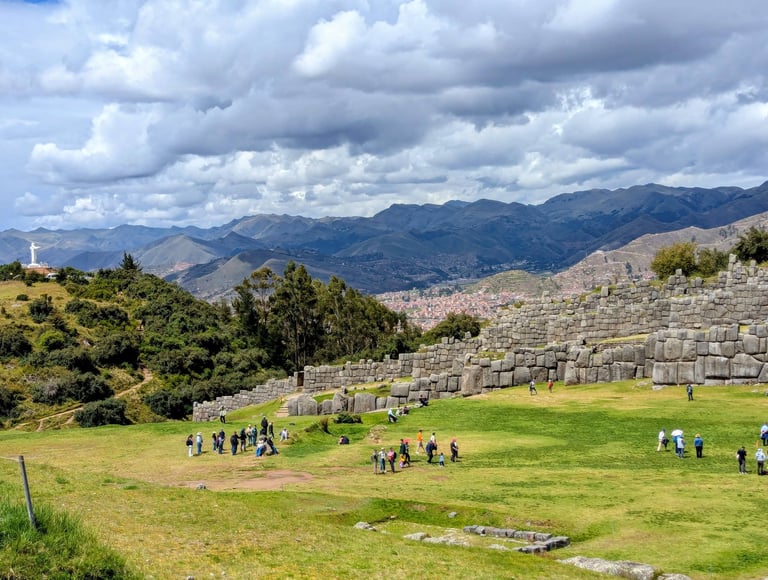
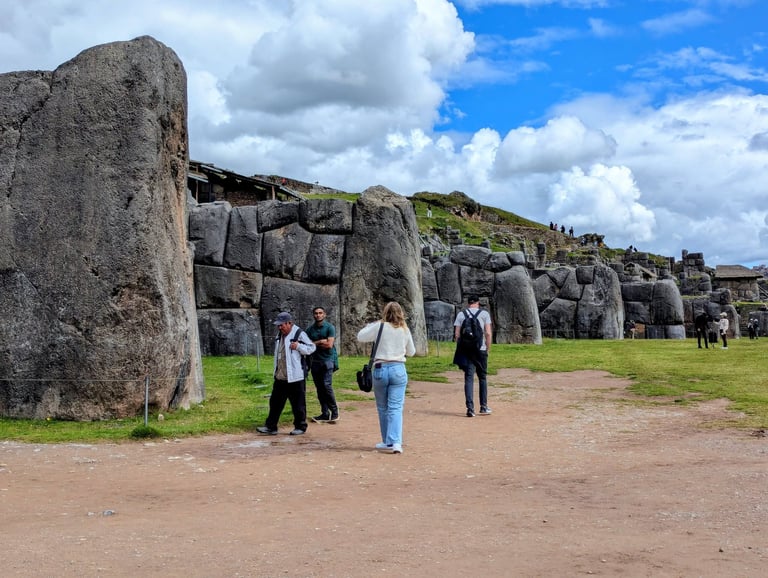
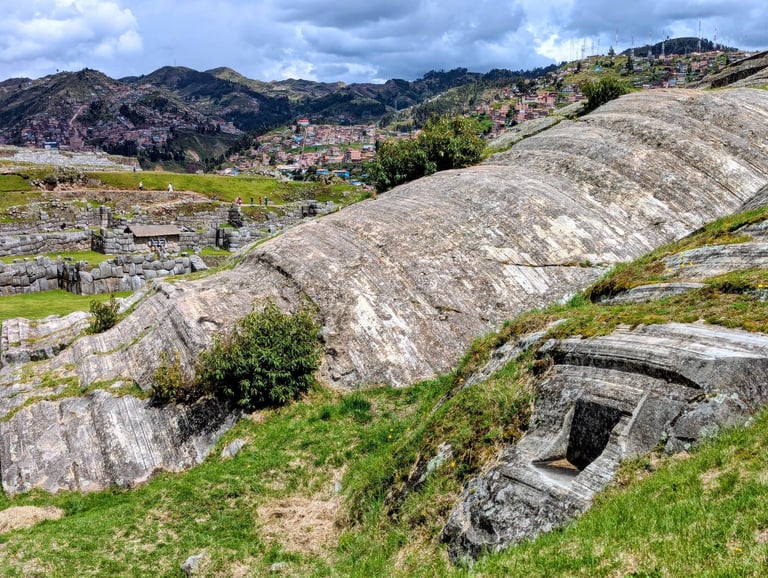
Beyond its role as a base for Machu Picchu adventures, Cusco rewards visitors with its own archaeological wonders like the massive fortress of Sacsayhuamán overlooking the city, where enormous stone blocks weighing up to 300 tons were somehow transported and fitted together with mathematical precision. The city comes alive during festivals, especially Inti Raymi (the Festival of the Sun) in June, when thousands gather to celebrate Inca traditions with colorful processions, traditional music, and ceremonial reenactments.
Getting to Cusco
The way to Cusco from anywhere is very, very far (except from the Sacred Valley). The easiest way to get here is by flight from Lima, Arequipa, La Paz in Bolivia, Santiago in Chile or Bogota in Colombia. However, if you're going to Lake Titicaca as we were, to see the Floating Islands and experience an overnight stay there, you're stuck with land travel. The recommended airline is LATAM (and remember to add your British Airways Club number to earn some juicy Avios points while you're at it! Or use your Avios to redeem a flight with LATAM, as it's a OneWorld alliance airline).
Getting around Cusco
The historical centre of Cusco is very compact and easy to walk around. As soon as you're outside of the historical centre, the traffic is a manic chaos! So be sure to try to stay somewhere in or very near the historical centre. Uber works fine in Cusco, but I read on online forums you're best to book an Uber with cash as payment option, as allegedly people's ride requests were not being accepted when paying with a card. We didn't ever try the card option, so I can't confirm whether this is true but if you find yourself in trouble getting an Uber, this might be why.
Places to stay in Cusco
We ended up staying 4 nights at the Saska Boutique in Cusco, which was very nice. When researching places to see, we were looking for somewhere near the historical centre for ease of finding restaurants and accessing sights and Saska ticket thad box. Some of the other options we looked at were:
Hostal & Apartments El Triunfo (£50 per night) - this was at the top of our list because we like having our own seating area, and their flats are really reasonably priced at around £50 per night (depending on season obviously)
Amaru Colonial (£51 per night) - beautiful colonial building located in the heart of the historical centre.
Amaru Inca (£53 per night) - another beautiful and well located colonial building.
Places to eat in Cusco
You're spoiled for choice really in Cusco when it comes to food. Some of the places that were highly rated on Google Maps when we were there included:
Chicha por Gaston Acurio
INKAGRILL
Ofrenda Peruvian Healthy Food
Morena Peruvian Kitchen
MAP Cafe
KUSYKAY Peruvian Craft Food
Cicciolina
Pachapapa
Qura
However, of these places the only place we actually ended up going to was Chicha por Gaston Acurio, because I wanted to try out this famous restaurant. We also went two times to Chull's Peruvian Cuisine & Craft Beer and Rosso. See the food section above for details.
Things to do in Cusco
You can pretty easily spend a couple of weeks in Cusco and the Sacred Valley if you have lots of time. Within the city itself, there's so much to explore just wandering around the city. A popular spot is Siete Borreguitos street, San Pedro market, the main square and its churches, Sacsayhuaman ruins and more.
In terms of day tours, you can do the following:
The Classic Sacred Valley Tour taking in the ruins at Pisac, Ollantaytambo, Chinchero, Moray and Maras.
Machu Picchu 1 day trip.
Cusco City Tour & the 4 nearby ruins of Sacsayhuaman, Q'enqo, Puka Pukara and the water temple of Tambomachay.
The South Valley including Tipon, Pikillacta and Andahuaylillas.
Humantay Lake
One of the Rainbow Mountains.
Cusco is also the starting point of many amazing multi-day trips starting in Cusco, such as the following:
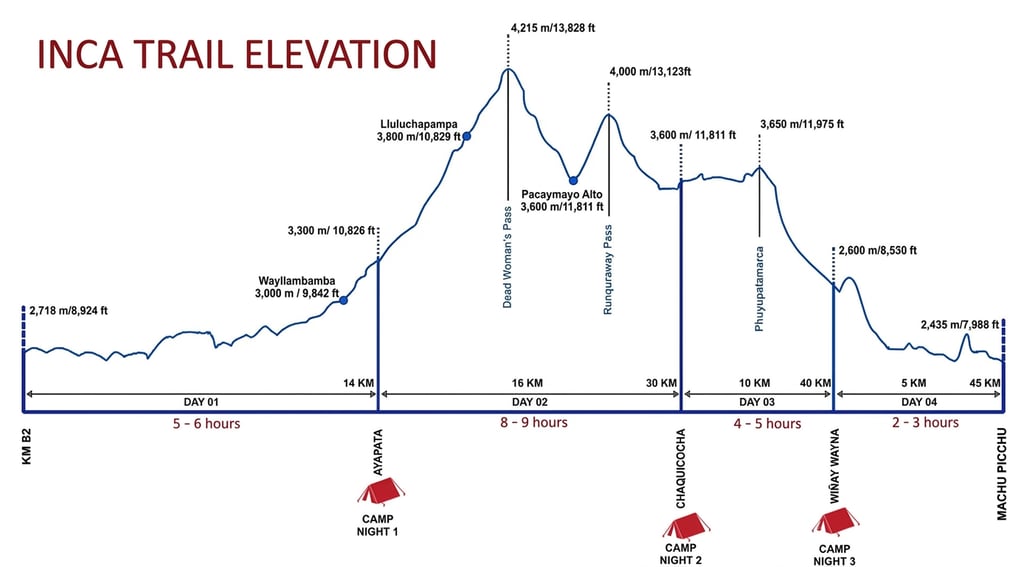
The Classic Inca Trail - Andes Mountains (4 days / 3 nights): You will hike along the actual stone paths laid down by the Incas over 500 years ago, passing through cloud forests, alpine passes (like Dead Woman's Pass), and exclusive ruins only accessible to hikers. It culminates with walking through the Sun Gate (Intipunku) at sunrise for your first view of Machu Picchu.
The Salkantay Trek - Andes Mountains (4-5 days): Named by National Geographic as one of the best treks in the world, this is the most popular alternative to the Inca Trail. It takes you past the stunning Humantay Lake, up over the snowy Salkantay Pass at 4,630 meters (15,190 feet), and down into the high jungle before arriving at Aguas Calientes (the town below Machu Picchu).
The Lares Trek - Andes Mountains (3 days / 2 nights): Often called the "Weaver's Trail," this route takes you through the remote Lares Valley. Instead of focusing solely on ruins, you'll hike past turquoise lagoons, soak in natural hot springs, and visit traditional, remote Quechua-speaking communities where locals still wear vibrant, hand-woven clothing.
The Inca Jungle Trek - Andes Mountains (3-4 days): Designed for adventure junkies, this trip swaps standard hiking for downhill mountain biking, whitewater rafting, zip-lining, and jungle trekking along an ancient Inca path to reach Machu Picchu.
Choquequirao Trek - Andes Mountains (4-5 days): A remote trek that takes you to Choquequirao, a massive Inca citadel that is actually larger than Machu Picchu, but because there are no trains or roads to it, only a tiny fraction of tourists ever see it. The trek involves a punishing descent into the Apurímac Canyon and a grueling climb back up the other side.
Ausangate Trek & Rainbow Mountain - Andes Mountains (4-5 days): A loop around Mount Ausangate, the most sacred Apu (mountain spirit) in the Cusco region. You’ll hike past neon-blue glacial lakes, herds of thousands of alpacas, and eventually cross over to see the Rainbow Mountains before the day-trippers arrive. This trek is entirely above 4,000 meters (reaching up to 5,200 meters). It features no Inca ruins, but offers the most jaw-dropping alpine scenery in Peru.
Manu National Park - Amazon Jungle (3-5 days): Manu is one of the most biodiverse protected areas on earth. A typical multi-day trip takes you by van down the winding Manu road (transitioning from cloud forest to lowland jungle) and then by motorized canoe deep into the rainforest to spot jaguars, macaws, giant river otters, and caimans.
Tambopata National Reserve - Amazon Jungle (3-4 days): While technically accessed via a short 30-minute flight from Cusco to Puerto Maldonado, Tambopata is the go-to choice for comfortable jungle lodges. You'll spend your days visiting massive macaw clay licks, searching for anacondas on Lake Sandoval, and doing night walks to find tarantulas and caimans.
The Luxury Rail Journey with Belmond Andean Explorer to Lake Titicaca (2-3 days): If hiking isn't your thing, you can board South America's first luxury (reads: expensive) sleeper train. The route takes you from Cusco across the high-altitude Altiplano plains all the way to Puno (Lake Titicaca) and Arequipa. It features fine dining, an open-air observation car, and plush private cabins, with a price tag to match.
You can probably now see how you could easily spend weeks in this region and see nothing else of Peru, as the amazing attractions are so bountiful!
However, when we were in Cusco, we just took it quite easy as I was struggling with the altitude a bit. But we did a free walking tour of the city, went independently to the nearby village of Pisac, explored the city on our own and visited the ruins of Sacsayhuaman.
On a tangent: The price of gold
Many of you will be aware of the gold rush that has been going on lately, causing gold prices to sky rocket to never-seen-before heights. This extreme demand comes at a very high cost to the environment.
Illegal and artisanal gold mining is concentrated in Madre de Dios, especially along rivers and in rainforests near Puerto Maldonado and the so-called “corredor minero” (mining corridor). It constitutes a major driver of deforestation and environmental destruction in the southern Peruvian Amazon. Researchers have observed tens of thousands of individual informal mining sites and camps operating, many without legal permits or environmental controls. Over the past decades, illegal gold mining has driven massive deforestation in Madre de Dios — hundreds of thousands of hectares lost. Recent data place Amazon-wide deforestation by illegal mining at over 140,000 ha, with a large portion in Madre de Dios.
Another environmental impact of the mining includes mercury contamination. Mercury is used to amalgamate gold from sediment. This mercury, which pollutes rivers and sediments, enters the food chain as it bioaccumulates in fish eaten by local communities and is linked to neurological and developmental health issues. In some mining-adjacent areas, mercury in the air and water is many times higher than safe levels. Elevated mercury levels are found even in towns like Puerto Maldonado, not just at mining sites. These exposures harm reproductive health and child development.
Illegal dredging and mining activities have contaminated hundreds of rivers and streams across the Peruvian Amazon, including in Madre de Dios. Mining has invaded Indigenous lands and protected areas, often without consent. Some communities report loss of land, displacement, and damaged livelihoods (fishing, forest foods). Conflicts arise between community land rights and mining claims, with limited effective legal protection.
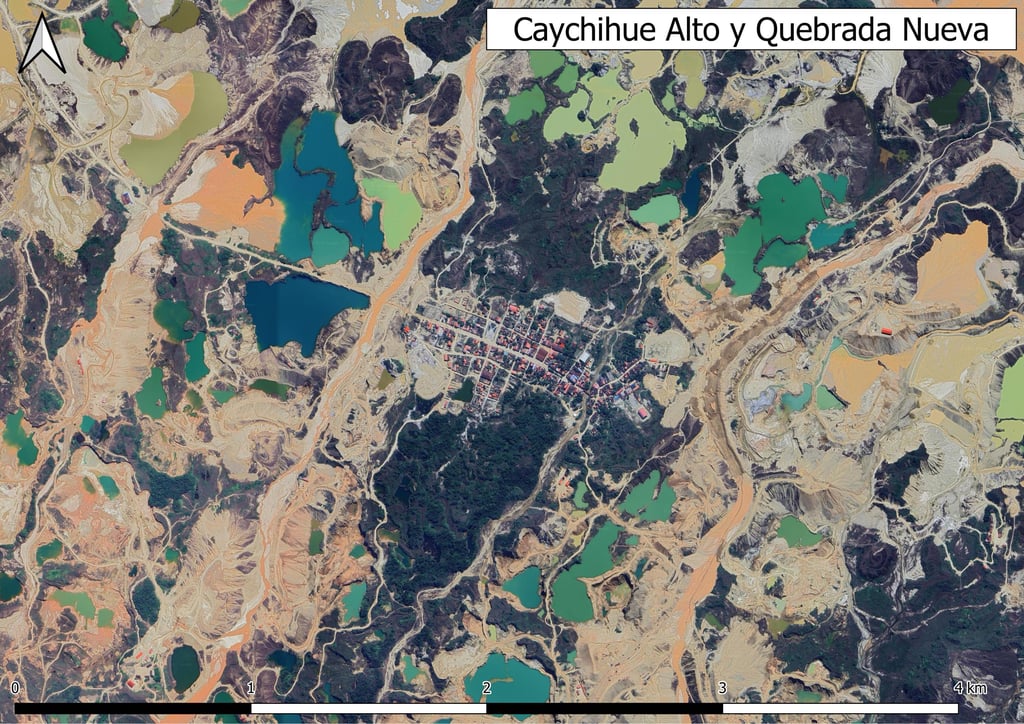

What was once pristine rainforest has now been stripped and is now full of toxic lagoons
I have added a scale bar to give you an indication of the sheer size of the destruction. And it only looks worse when you zoom out. The size of Cusco city (left-bottom corner) pales in comparison to the destruction of the Amazon rainforest of Peru.
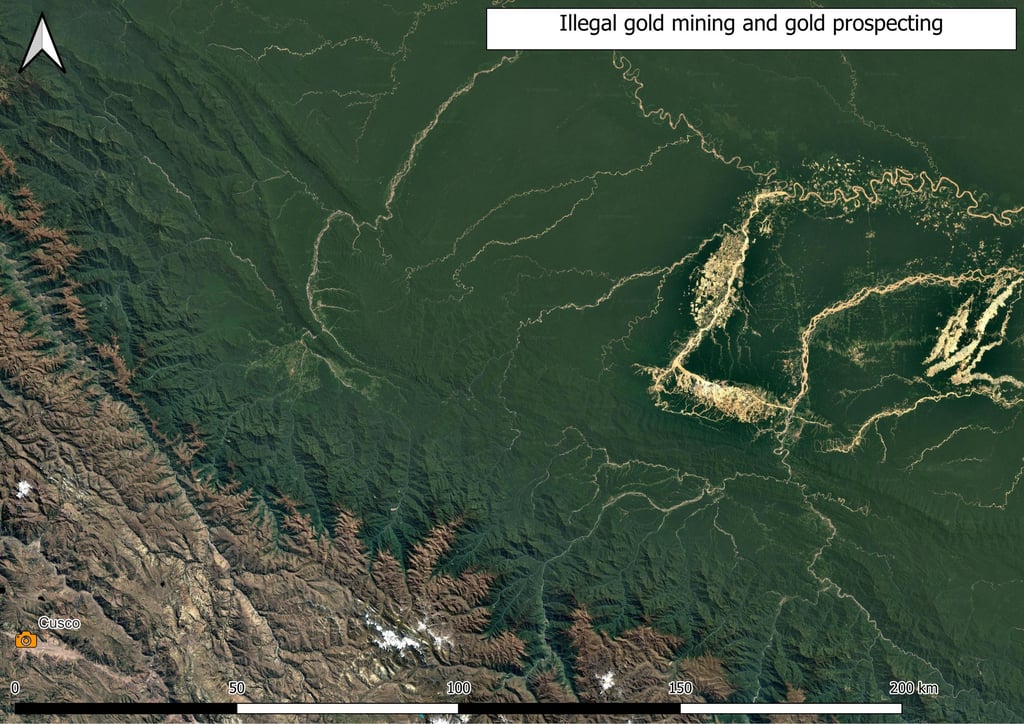

Illegal and artisanal gold mining continues in Madre de Dios in 2026 and remains widespread, remaining the epicenter of illegal gold mining in Peru, with recent reports showing the activity expanding rather than disappearing. It continues to destroy large areas of forest and river systems in the region. Aerial and satellite imagery continue to show dredges and mining operations in Amazonian waterways like the Tambopata and Madre de Dios rivers. Illegal mining is recognized as a major security, environmental, and governance challenge in South America, with Peru - particularly Madre de Dios - heavily affected.
Official environmental and conservation reports indicate thousands of dredges and mining operations continue to work in and around the Madre de Dios basin, often with increasing numbers year-on-year. Deforestation linked to mining remains high, with tens of thousands of hectares impacted over recent years. Illegal gold mining isn’t just ongoing - it’s also tied to criminal dynamics and conflict. There are reports of organized criminal groups and violence related to control of mining territories. The persistence of mercury use and environmental harm contributes to long-lasting contamination. The Peruvian state continues law enforcement operations and occasional destruction of illegal mining gear, but these have not ended the activity and often are temporary or localised setbacks.
The reason for this distruction is humanity's apparent insatiable need and desire for gold, driving the prices up so much that people will do anything to get their hands on some gold to sell at record-breaking prices.
Read more here: https://globalhealthnow.org/2025-04/perus-illegal-mining-surges-and-destroys
Day 8 - Pisac
We visited Pisac independently and that way saved heaps of money and enjoyed it so much better than had we gone with a tour. We both 100% recommend our approach to going to Pisac, it ended up being one of our absolute highlights of our trip to Peru. I explain how we did it independently from Cusco below.
Pisac Archaeological Site
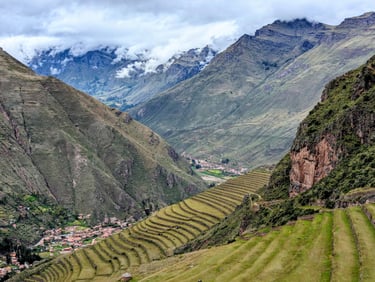
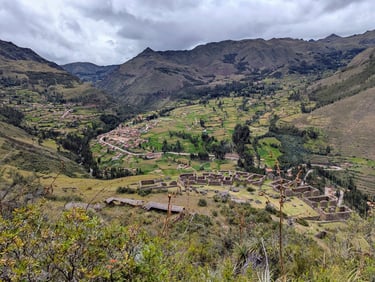
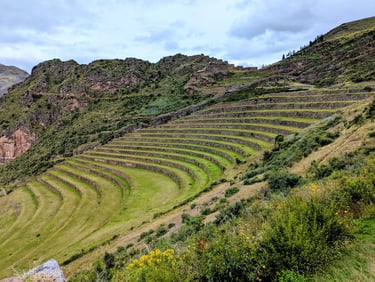
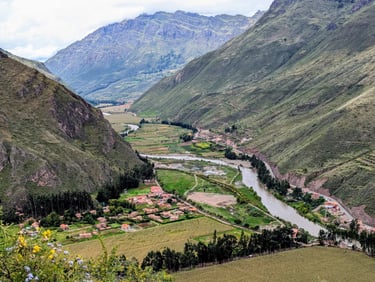
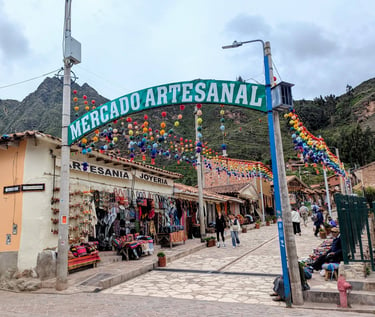
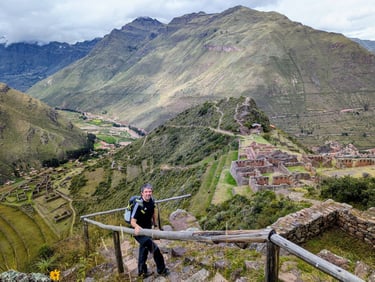
Most people talk about going to Pisac to go and see the market. The market that it was famous for is no longer there, but is now a permanent one near the northwestern end of the main square. We went to Pisac, but mainly to take advantage (and our money's worth) of our tourist ticket by going to see the ruins there on one of our free days in Cusco. The Pisac archaeological site is one of the crown jewels of Peru’s Sacred Valley. Perched dramatically on a ridge overlooking the Vilcanota River, it rivals Machu Picchu in its breathtaking blend of engineering, architecture, and landscape. The complex was constructed in the mid-15th century during the reign of the transformative Inca Emperor Pachacuti (Pachacutec). After conquering the local Cuyos people, Pachacuti ordered the construction of Pisac as a multi-functional citadel. Pisac wasn’t just a city; it served several critical roles as a military guardpost, agricultural laboratory as well as a religious and royal retreat.
How to get to there
To get from Cusco to Pisac, you're best taking a "colectivo" (here: a minibus) to Pisac from the top of Puputi Street in Cusco (w3w ///viewing.slices.recent). When we went, the fare was S/.6 (Approx. £1.35 GBP). There are no set departure times, they just leave when the minibus is more or less full. The drive to Pisac is spectacular, if not a bit hair-raising. Then once we arrived in Pisac village an hour later, there is a taxi rank (w3w ///percussion.diesels.faltering) with set prices of 35 soles (£7.65 GBP) per car to take you up to the top of the ruins (they are HIGH UP, so you'll want to start at the top). To get back to Cusco, you just go to the same colectivo spot they dropped you off at, same fare back.
The Pisac Trek
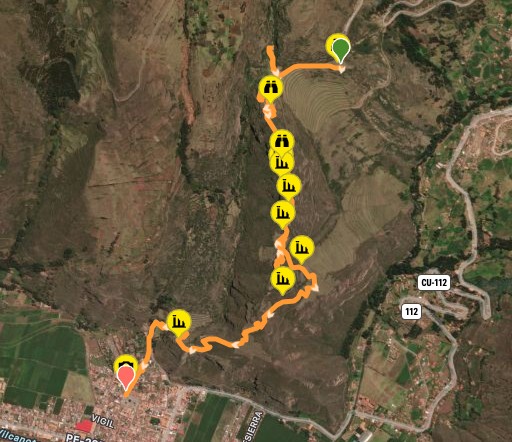
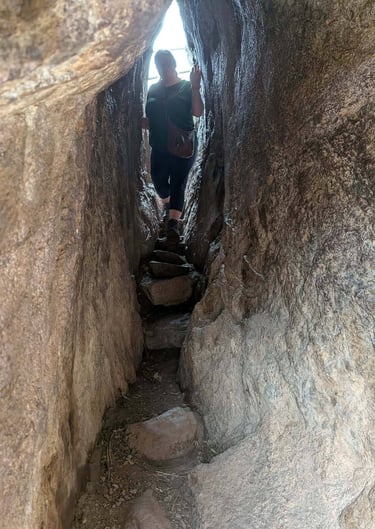
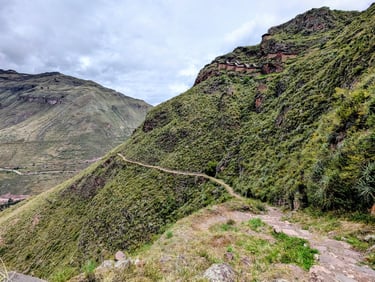
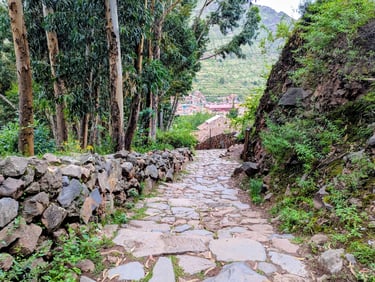
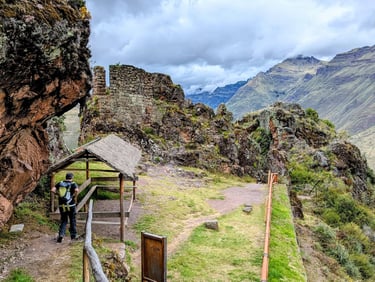
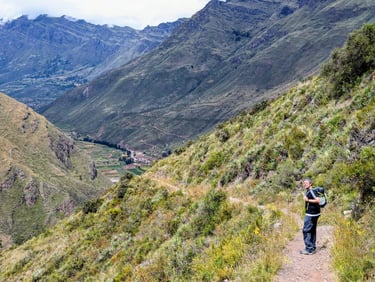
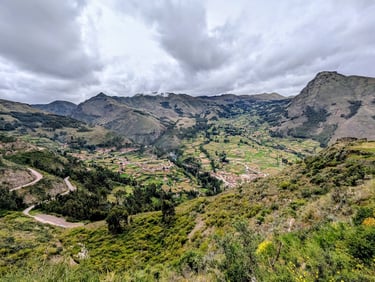
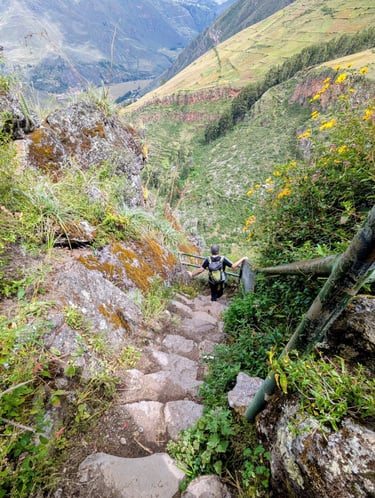
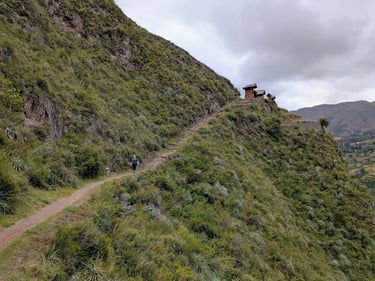
Once at the top of Pisac Archaeological Park, we went on a hike from the top, through the main section of the terraces and ruins that everybody on organised tours goes to see, but then kept going onwards towards the village of Pisac below. Once we had left the main ruins, we left the bus crowds behind and we felt as if we had the whole Sacred Valley to ourselves. The trek, which you can find on Wikiloc here, is just under 3 miles and you're basically just walking on semi-flat ground, or going downhill for the the vast majority of the trek. The small exception to this is right at the start where you gain maybe about 100m in elevation, which can feel a bit difficult if you're not adjusted to the altitude and you're already practically at 3400m above sea level. But if I managed to do it, most people who don't have mobility issues will be able to do it! See the trail below, where green is the starting point, and red is the end point at the main village square in Pisac.
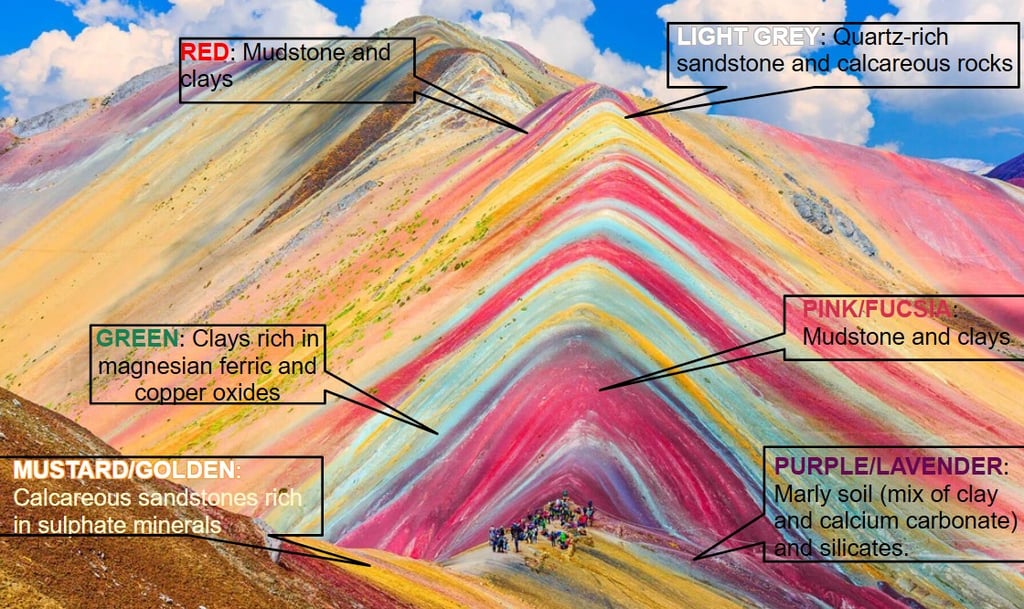

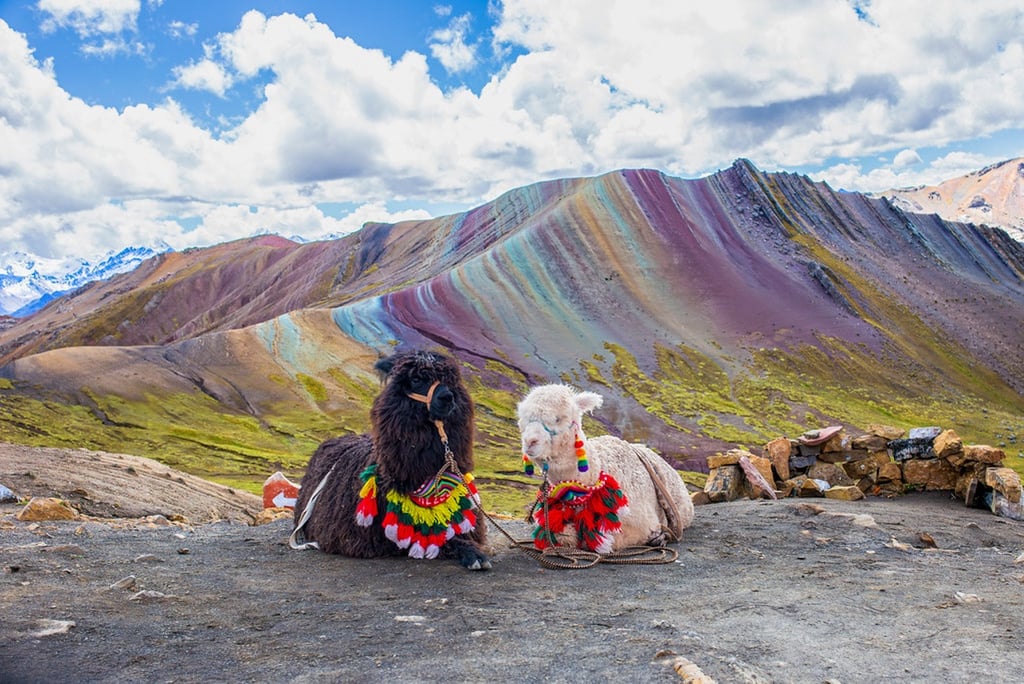
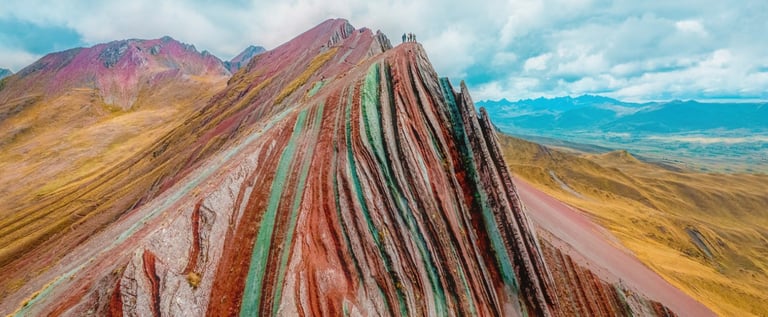
Off-piste: Ruta del Sol Tour from Cusco to Puno
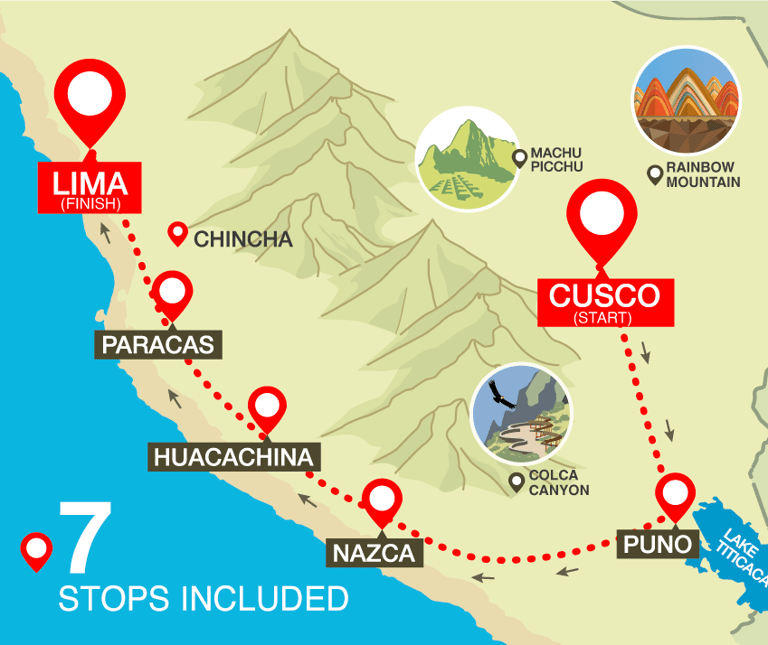
When I was planning our trip around Peru, I had to decide on where we were going to stop and how to get between these stops. One of the stops I wanted to make was in Puno, to let Joe see Lake Titicaca and the floating islands there. Unfortunately, due to time restrictions, we had to cut it out of the itinerary. However, as I was researching the best way to get there from Cusco, I discovered this tour that was new since the last time I was in Peru 16 years ago, namely, "Ruta del Sol". It makes a bus journey from Puno to Cusco which typically is a long, gruelling one, taking 7 hours when travelling direct, into a pleasant tourist journey with interesting stops along the way to stretch your legs. There are no flights between Cusco and Puno, so this makes for the most bearable way to travel the distance (or in some instances you can choose a very, VERY expensive train instead of the gruelling bus journey).
There is this very convenient service provided by a company called Inka Express, who have clearly found a gap in the market - they run a "one way" tour between Puno and Cusco, which means that the 7 hour bus journey is actually turned into an 11-12 hour sightseeing tour where you get out to stretch your legs at regular intervals. You can buy tickets for either direction - in our case from Puno to Cusco, but you can also get Cusco to Puno. if you're travelling "clockwise". For this convenience, you pay £35 GBP per person, instead of paying Cruz del Sur (or similar bus company) £16 for the semicama bus ticket (seats that recline 140 degrees, or £21.50 GBP for a seat that reclines 160 degrees.
Blast from the past: Lake Titicaca in 2007
One of the major tourist attractions along the "gringo trail" is Lake Titicaca and its floatig islands. They are pretty cool and I will always remember fondly by trip there back in 2007 as such an unusual place to visit. I wanted to take Joe there on this trip, but it just takes quite a lot of time due to the fact that there are no flights between Cusco and Puno/Juliaca or Arequipa and Puno/Juliaca. Therefore, we would have spent too much time sitting on buses just to get to Puno and it would all have just felt a bit too rushed, both visiting the Floating Islands, as well as our subsequent visit to Arequipa, due to how long it takes to get there.
I might rub some people the wrong way when I say this, but Puno isn't really a place people want to hang around at. It's a cold city sitting at 3827m above sea level and if you're ever going to feel the effects of altitude sickness, it's going to be here. On the plus side, at least you just came from Arequipa, so your body is somewhat used to the altitude by now. Take it easy! Also, be prepared for the cold! Instead of hanging around in Puno, people usually head to the islands on Lake Titicaca, the highest navigable lake in the world (apparently).
Getting there
There are two main ways to get to Puno to be able to travel to the floating islands of the Uros people:
Flying from Lima with either LATAM or Sky Airline to Juliaca and then travel to Puno from there with taxi (1hr) or a bus.
Travelling by bus from Cusco, Arequipa or any of the other nearby places.
I am a long-term fan of the Cruz del Sur buses. Throughout the decades, they've constantly kept their buses modern and comfortable, with 160 degree-reclining seats. If you are coming from Cusco, you get a choice of either:
a night bus leaving Cusco at 10pm and arriving in Puno at 5am, or
a daytime bus leaving Cusco at 8am arriving in Puno at 3pm.
The night time bus would be ideal for either people strapped for time, or people strapped for cash as an overnight "place to sleep", as I would have done in my past life as a shoestring backpacker when I was younger. The fare for the 7hr journey is the same, 97 soles (£20 GBP) for a 160 degree seat, or 65 soles (£13.50 GBP) for a 140 degree seat (but note that the prices will vary depending on the day you travel, the season and how much in advance you buy your ticket).
Alternatively, you can make the journey a lot more pleasant and interesting by taking the Ruta del Sol tour from Cusco to Puno. This way, you get to stop and strentch your legs frequently on the long journey, while also visiting the less-visited tourist attractions in the high Andes.
We were travelling from Arequipa towards Cusco via Puno. As usual, Cruz del Sur buses are your best bet for a comfortable trip. There's a nightbus leaving Arequipa at 22:00 arriving in Puno at the ungodly hour of 04:30am! If you'd rather do a daytime bus, you can go from Arequipa at 14:00 arriving in Puno at 20:30 and seats cost 65 soles. The alternative is a CIVA bus to Juliaca at 15:15 arriving in Juliaca at 21:15, which is not tremendously convenient as you then need to travel (albeit short distance of c.a. 1hr) to Puno by taxi or other means.
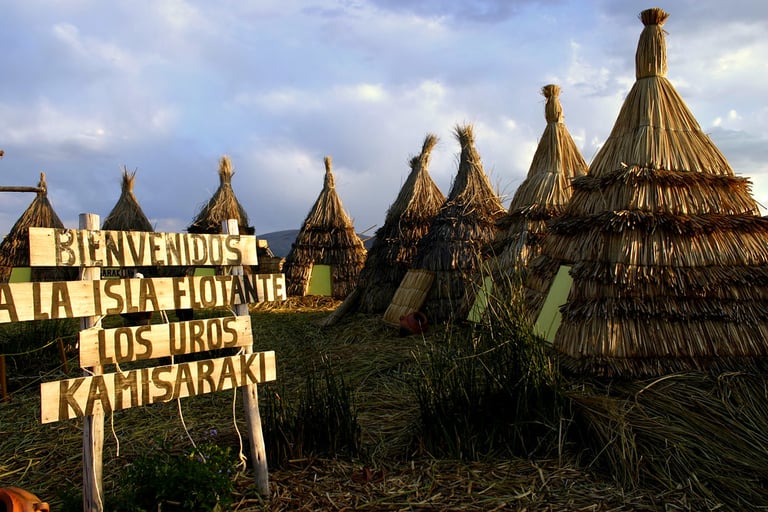
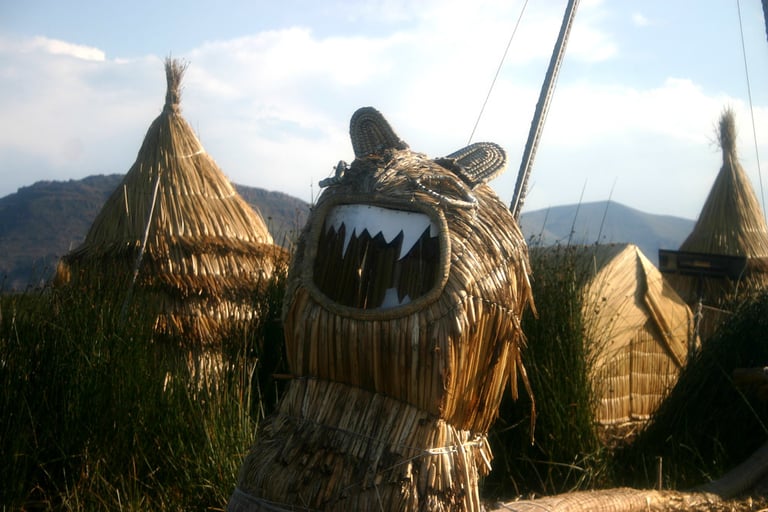
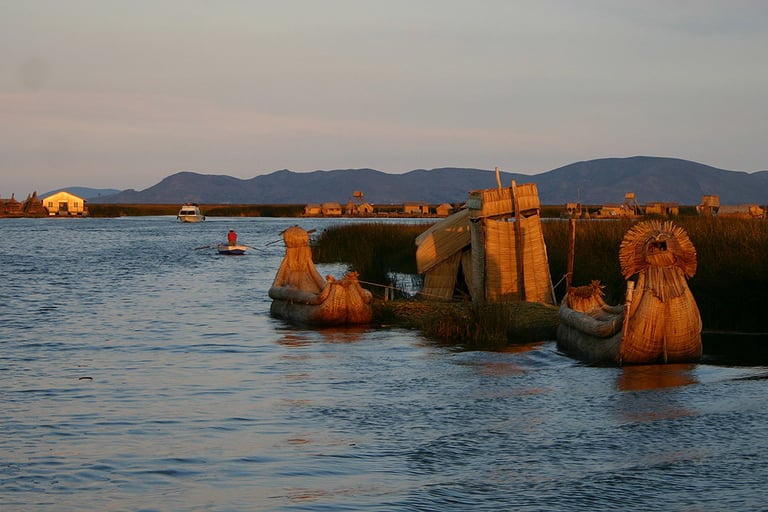
The Uros people are an indigenous group who live on unique floating islands made of totora reeds on Lake Titicaca, which lies on the border between Peru and Bolivia at an altitude of about 3,800 meters (12,500 feet). They are one of the most distinctive and historically fascinating cultures in the Andes. Who Are the Uros? The Uros claim descent from a people who predate the Inca Empire. Their language was originally Uru, but most now speak Aymara, and some speak Quechua or Spanish due to assimilation and education. They consider themselves to be “people of the lake” and have a strong spiritual connection with Lake Titicaca. The Floating Islands The islands are constructed from dried totora reeds, which grow abundantly in the shallow parts of the lake. Each island is handmade and anchored to the lakebed with ropes and stakes to keep it in place. The reeds decompose from the bottom, so new layers are added to the top every few weeks. The islands support homes, watchtowers, schools, and even solar panels today. Traditional Life Uros life traditionally revolves around fishing, hunting waterbirds, and harvesting totora reeds for building and food. They also build reed boats (balsas) shaped like large canoes or animals. Many now participate in tourism, offering homestays, boat rides, and crafts, which has become an important source of income.Culture and Beliefs The Uros see the lake as sacred and maintain elements of pre-Columbian spirituality, blended with Christianity. Their myths speak of being "black blooded" and unaffected by cold, distinguishing themselves spiritually and physically from other peoples. While many modern influences exist, they still hold traditional festivals, dances, and ceremonies. Visiting the Uros Islands Most visits depart from Puno, Peru, the main town on the lake. Day trips are common, but some islands offer overnight stays, giving a glimpse into island life. Be aware that some islands are more “touristy” than others—ask for less-visited Uros islands if you're seeking authenticity. A Note on Sustainability & Authenticity While fascinating, the tourism boom has led to a commercialization of some aspects of Uros life. Some islands are essentially living museums, and the experience may feel staged. However, other communities still preserve more of their traditional lifestyle. If you're curious, I can recommend responsible tour operators or ways to visit respectfully and meaningfully.
Where to stay
The idea was to arrive in Puno and spend the night there, then stay on one of the floating islands the second night.
Some of the decent-looking places we found in Puno city included:
Tierra Viva Puno Plaza. located in Puno
Hotel Hacienda Centro Historico located close to the main square in Puno
When it came to picking a local family run floating bungalow to stay in on the lake, these were some of the most attractive choices:
QHAPAQ Lago Titicaca. located on a floating island, all inclusive with indigenous host.
Uros Samaraña Uta Lodge. located on a floating island, all inclusive with indigenous host.
I visited the Floating Islands on Lake Titicaca just outside Puno back in the year 2007.
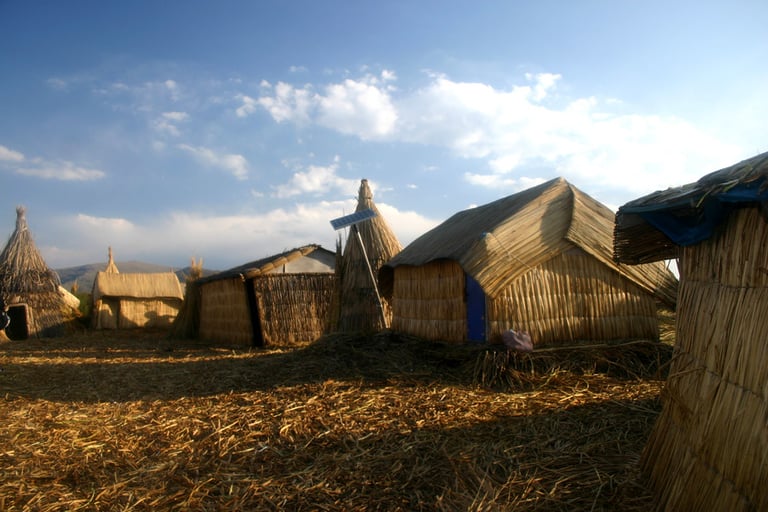
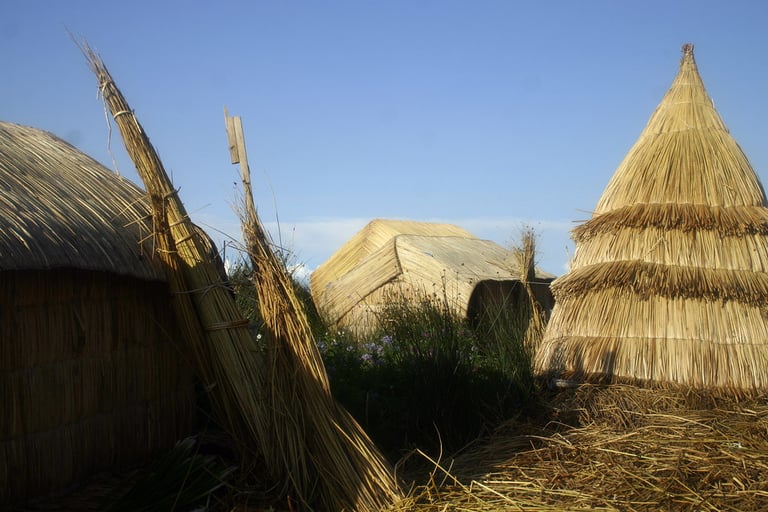
Days 10 to 13 - Arequipa
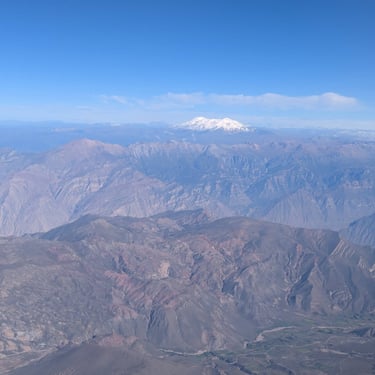
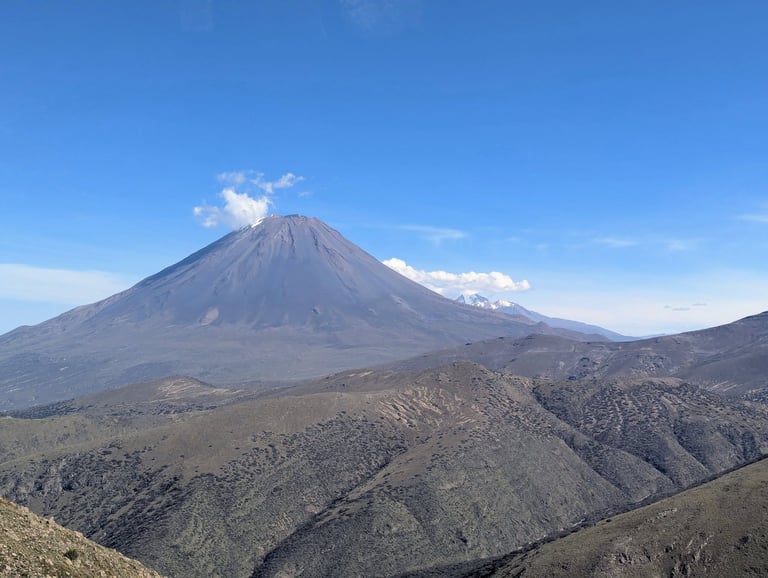
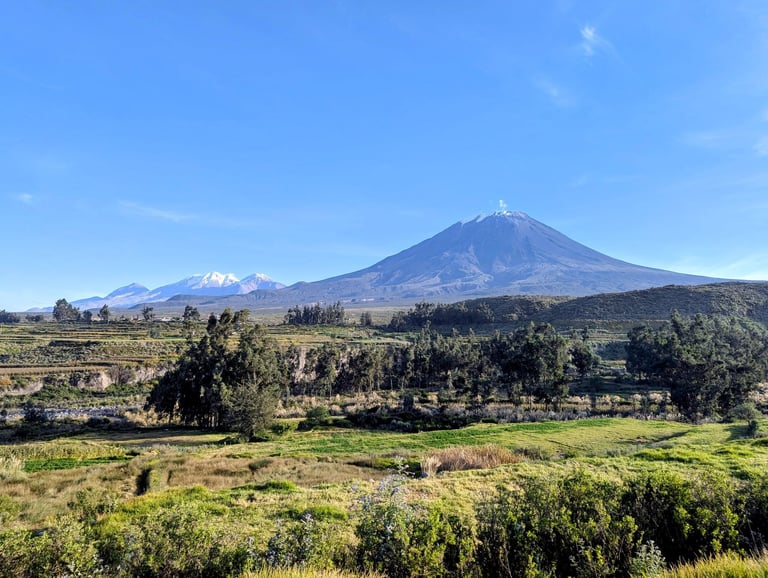
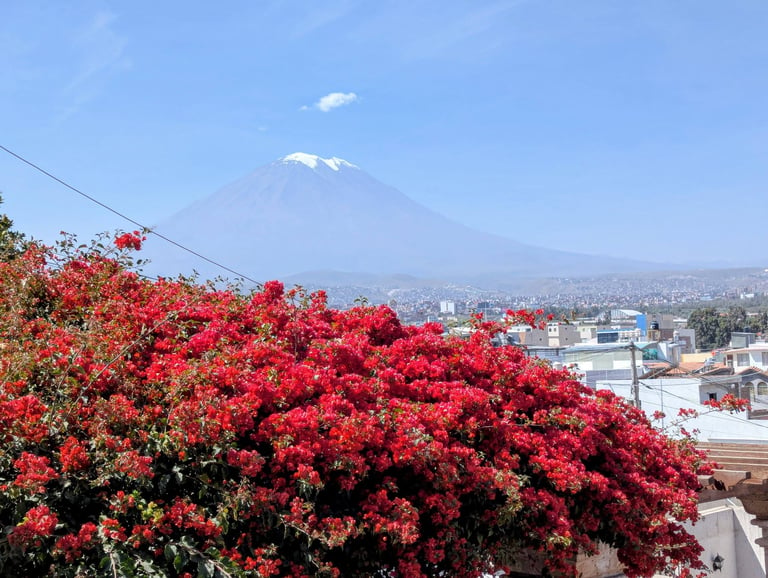
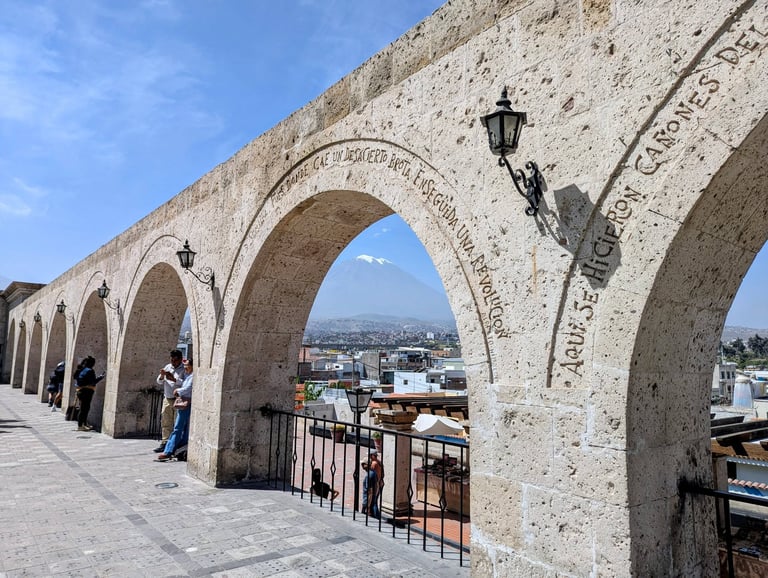
The city of Arequipa lives in the shadow of the Misti volcano, you'll see its striking stratovolcano form as soon as you land - or possibly from the air, depending on where you're sat on the plane. Due to its proximity to Arequipa, Misti is considered one of the most hazardous volcanoes in the world, with potential risks from pyroclastic flows, lahars, and floods.
Getting there
We travelled from Nazca to Arequipa by bus, but it's a long overnight journey that lasts 9 hours, much to Joe's joy (not), but unfortunately it is the only way to get there (unless you want to take a 7hrs bus back to Lima and then fly to Arequipa, which is just silly). So your options are really limited to the following:
Cruz del Sur bus: Nightbus 22:00-08:20 for 142 soles for the more comfortable seats.
Oltursa bus: Nightbus 21:00-06:00 for 135 soles for the more comfortable seats.
Civa bus: Nightbus 21:00-? 145 soles
Where to stay in Arequipa
You'd want to stay somewhere central in Arequipa because it's a super walkable city.
Some of the options we considered were:
Casona Solar (£66) - in the historical center, breakfast included, old fashioned but in a charming way
Palla Boutique Hotel ( £81) - traditional but also modern, with a rooftop pool
qema Arequipa (£73) - super cozy decor, and why not splurge on a suite for another £4, even better!! Like a weird oasis in the middle of the city.
Plaza Arequipa Boutique (£55) - seems quite fancy for not much money. Albeit basic rooms.
La Hosteria Boutique Hotel (£102) - very traditional historical building. A tiny touch more expensive than what we'd like to pay in this neck of the woods though, but it seems to be worth the money for the environment and location.
Places to eat in Arequipa
There are a fair few famous and many excellent restaurants in Arequipa.
Zig Zag
Chicha por Gaston Acurio
El Tio Dario
La Nueva Palomino Picanteria Arequipena
Chira fusion
Things to see and do in Arequipa
Museo Santuarios Andinos - MUSA
Santa Catalina Monastery - one of the most instagrammable places on Earth
So pretty
Colca Canyon - The world's deepest canyon
I had previously done a 2 day / 1 night Colca Canyon tour some 15 years ago or so. It's hard work, and I am not getting any younger or fitter, but for avid trekkers who think they can cope with the strenuous hike up back out of the deepest canyon in the world, go for it! It's an interesting trip and you get a glimpse into the lives of the people who live at the bottom of this valley. However, given our restricted time (as well as my lack of fitness), we opted for the Colca Canyon Daytour. I don't really think you can go to Arequipa and not go and see this famous canyon, so this is one way to do it. If you are up to the challenge, the most common way to see the canyon is on the 2 day/1 night tour, and it's not expensive for what you get.
The Sillar Route - Arequipa's buidling stone
Sillar is a type of stone found in Arequipa and used in most of the old buildings in the city. It's a white, porous, light-weight volcanic rock of rhyolite composition. It's an ideal place to visit in Arequipa if you're a geologist, but it's also just nice to get out of the city and into the country side on the Sillar Route Tour. It's just a half a day tour. Sillar is a type of ignimbrite, a volcanic rock formed from pyroclastic flows. It is of rhyolitic composition but can contain small fragments of andesite. It is lightweight, soft, and porous, making it ideal for carving and construction.
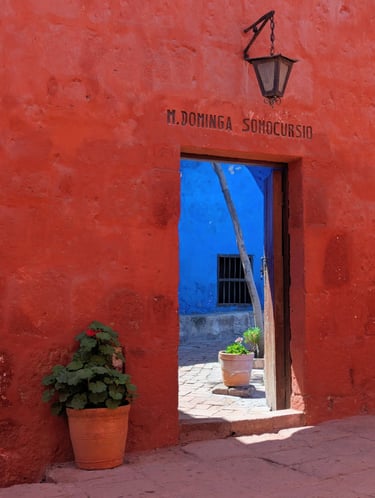
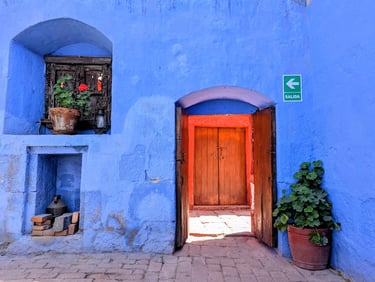
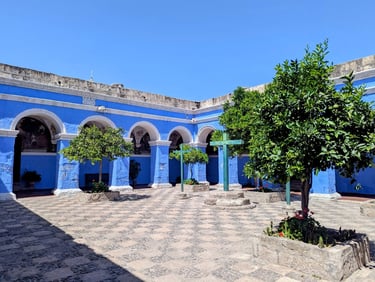
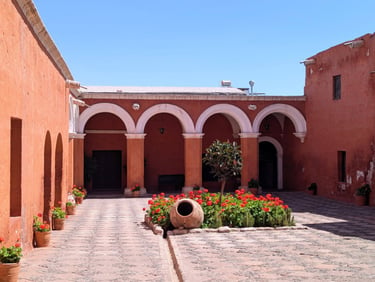
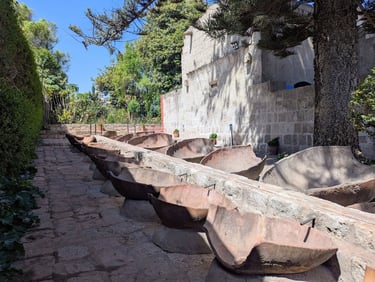
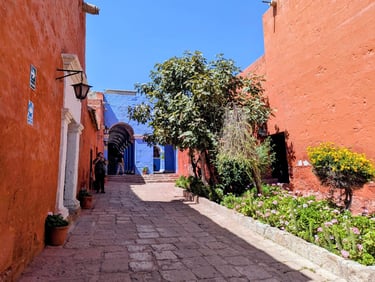
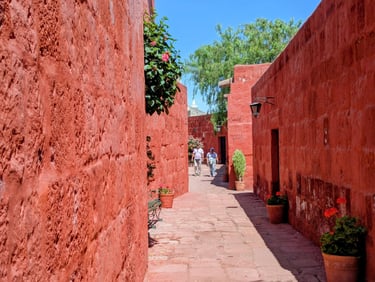
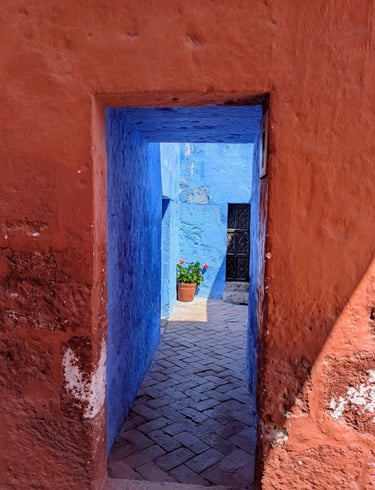
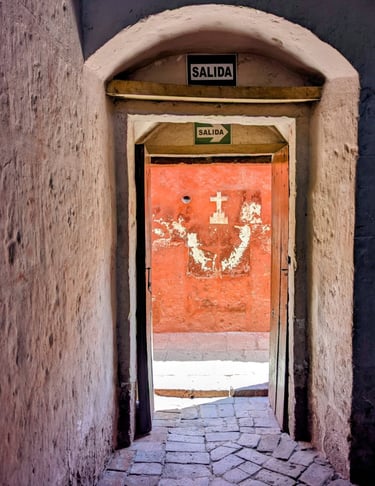
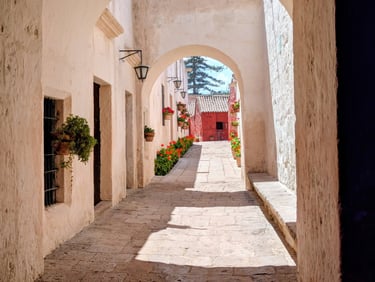
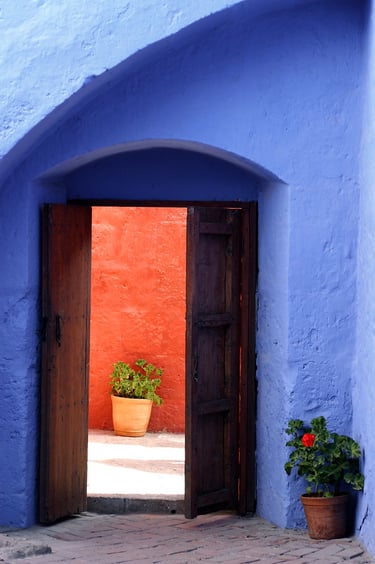
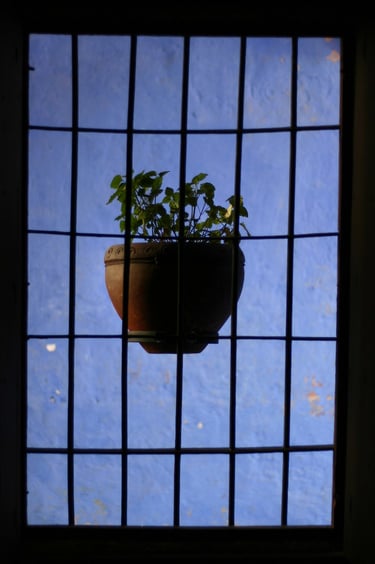
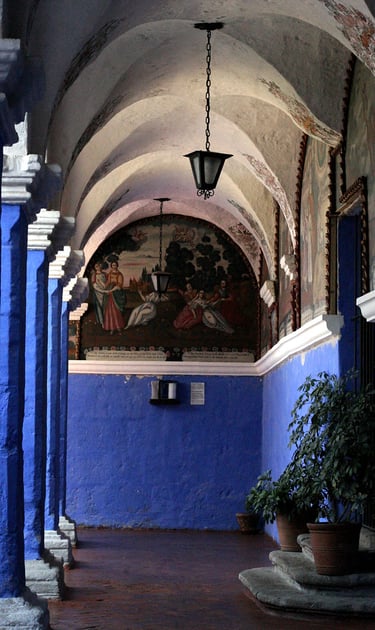
Blast from the past: Santa Catalina Monastery in Arequipa in 2007
I went to Santa Catalina Monastery back in 2007, but below are a few pictures I took then. It hadn't changed very much to be honest in these 19 years.

Here are some of the activities you can take part in while in Arequipa:
Blast from the past: The 2 day trek of the Colca Canyon in 2007
Below are some pictures from the 2 day/1 night tour I went on of the Colca Canyon back in 2007. As you can see from the photos, there is some serious trekking involved at great elevations, so the walk is not for unfit people like myself. I was significantly younger and fitter 19 years ago and still struggled to get out of the canyon back then, needing the help of a donkey to get me back up after I was absolutely exhausted.
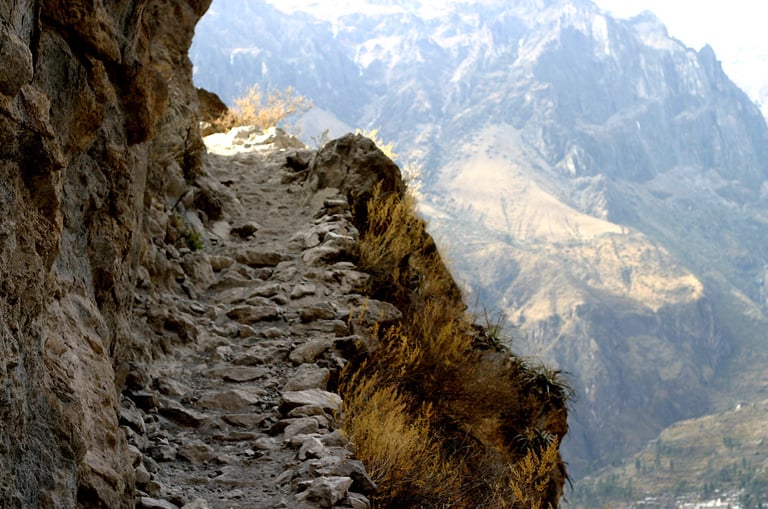
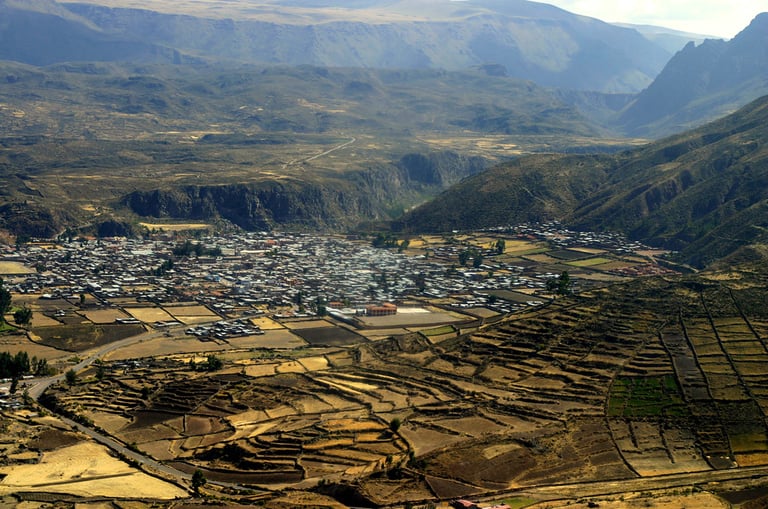
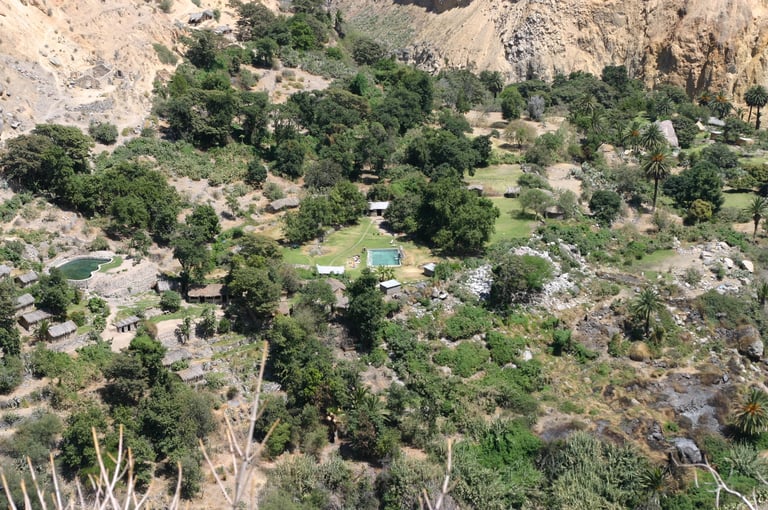
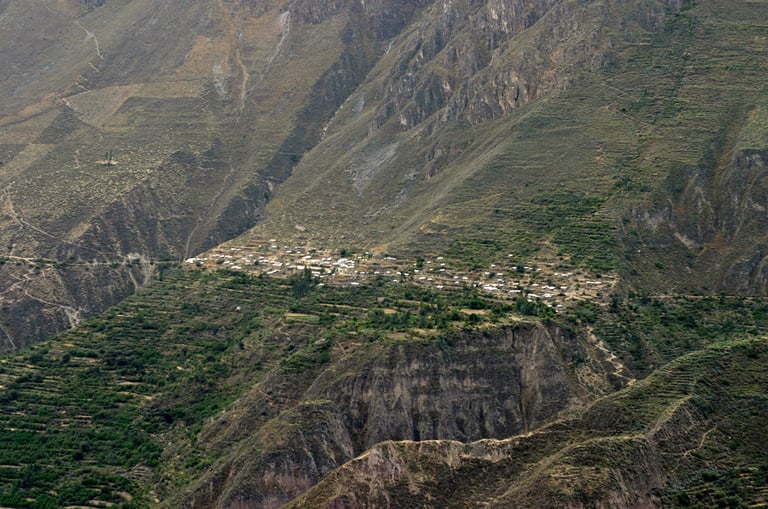
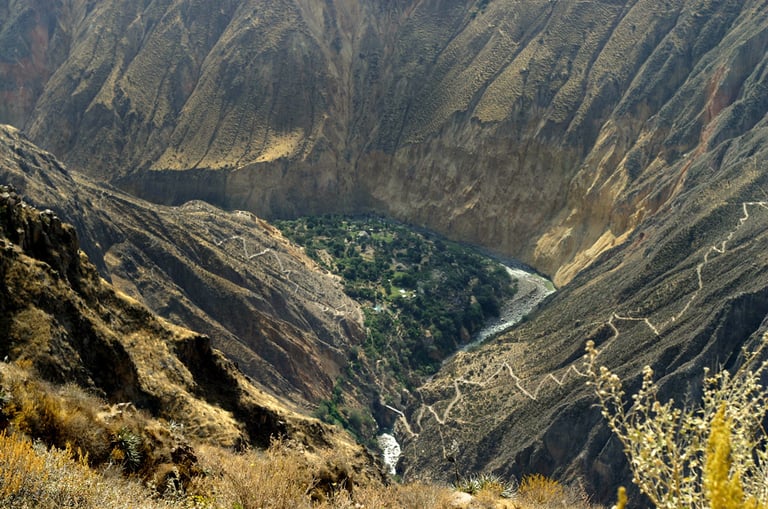
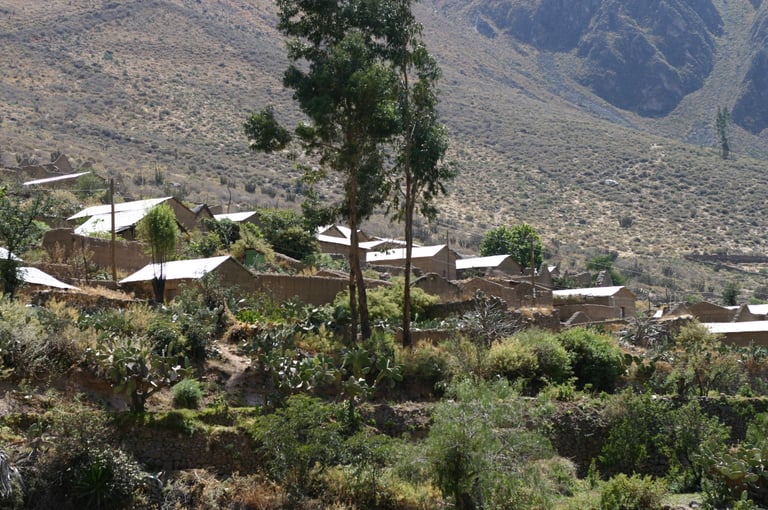
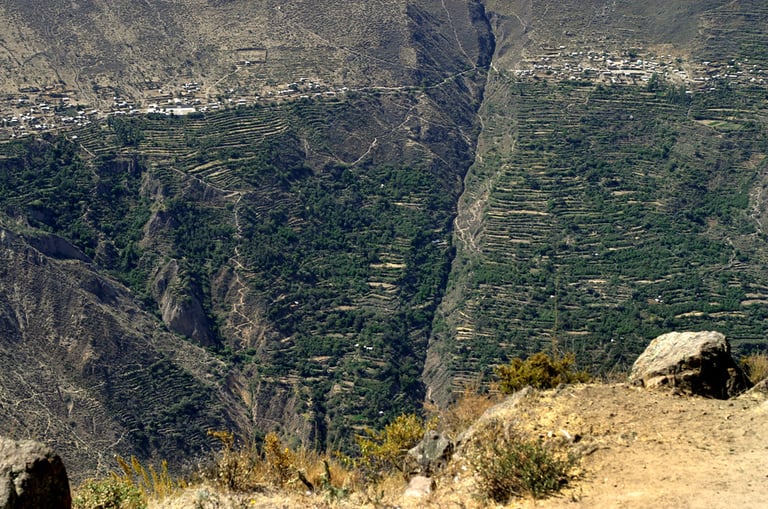
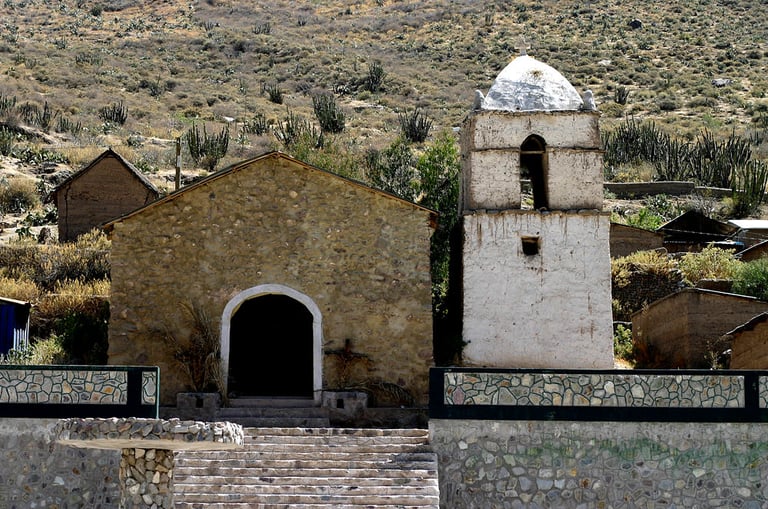
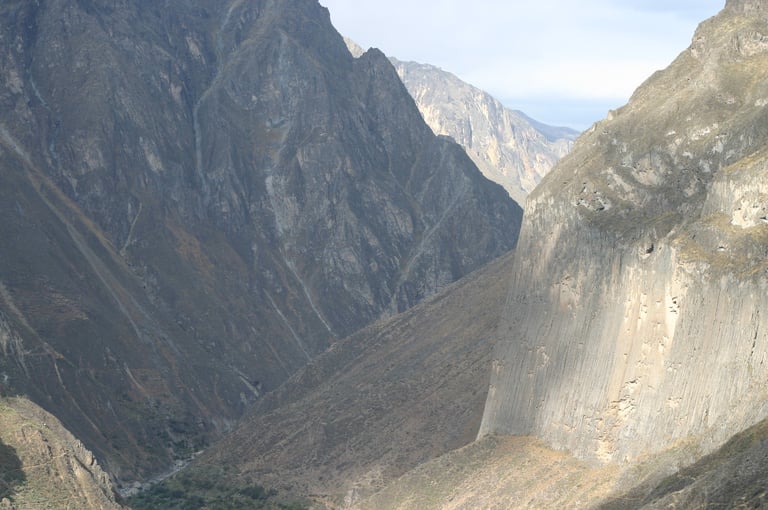
Photographs I took during a 2 day Colca Canyon trek back in 2007
Accommodation during the 2 day / 1 night Colca Canyon tour
One thing you should also mentally prepare yourself for if you're going on the 2 day / 1 night trek of the Colca Canyon is the accommodation. It is very very basic. It may have improved since 2007, but I doubt it. Imagine the logistics of trying to get anything down into the canyon. It is highly restrictive, so therefore houses, furniture, washing facilities and equipment is very basic.
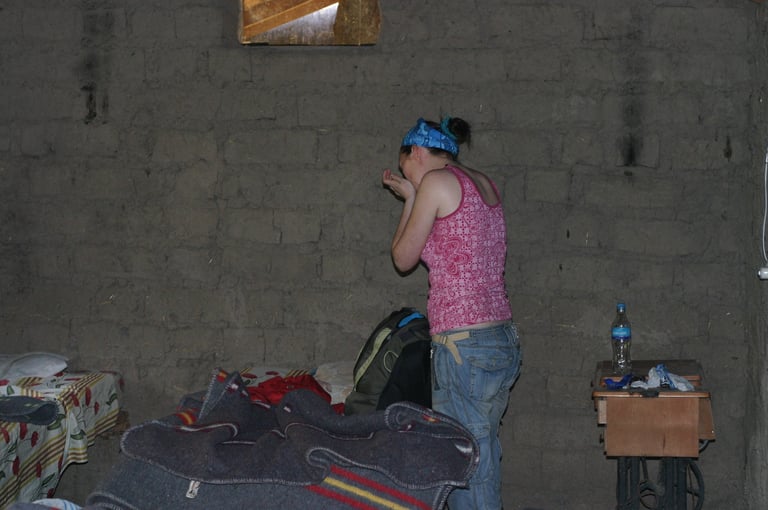
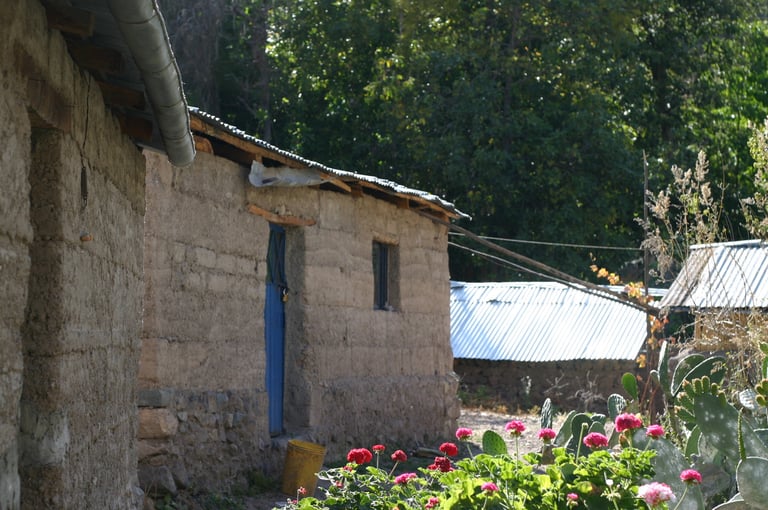
Shared sleeping facilities in the Colca Canyon in 2007
I'm not trying to persuade you to not do the Colca Canyon walk, but be mindful that it isn't an easy trek, especially so at the altitude, and facilities are very basic. As long as you're fairly fit, enjoy trekking and happy enough to rough it, you'll have a great time!
Day 13 - The Sillar stone mines of Arequipa
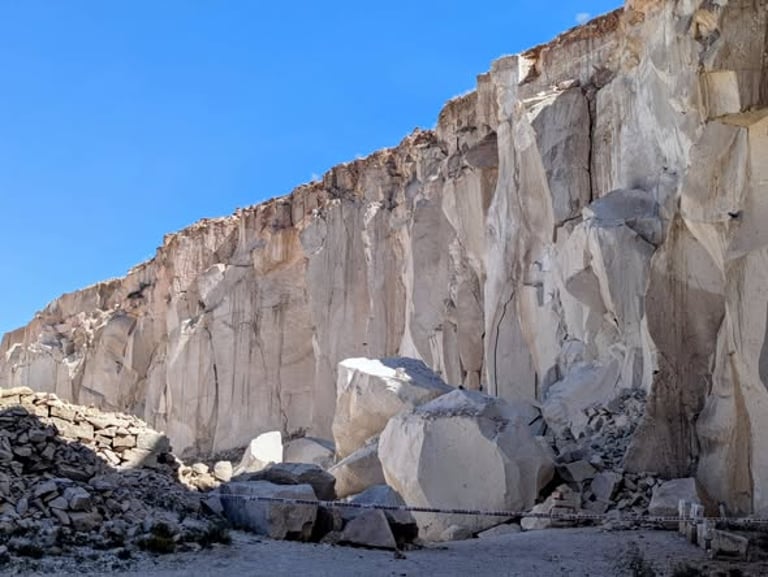
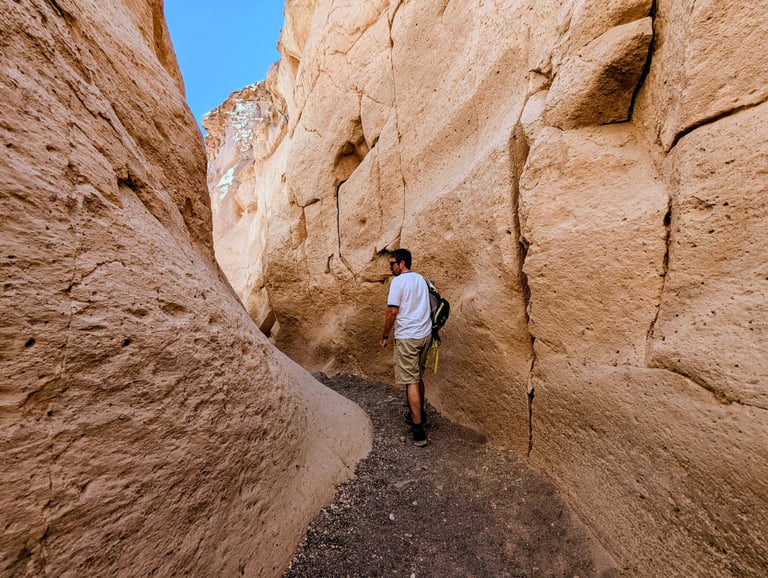
On our last full day in Arequipa, we went on a half-day Ruta Del Sillar tour which took us to the Sillar Añashuayco stone quarry and the Sillar outcrops in the Culebrillas ravine near Arequipa city. The Sillar is the stone that gives Arequipa its nickname “La Ciudad Blanca” - The White City. The rock was used in almost all the buildings in the historical centre and is also used as a decorative stone.
Geology of the Sillar
Geologically, the Sillar is a vapor-phase ignimbrite that's rhyolitic in composition (rich in silica, giving it the white color), formed from explosive eruptions of the region’s active volcanoes. The main "sillar" is approximately 1.65 million years old.
A vapor-phase ignimbrite is a type of volcanic rock formed from extremely hot, fast-moving pyroclastic density currents (basically avalanches of ash, gas and rock fragments) produced during explosive eruptions. After the ash and pumice settle, the deposit is still so hot that gases trapped inside the ash begin to react chemically with the particles. This process is called vapor-phase crystallization. Instead of cooling immediately into glassy volcanic ash, minerals grow directly from the hot gases, coating or replacing the ash particles. This gives vapor-phase ignimbrites distinctive features like tiny crystals lining pores (often quartz or feldspar) and a more “dry,” non-welded texture compared to welded ignimbrites.
Vapor-phase ignimbrites form at very high temperatures, c.a. ~500°C to 800°C is the key range, though most vapor-phase alteration happens around 600–700°C. For comparison, the pyroclastic flows that buried Pompeii during the eruption of Mount Vesuvius in AD 79 were generally estimated between about 300°C and 700°C, depending on the specific surge or flow. Even the lower end (~300°C) is hot enough to cause instant fatal burns to lungs, capable of killing within seconds due to thermal shock and asphyxiation.
Contrary to popular belief, the white sillar (scientifically known as Arequipa Airport Ignimbrite) did not come from the perfectly conical Misti volcano that dominates the Arequipa landscape. It originated from a massive explosive eruption of an "ancestral" volcano that existed before the current Misti and Chachani were formed. Geologists believe the source is a large caldera (a collapsed volcanic crater) now largely buried under the Chachani Volcanic Cluster, though the source is still debated.
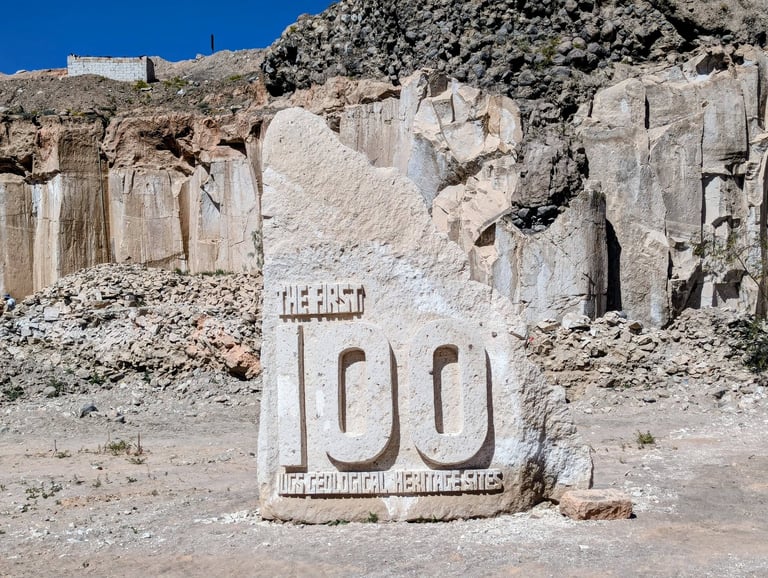
The quarries at Añashuayco, Cortadores, and Culebrillas expose spectacular cross‑sections of this material and show exactly how it formed. The Añashuayco quarry formed one of the first 100 GeoHeritage sites, as it's a type locality of the Sillar rock.
Given existing deposits of this rock type beneath the city of Arequipa and its extreme proximity to the active Misti volcano and continuous urban sprawl towards its slopes, the possibility of a similar event as happened in Pompeii and that created the Arequipa Sillar cannot be completely ruled out to happen in the future. Misti has a long history of "Plinian" eruptions, the most violent type of volcanic activity. These eruptions create massive ash columns that eventually collapse, sending pyroclastic flows racing down the slopes. However, the probability of a Pompeii-scale, city-burying ignimbrite event is low. The last major eruption in Misti occurred in the mid 15th Century. Currently, there is no evidence of an imminent eruption at Misti volcano. As of April 2026, the official alert level remains at Green (Normal), indicating the volcano is in a period of relative calm with no signs of immediate danger.
Ruta del Sillar Tour
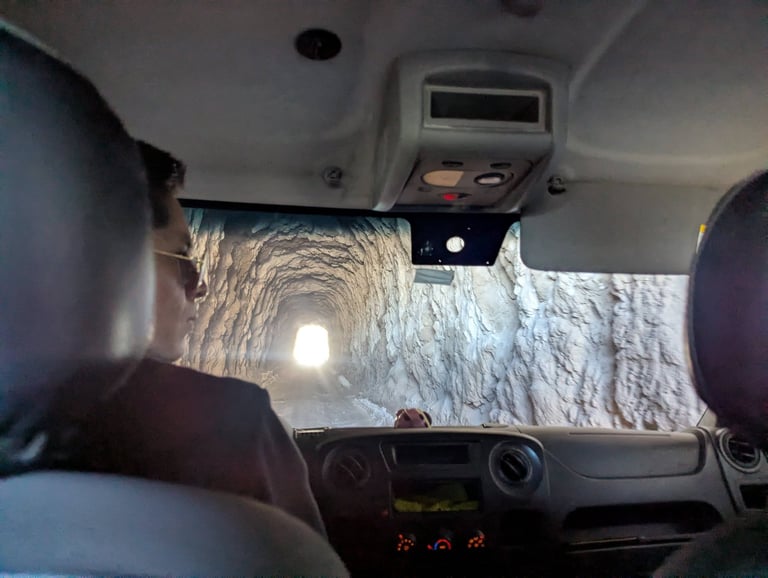
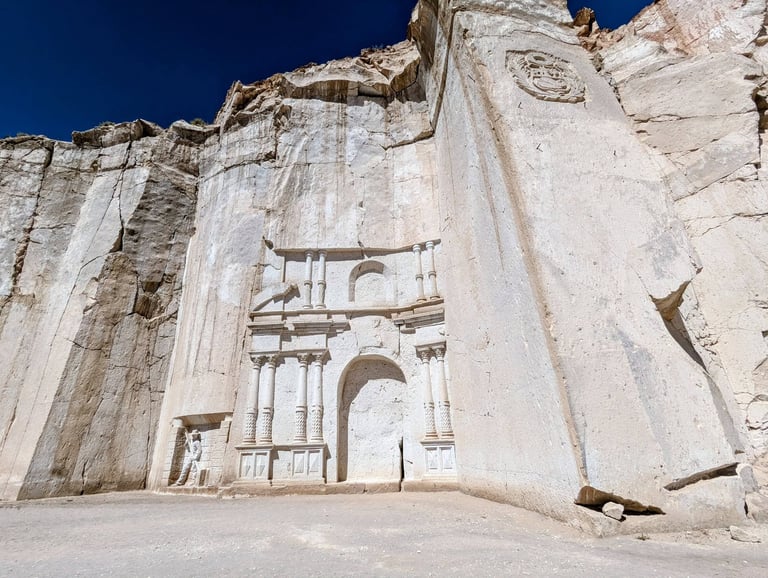
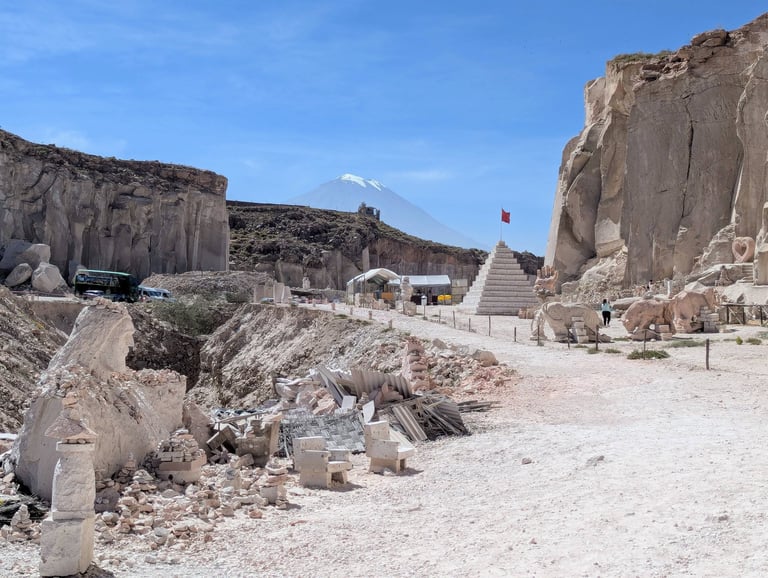
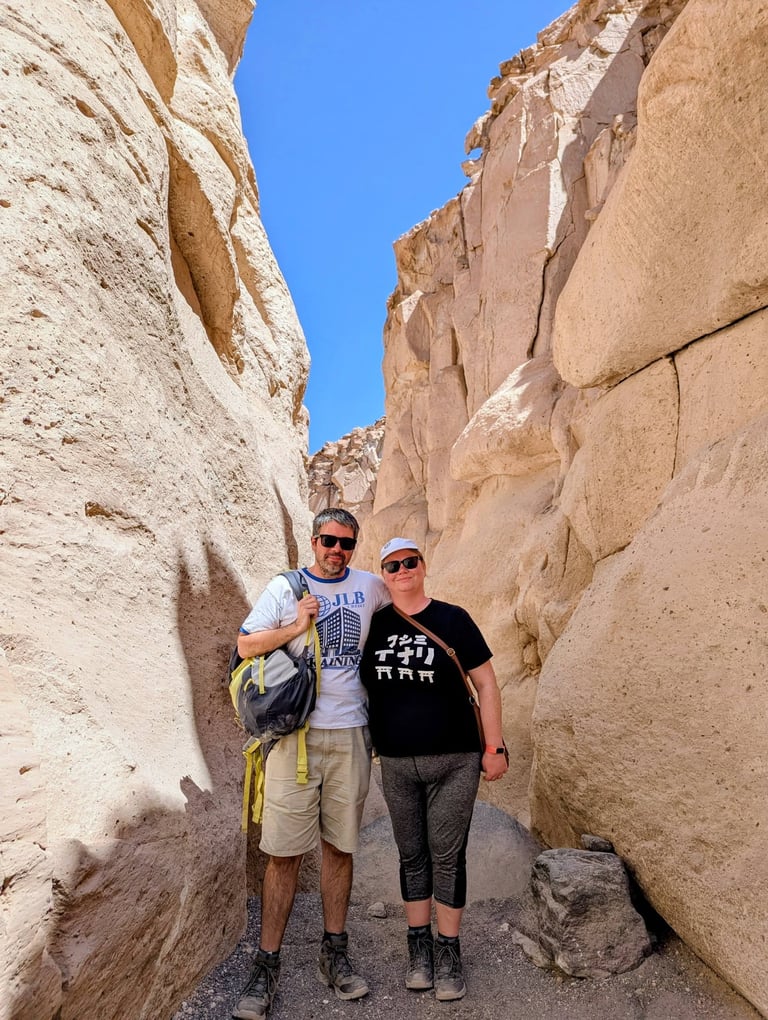
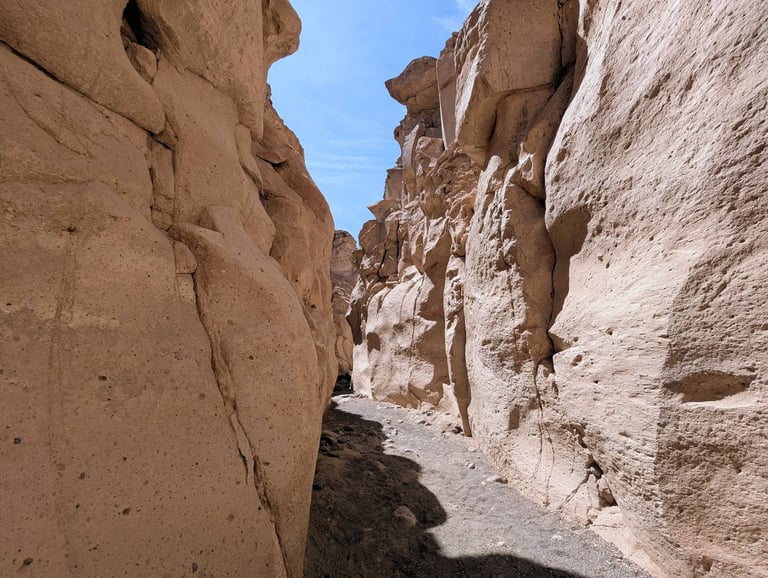
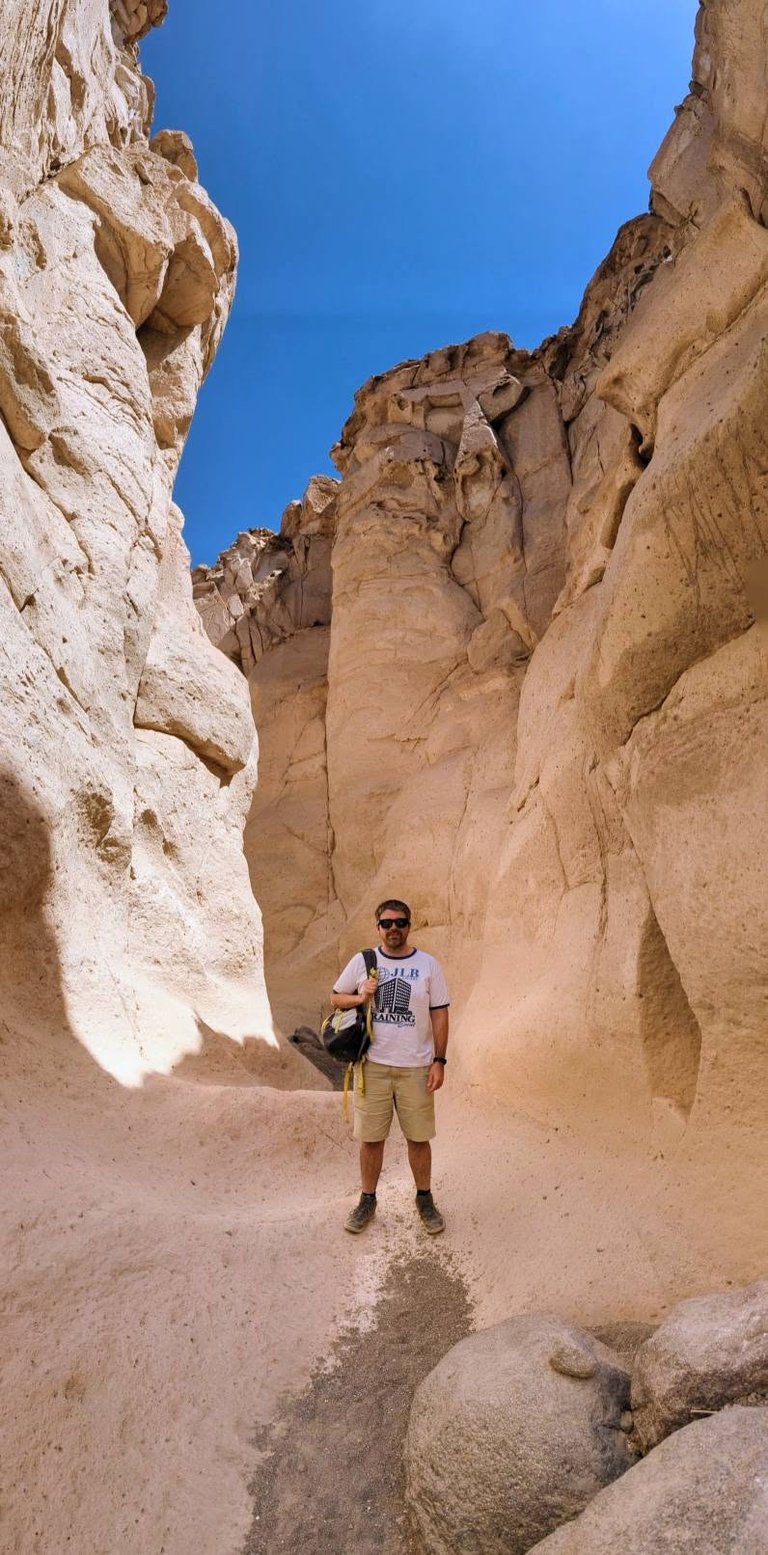
We joined an organised tour which we booked on Viator for £19 GBP to see the different outcrops of the Sillar stone in the areas surrounding Arequipa city. We were picked up from the main town square and driven to our first stop, the Sillar Añashuayco stone quarry. This is where artisans remove the Sillar from the rockface using the natural joints in the rock, then cut the stone to shape, whether it's for a construction project or a sculpture of any sort. There are a few "sculpture gardens" within the quarry itself, including a carved out Petra-like facade. The volcano Misti towers over the quarry in the distance, so the place is quite picturesque.
Nazca
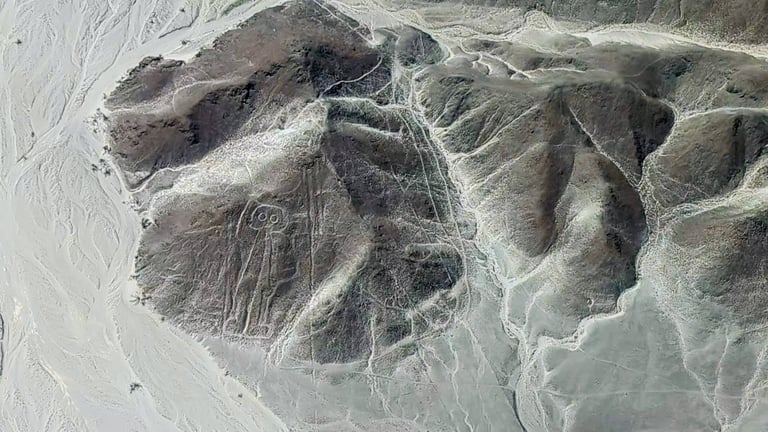
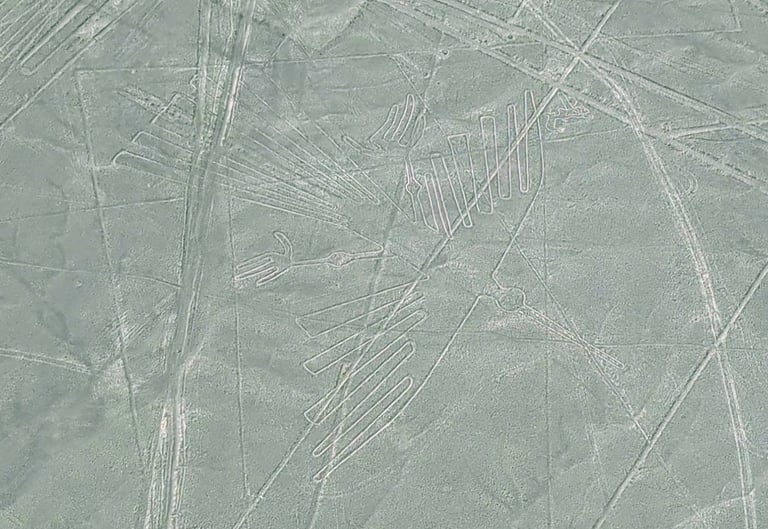
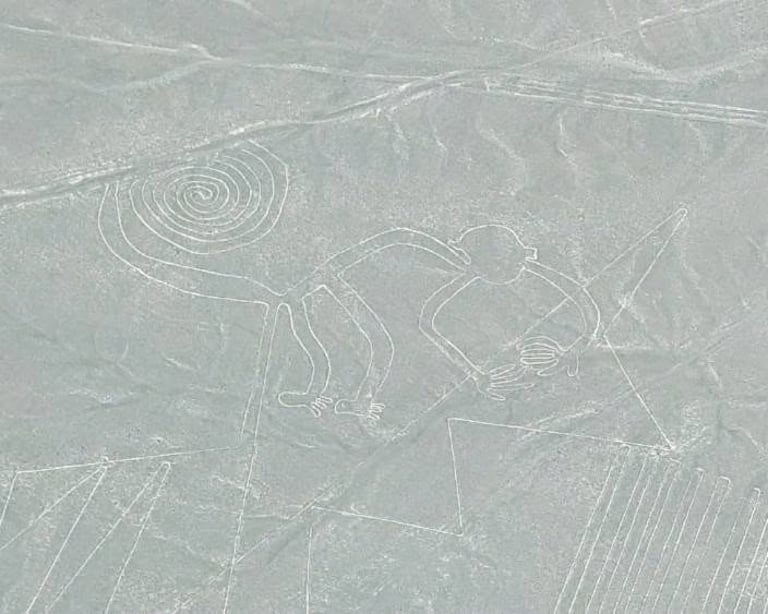
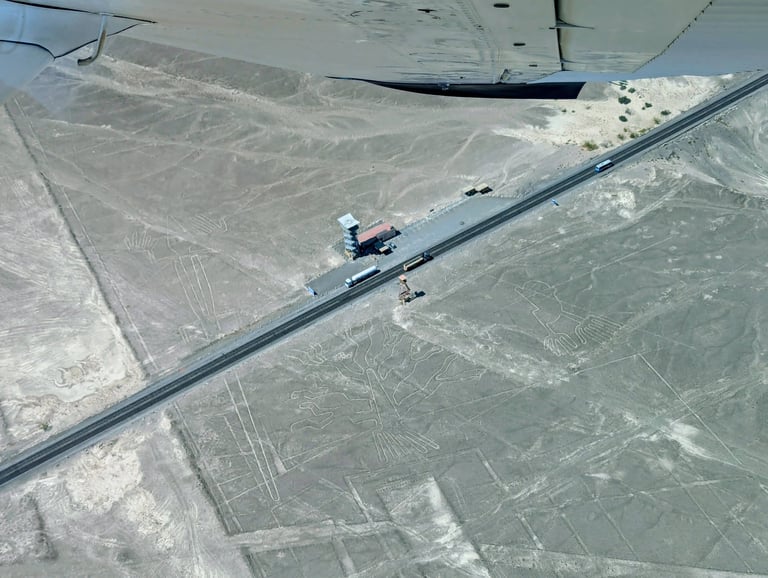
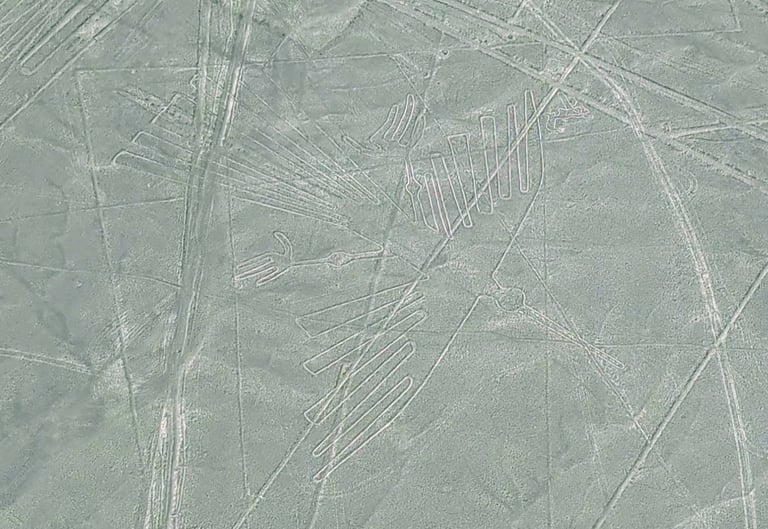
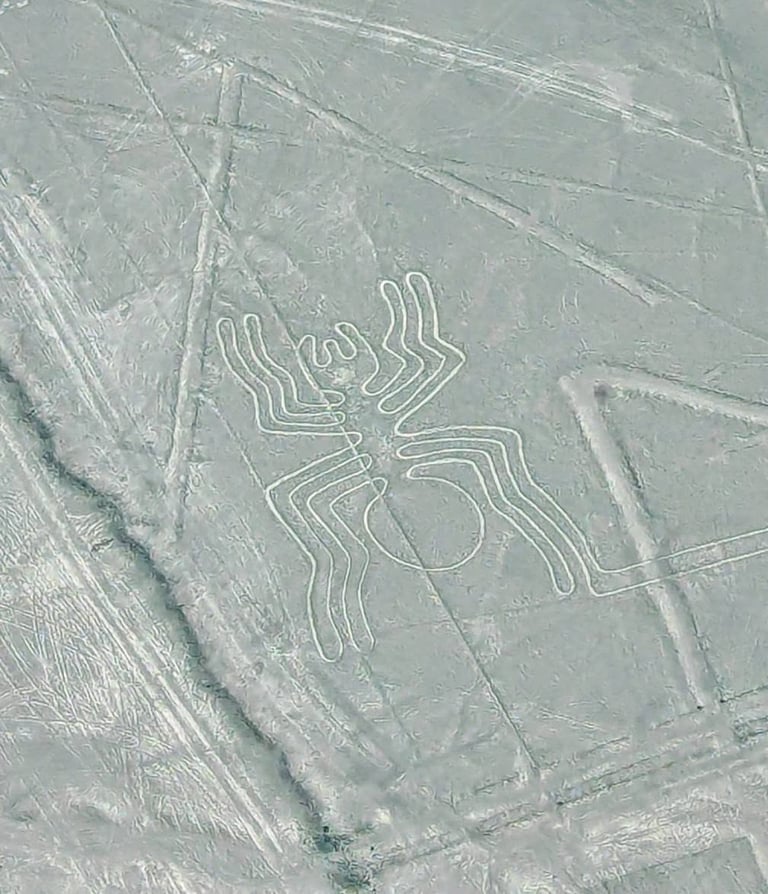
Nazca is a fairly small town in the desert of southern Peru, famous for the Nazca lines. The Nazca Lines represent one of the most profound archaeological mysteries in the world, etched into the arid Pampa de San José in southern Peru between 500 BCE and 500 CE. Historically, these massive geoglyphs, ranging from simple lines to complex zoomorphic figures like the hummingbird and spider, were created by the Nazca culture by removing the dark, iron-oxide-coated pebbles to reveal the lighter sand beneath. While their exact purpose remains a subject of intense scholarly debate, they are widely believed to have served as a sacred astronomical calendar or as ritual pathways linked to water and fertility.
The sheer scale of the designs, some stretching over 370 meters, suggests a society with sophisticated surveying techniques and a centralized organizational structure capable of executing large-scale terrestrial art that is best viewed from the sky.
Geologically, the lines have survived for nearly two millennia due to the unique climate of the Nazca Desert, one of the driest places on Earth. The region's lack of wind, rain, and erosion, combined with a layer of lime in the soil that hardens upon contact with morning mist, has effectively "fossilized" the designs in place.
Getting to Nazca
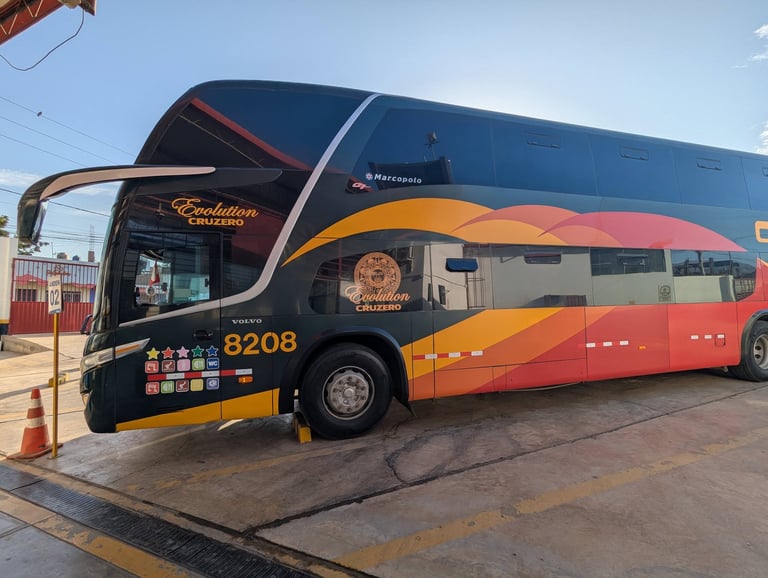
We travelled on a Cruz del Sur nightbus from Arequipa to Nazca by bus, but there are loads of departures with Cruz del Sur and other bus companies every day from Ica, and Lima as well. Peru Hop also does the journey. Nazca is on the Panamerican highway, so there's lots of traffic passing by.
Where to stay in Nazca
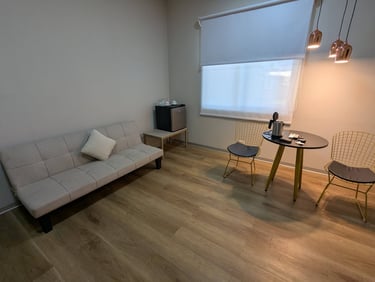
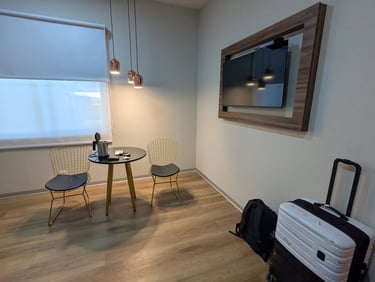
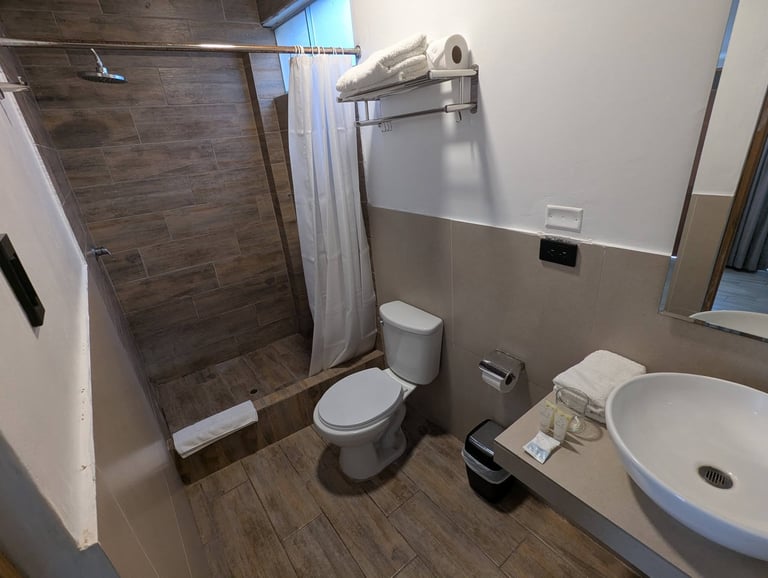
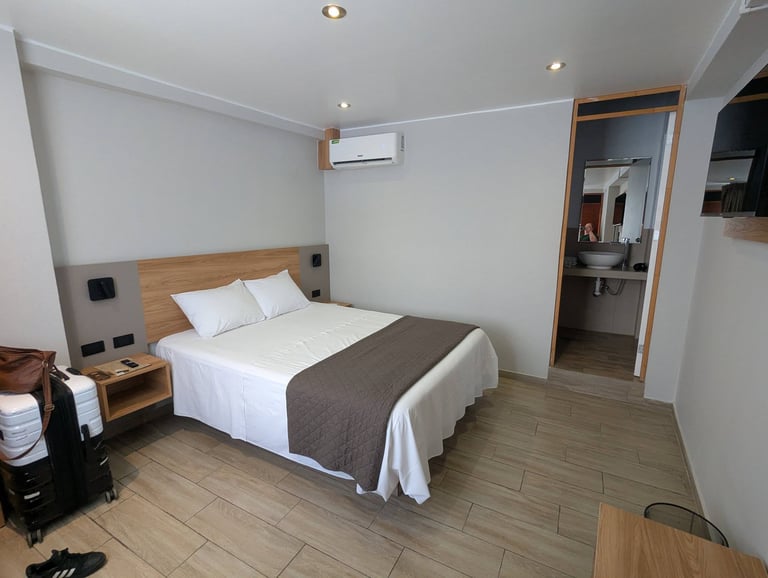
We were only just staying in Nazca for a night, however we were arriving early in the morning and we didn't know if we'd manage get a comfortable night's sleep, so we sent a WhatsApp to the hotel and asked if they'd have an option for an early check-in. It would also be convenient as we'd have somewhere to leave our stuff, and get a shower as well after the long journey. They got back to us, saying it cost $45 USD, which is very expensive for a hotel that cost us £62 GBP for the night including breakfast. But beggars can't be choosers, so we went with it anyways for convenience and we were checked in by 8am.
However, there is also plenty of super cheap and convenient little homestays in Nazca, such as:
La Maison de Lydia (£15 per night) - cheap and cheerful but a bit out of town. Has a swimming pool which is a plus.
Hotel Samanahuasi (£25 per night)
Hospedaje Jumana (£25 per night) - super close to the central square and people who run the place are very nice.
Hospedaje el Telar (£25 per night)
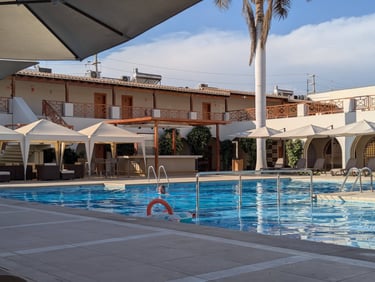
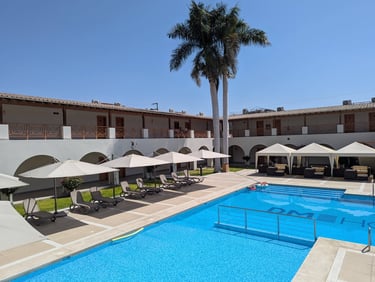
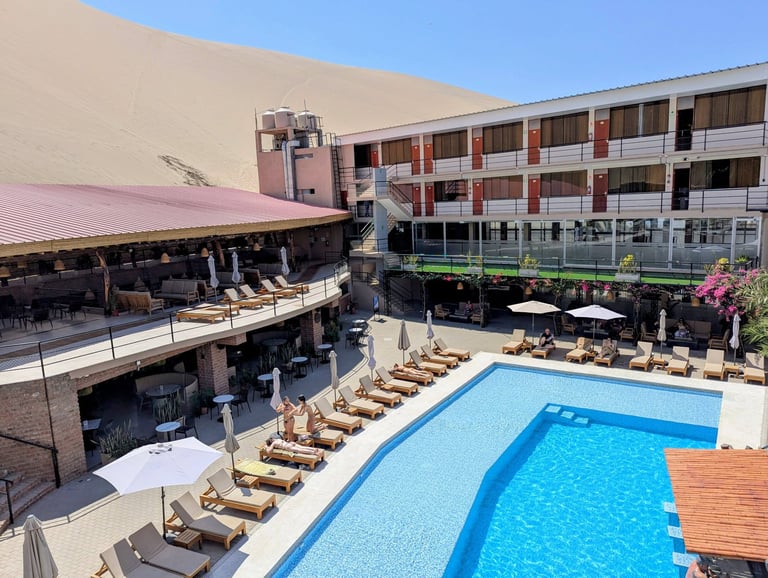
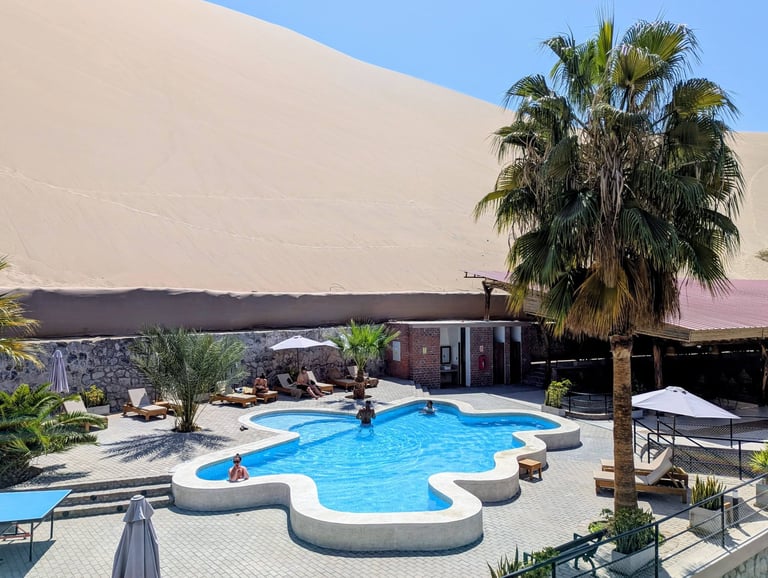
Our choice to stay at DM Hoteles was due to the fact that it was super close to the Cruz del Sur terminal (literally just a block and a half away) and it has a nice swimming pool and a big area with sun loungers, so that meant that we had a nice place to chill out.
Things to do in Nazca
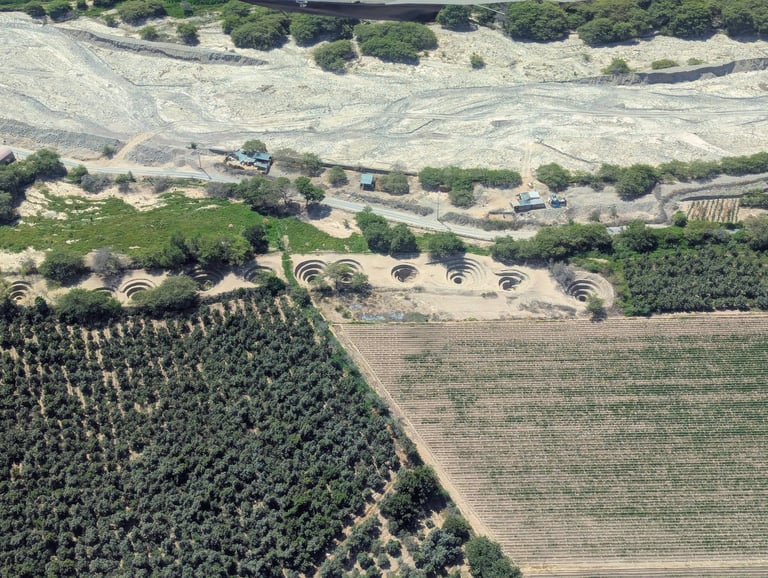
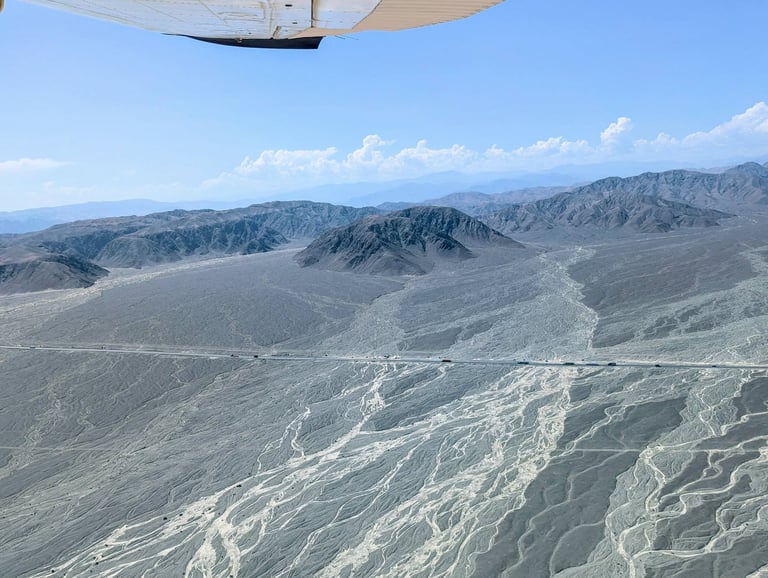
Clearly the reason why people go to Nazca is for the Nazca lines, where the recommended way to see them is by small aeroplane. The last time I was in Peru, I was a poor student, so I could not afford a flight over the Nazca lines. Now that I am older, I have a fear of flying (ironically, as I love travelling). When I was a young person, I always trusted that adults know what they're doing, but now that I am an adult myself and surrounded by adults, I realised that we're all just trying to do the best we can but we're all definitely flawed. This caused me to be afraid of flying - there are imperfect pilots out there.
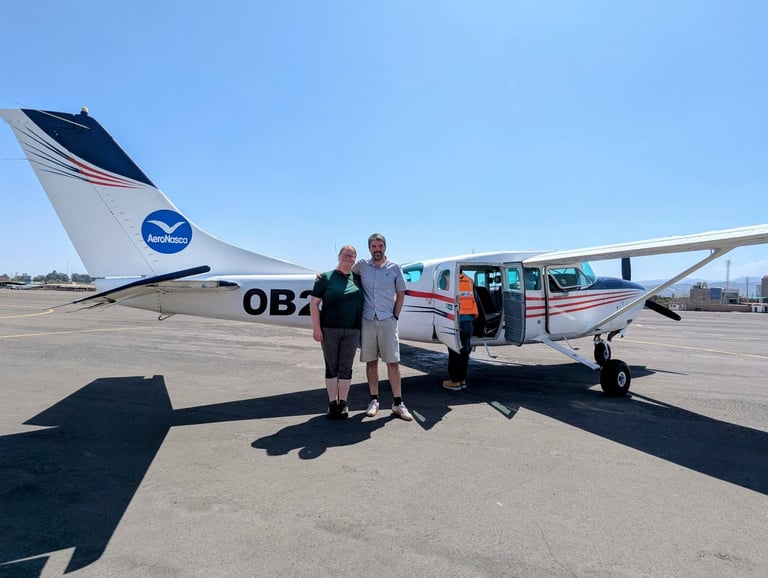
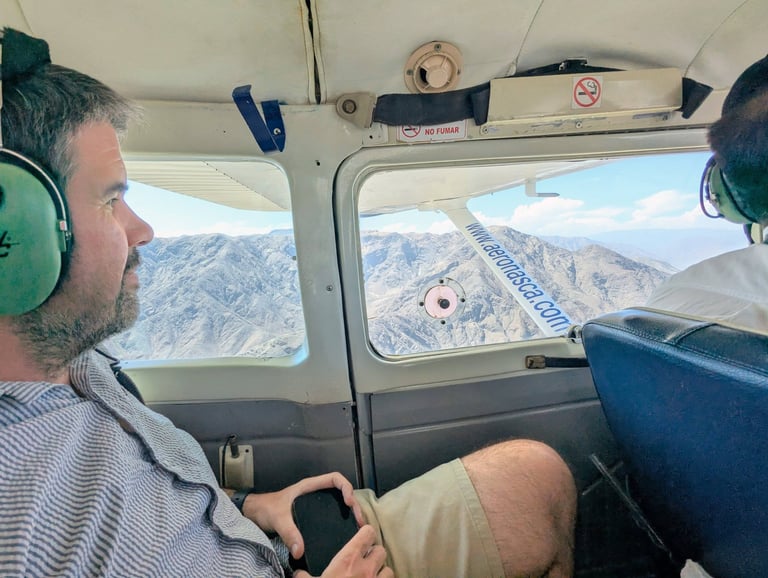
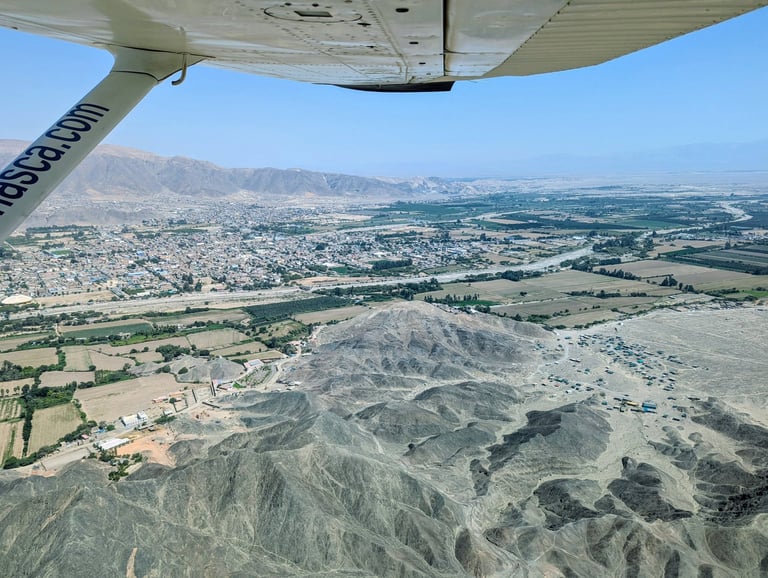
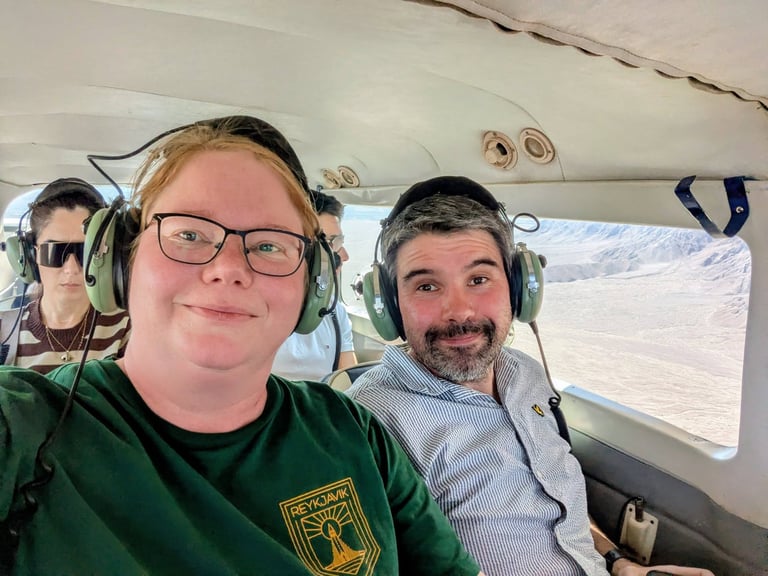
However, I didn't want that fear to get in the way of me living the dream of many years of seeing the famous Nazca lines from the air. So we booked ourselves into an AeroNasca flight in afternoon (as morning flights were sold out both days that we could have gone) to see the Nazca lines! AeroNasca is the most reputable company at Nazca airport, using an 8 seater Cessna for the flights. The cheapest way to book the flights is to book directly with them via WhatsApp on their website - we paid $75 USD (£56 GBP) per person, plus 77 soles (17 GBP) in airport taxes and charges. If you book on a site like GetYourGuide or Viator, it is almost double the price.
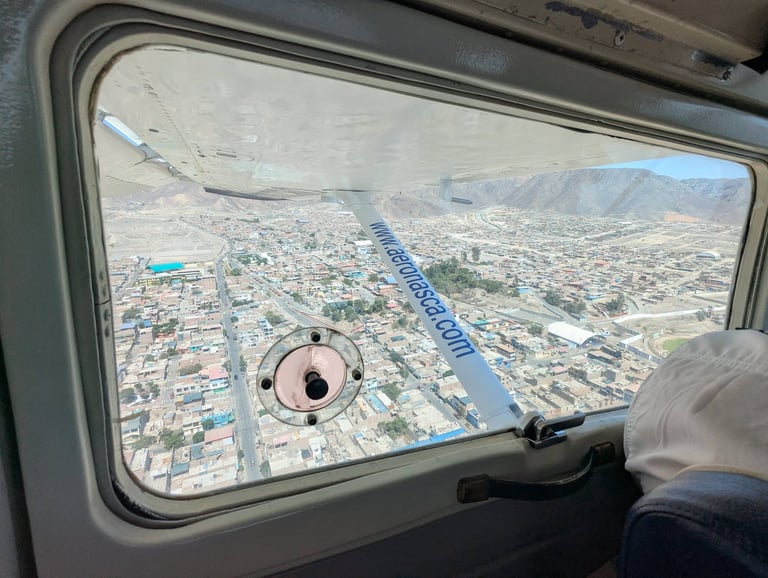
I was a little bit worried about flying in the afternoon, as I am not a good flyer and the afternoons are known to be bumpier rides than the morning flights. I was absolutely on edge first when we got into the air, wanting to just jump out of there, but the pilot's super SUPER chilled commentary calmed me down. The flight didn't actually end up being that bumpy, certainly compared to how small the plane was. Seeing the Nazca lines from the air was an unforgettable experience and I would recommend it to anybody!
Top things to do while in Ica or Huacachina. You can visit Islas Balletas and the Paracas Natural Reserve from Paracas as well, but the place is near enough to Ica and saved us packing and unpacking our luggage staying just in Ica rather than first in Paracas for the nature tour and then move onto Ica for the wine tour and sand dunes.
Day 16 & 17 - Huacachina
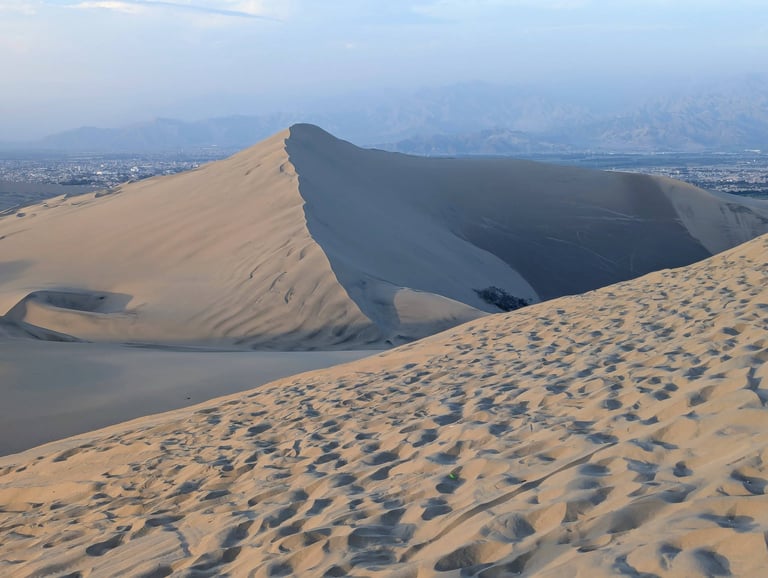
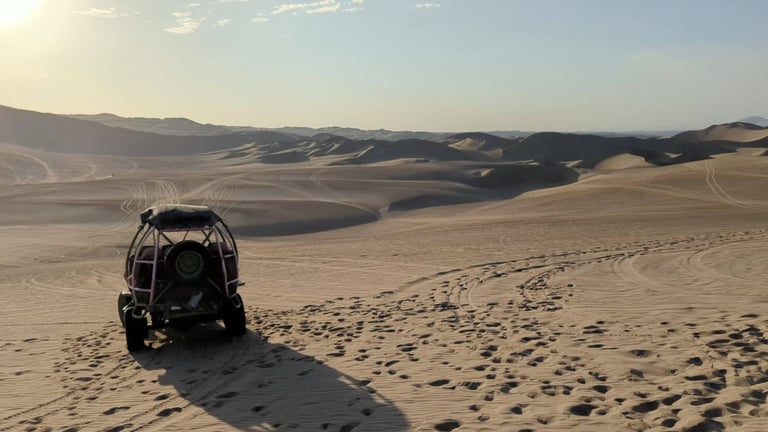
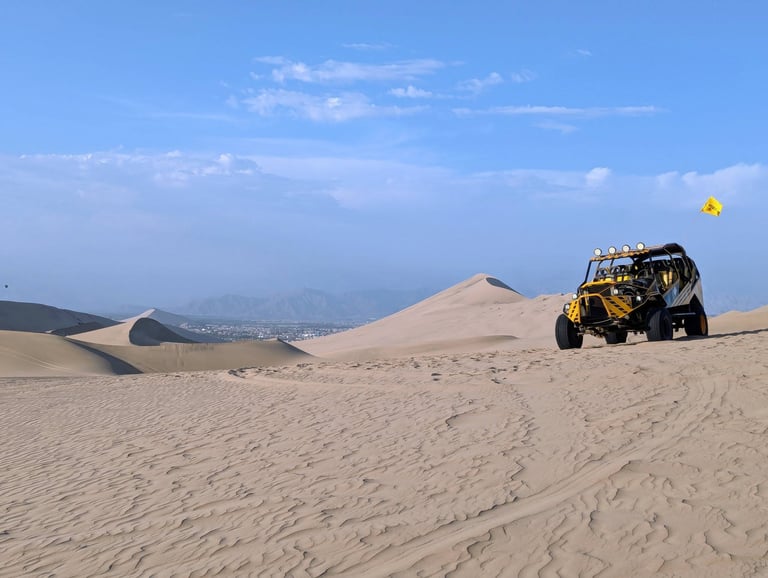
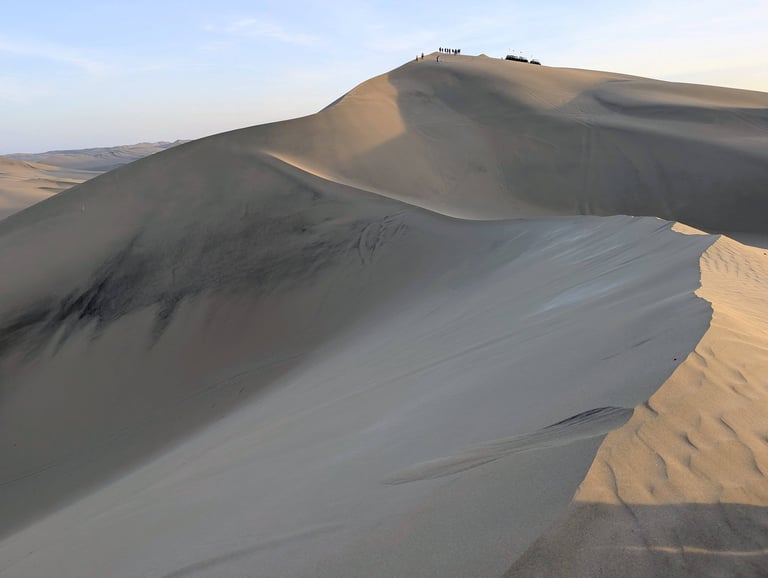
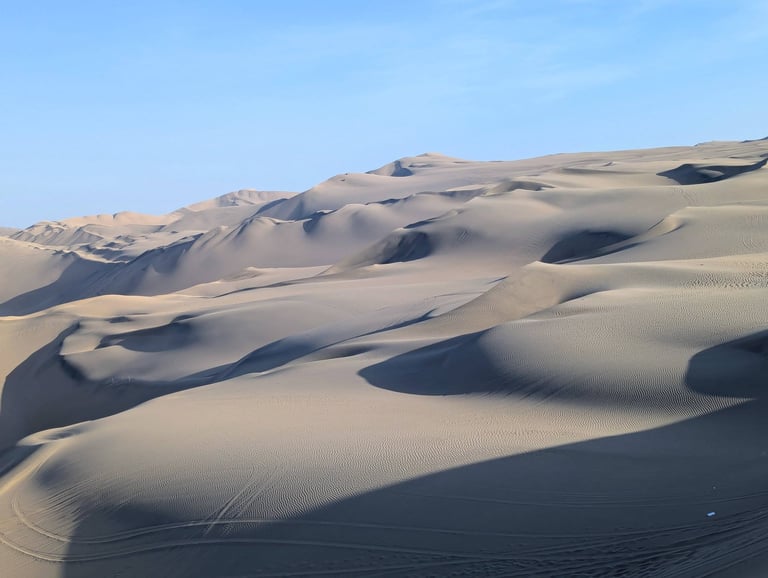
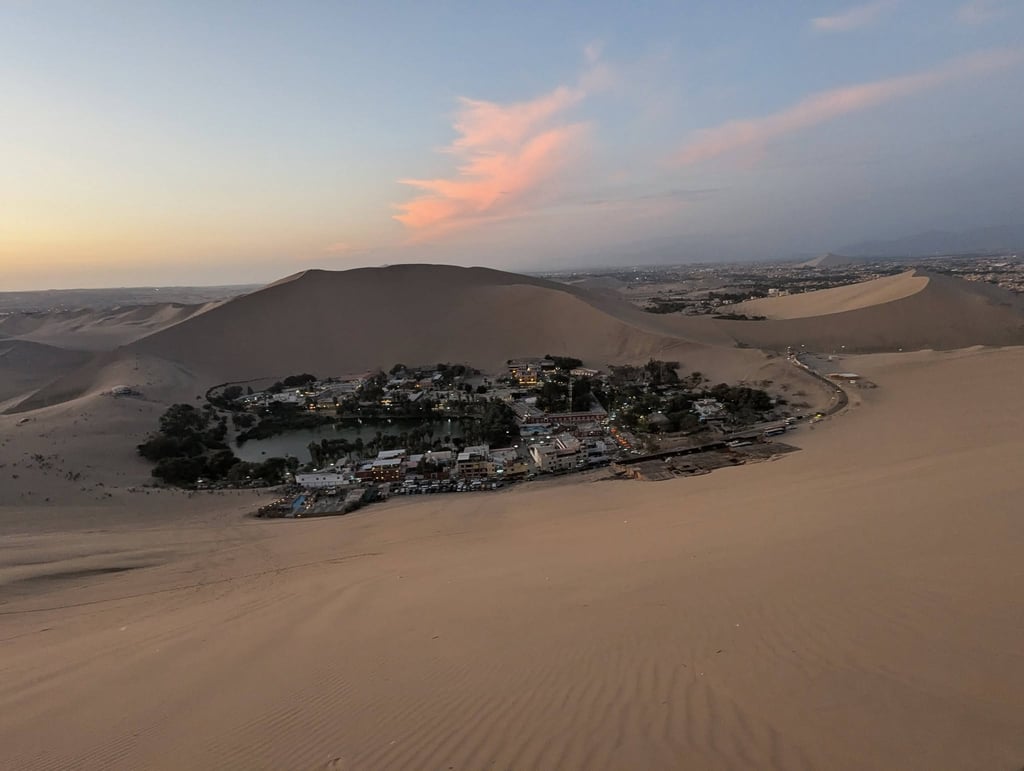
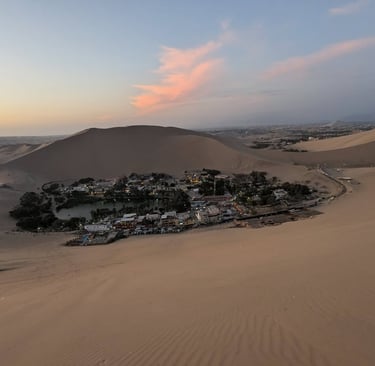
From Lima we made our way south along the coast to the town of Ica. There are a few things of interest in the vicinity of Ica, most famously the oasis of Huacachina where people have fun on dune buggies and sand boarding / sand skiing.
Getting there
Ica is really well served with buses, as it's on the Panamerican route with dozens of departures every single day taking about 4hrs if travelling direct, but the most reliable companies with the most comfortable buses would be:
Cruz del Sur: 65 soles for semi-cama (140 degree reclining seat) and 80 soles for a cama (160 degree reclining seat). They leave direct from Javier Prado station in Lima and typically only makes a stop at Atocongo station in Lima, but sometimes there's a second stop in Paracas. You can also use Cruz del Sur to get to Ica from Nazca and Arequipa.
Peru Hop: Part of a wider bus tour ticket which stops along all the "Gringo Trail" stops in southern Peru. I think it is so funny that the slogan on their website says "Don't be a typical tourist... Discover the REAL Peru!" when the absolutely opposite is true. But it is a good service for people who feel a bit insecure about navigating the Peruvian transport system and want to meet fellow travellers on the way.
Once you are in Ica, Huacachina is practically a suburb of the city, best accessed using an Uber taxi - avoid the taxis at the bus terminal, as we found that they rip you off. We got quoted 50 soles for the short ride while Uber was charging 10 soles.
Where to stay in Huacachina
Huacachina is a very small place but charming, while Ica is perhaps not as much so. However Ica is typically cheaper. We originally ended up going for the Banana's Adventure Hostel for the lively vibes, great location and breakfast included. While it is called a hostel, and technically is a hostel, they also have double rooms. Hostels are a great place to start a trip along the "Gringo Trail" because you meet lots of likeminded adventurous spirits, young and old, which you then keep bumping into as you progress on the Gringo Trail. Note however that this hostel is incredibly popular so if you are planning to snatch one of the double rooms, better book early! This is something I found out the hard way, as I had originally booked it assuming we'd be travelling counter-clockwise through Peru, but then decided clockwise would be better (i.e. starting in Cusco then Arequipa - Nazca - Huacachina - Lima), as it would give us more flexibility to see Machu Picchu if anything didn't go according to plan. So I asked to re-schedule the nights we had booked at Bananas hostel but they had already sold out of those days.
Luckily though, I had booked a fully refundable room, so now I just had to find something else and we ended up booking the Senoma Adults Only hotel that was literally just across the road. You can see our review of the hotel in the accommodation section above.
Things to do in Huacachina
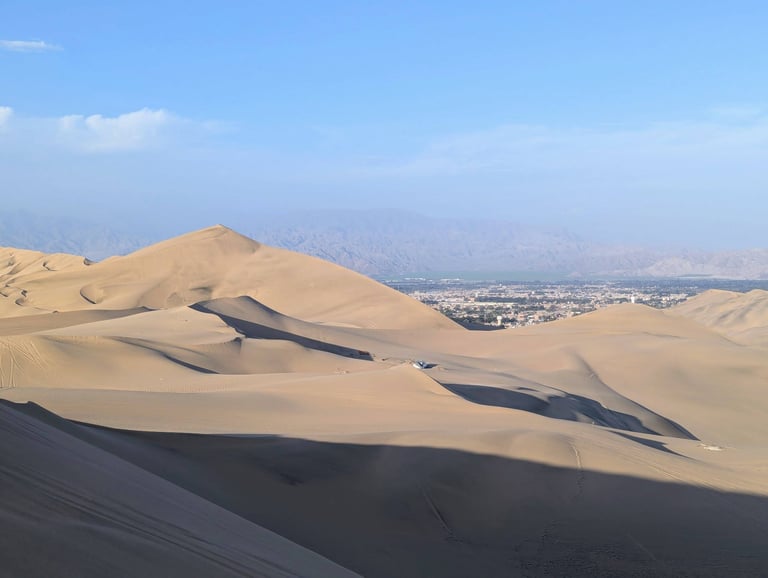
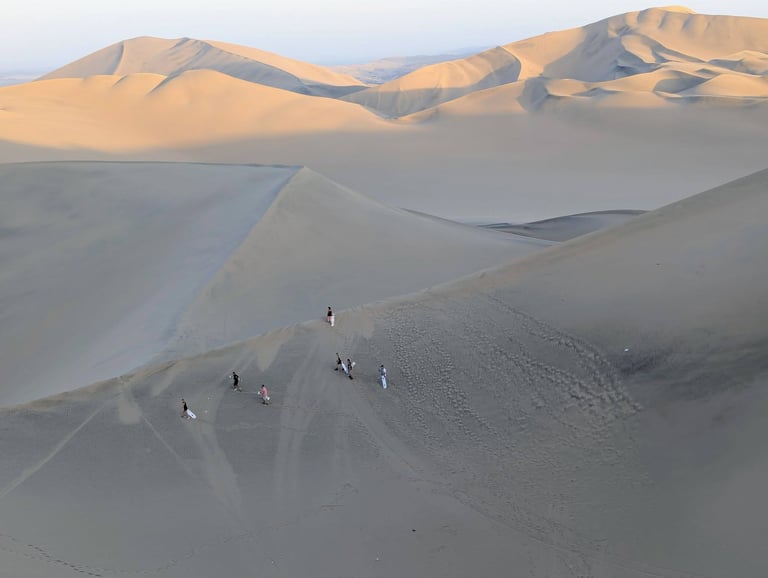
People come to Huacachina for the incredibly picturesque and impressive big sand dunes surrounding this little oasis village. Huacachina itself doesn't really have locals living there, it's very much a tourism hub and has been one for decades.
Walk around the oasis.
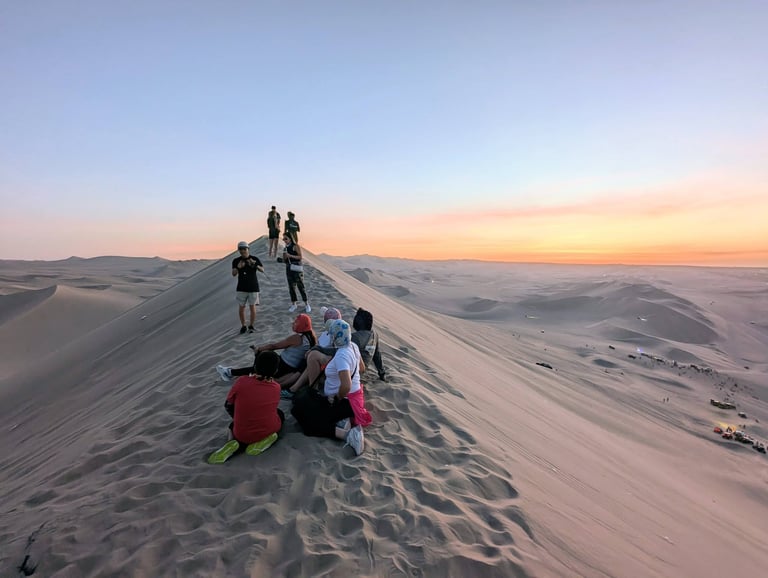
Climb to the top of the sand dunes.
Rent a paddle boat to paddle around the oasis lake.
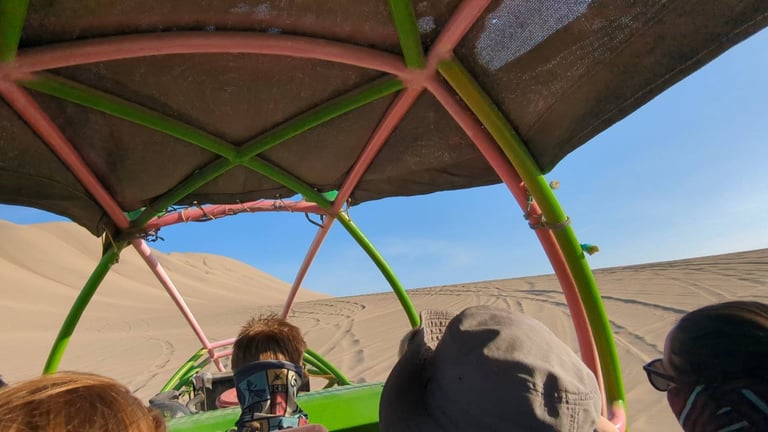
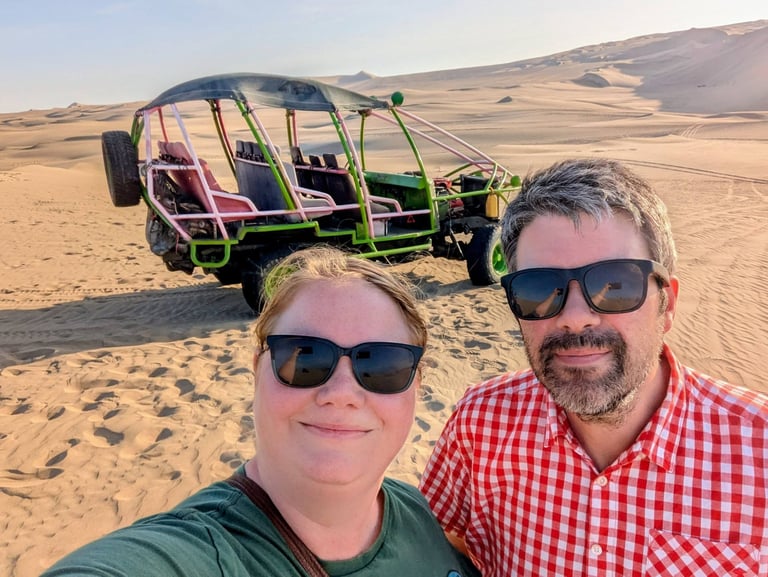
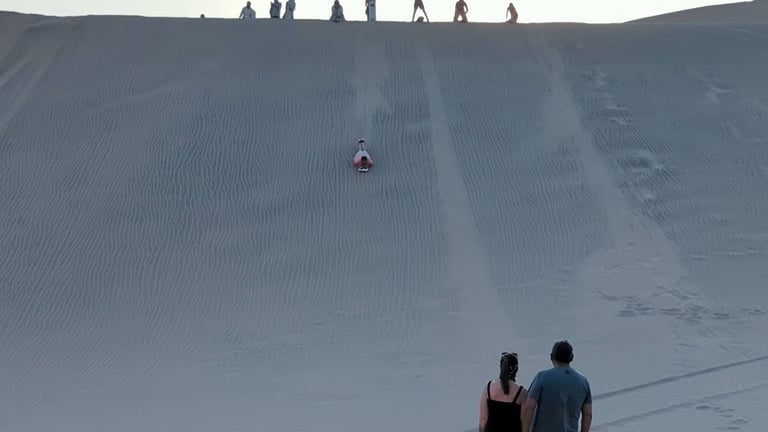
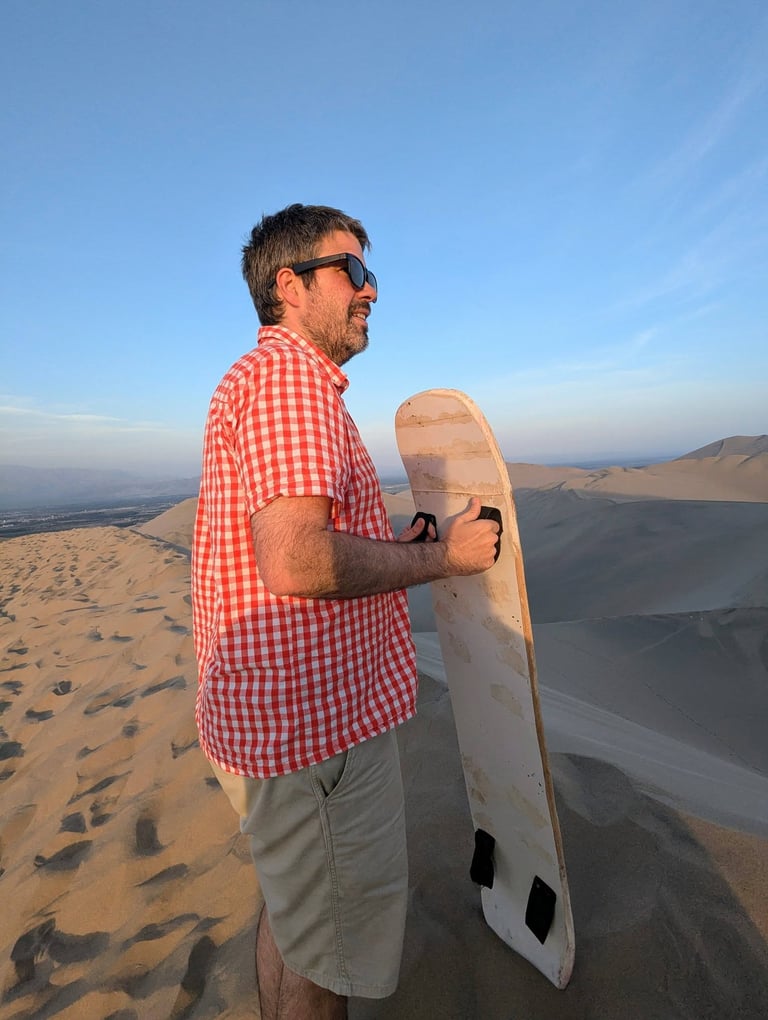
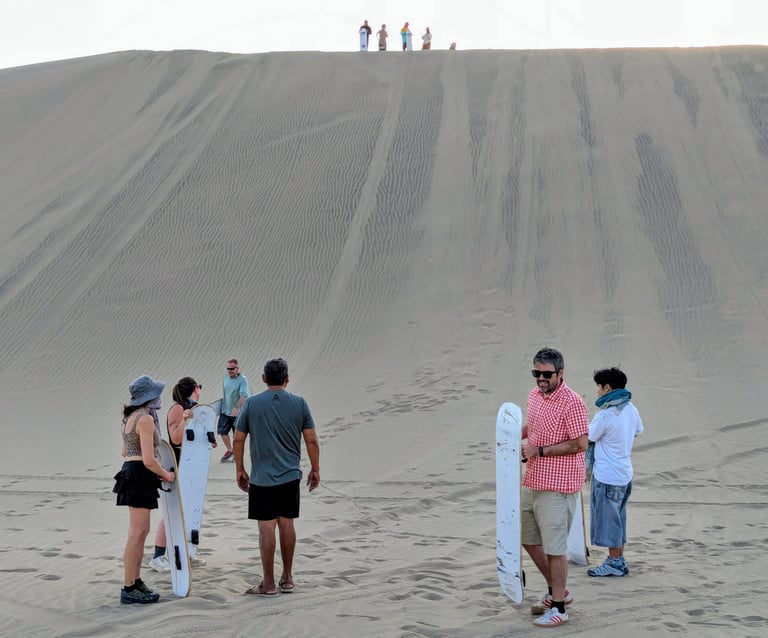
Go on a thrilling Dune Buggy & Sandboarding tour of the sand dunes
Go on a daytour of the Ballestas Islands & Paracas National Reserve
Visit the wineyards (yes, they've got them in this place despite the desert!) to taste the local Peruvian wine and Pisco.
Day 17 - Islas Ballestas and Paracas National Reserve
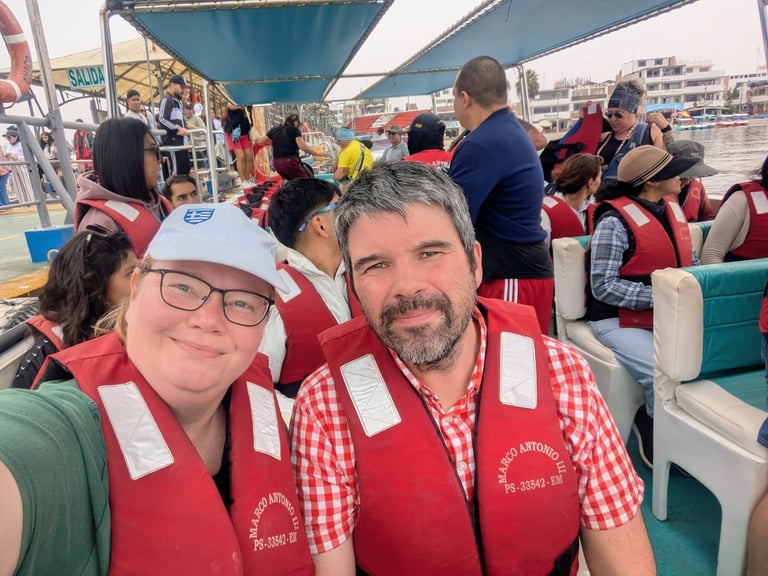
On our second day in Huacachina, we went on an organised tour to Islas Ballestas and Paracas National Reserve in the Ica region of Peru. The full-day tour from Huacachina cost us 110 soles (£23 GBP) per person, organised through the Bananas Adventure Hostel across the road from our hotel.
The tour started with pickups of passengers across Huacachina and Ica, which took a while, especially as an Israeli had been staying in this weird place in Ica which had locked him inside the hotel, with no reception staff available to let him out. So we ended up hanging around for a while until he was finally released out of his "prison". We then drove just over an hour to the town of Paracas, where we boarded a boat to go to the Ballestas Islands.
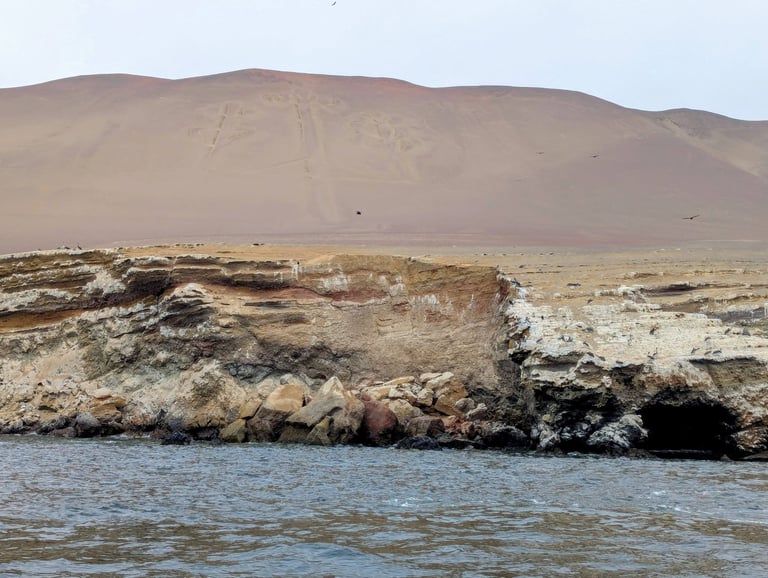
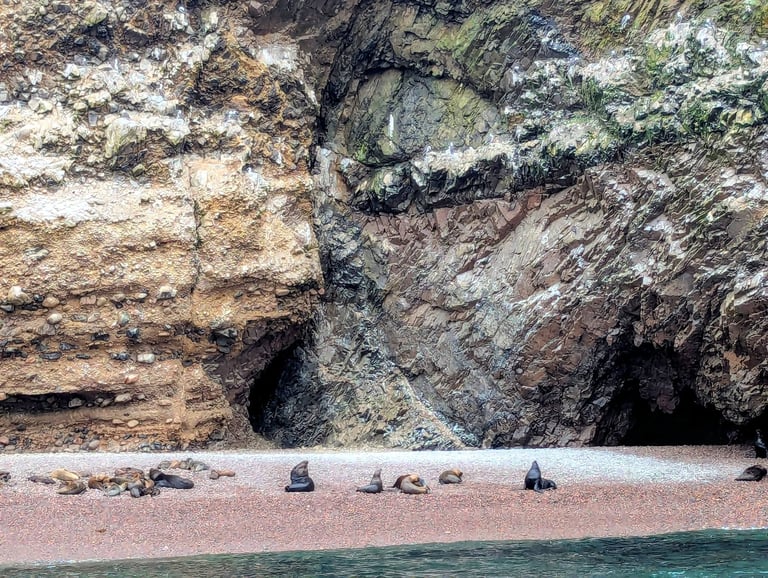
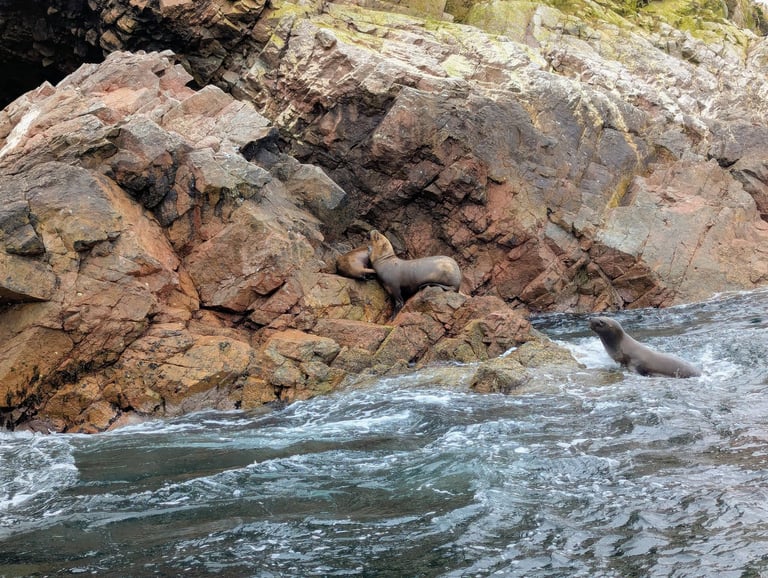
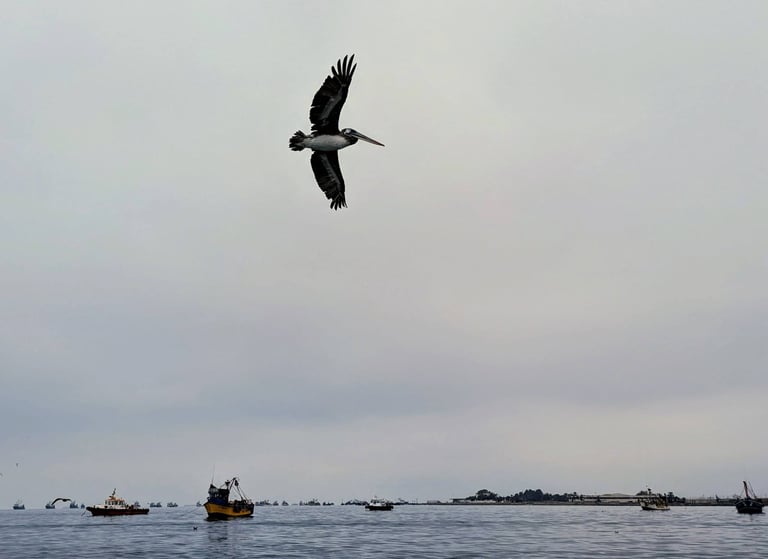
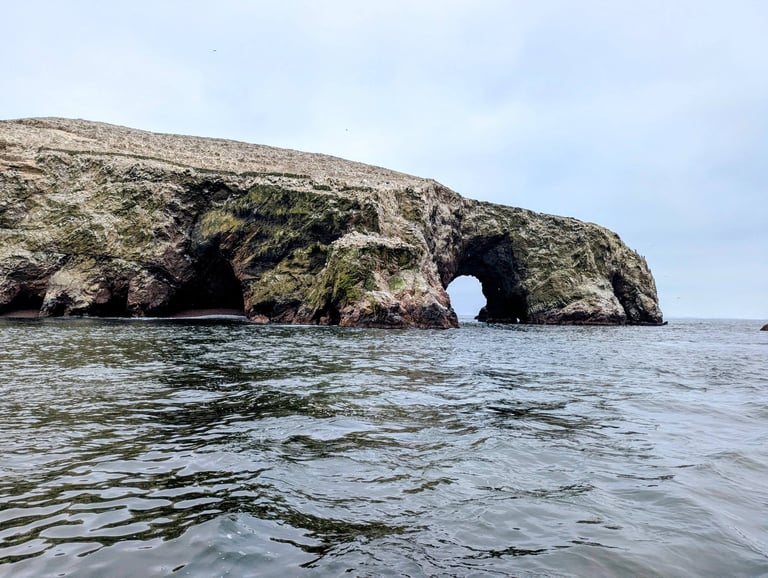
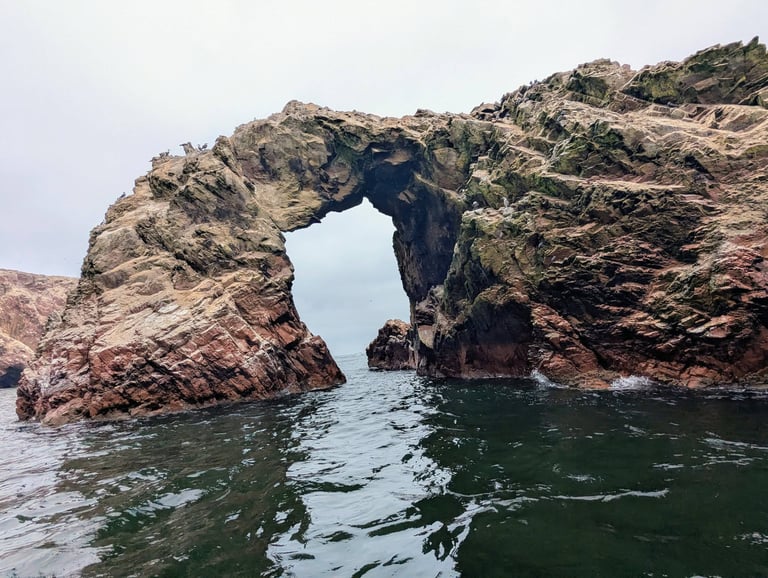
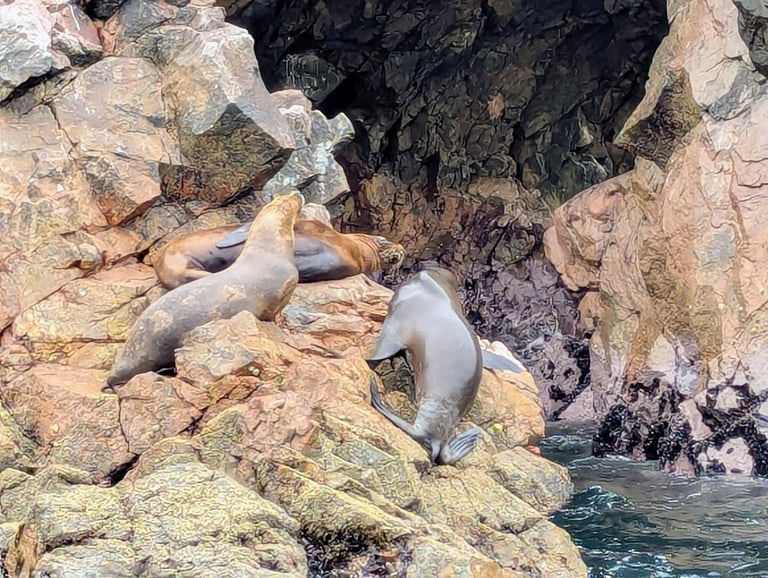
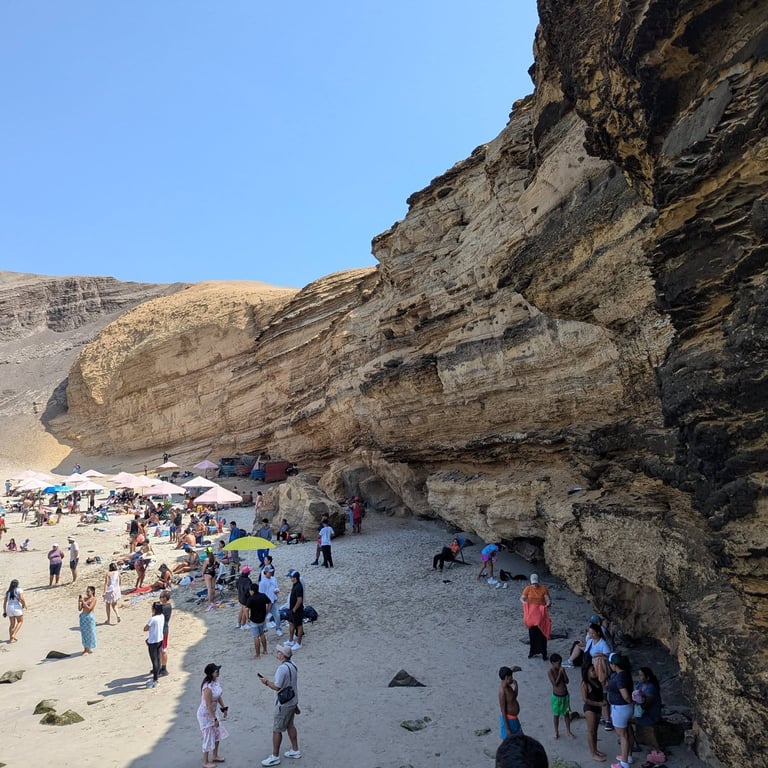
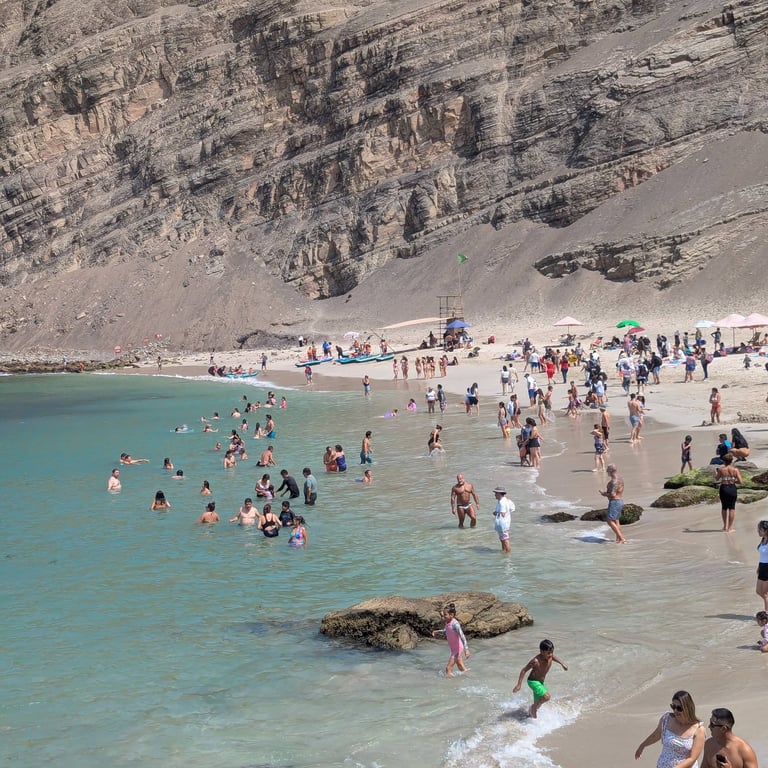
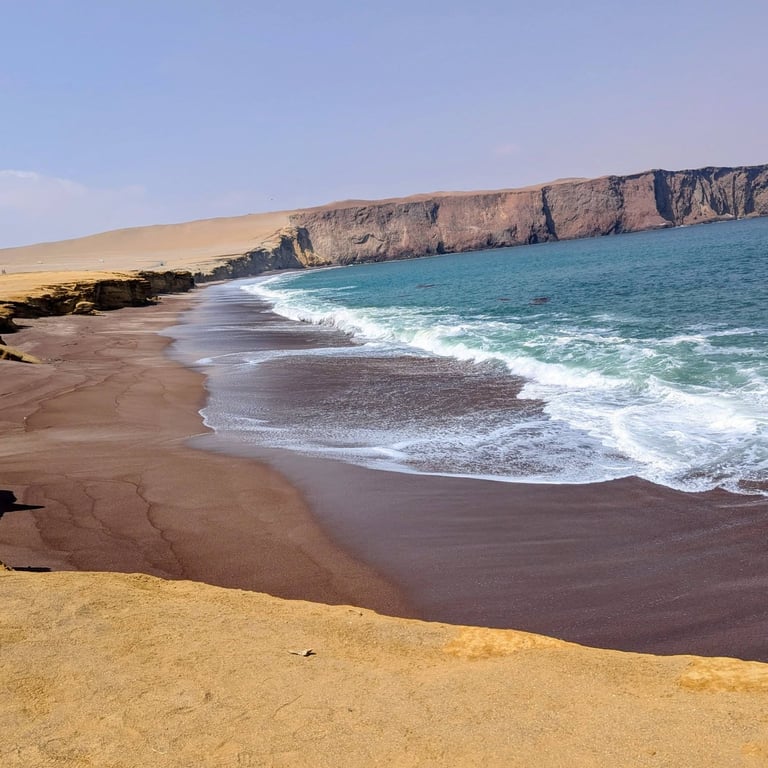
Often referred to as the "Galápagos of Peru", the Ballestas Islands are a group of rocky islets located just off the coast of Paracas, renowned for their staggering density of marine life. These protected islands serve as a vital breeding ground for Humboldt penguins, blue-footed boobies and sea lions. The islands are a haven for millions of birds, supported by the nutrient-dense Humboldt Current, with over 150 species frequenting the area. These include the Guanay cormorant, Peruvian booby, Inca tern, Humboldt penguin, Peruvian pelican, red-legged cormorant, Belcher's gull, blue-footed booby, black skimmer, grey gull and many more. Because the islands are a delicate sanctuary, visitors are not permitted to set foot on the land, instead viewing the spectacular wildlife from boats that navigate the surrounding waters. The area is also historically significant for its guano (bird droppings) deposits, which were once one of Peru’s most valuable exports, and for offering a seaside view of the enigmatic Candelabra geoglyph etched into the nearby mainland cliffs.
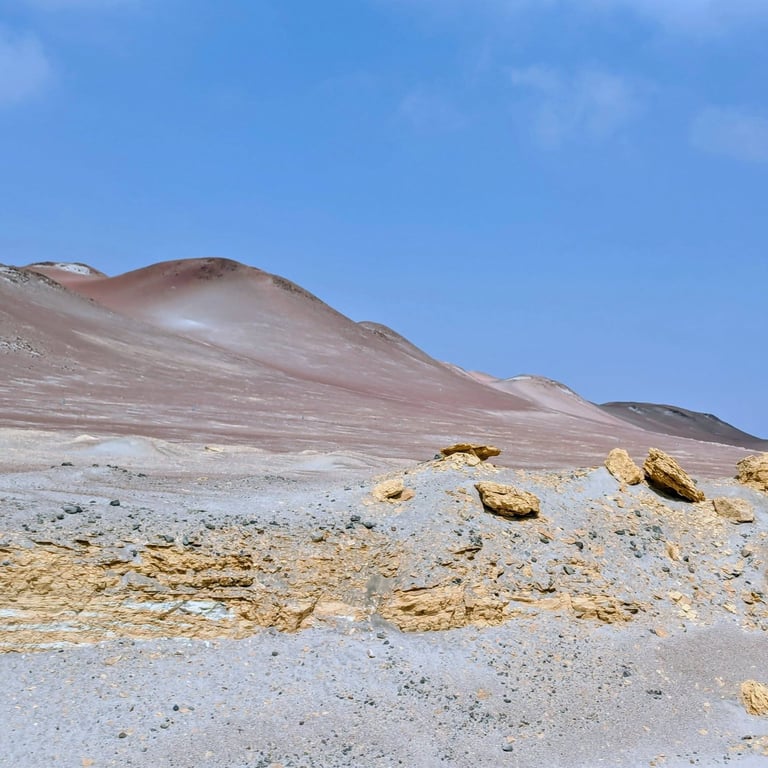
The best time of year to see the wildlife is during the coastal summertime (which coincides with the rainy season in the Andes) but we still saw plenty of sea lions both on land and in the water and countless birds at the start of May 2026. However, the signature bird of the islands, the Humboldt penguin, wasn't really anywhere to be seen. We literally just saw a single solitary penguin on one of the beaches. I'm not sure if this is typical these days, or if we just arrived at the totally wrong season. Though I did notice an immense decline in Humboldt penguin numbers on two separate trips to Isla Damas in Chile, between 2012 and 2019.
Day 18, 19 & 20 - Lima
Arriving in Lima Airport and getting into town
In our case, we took a Cruz del Sur bus to Lima and then an Uber, which is super cheap.
If you are coming from the airport, there are private hire services like Taxidatum you can pre-order which takes approximately 45 minutes into Miraflores and can cost around 75 soles. Alternatively, there's the official airport bus/shuttle service called Airport Express Lima which costs about 20 soles per person.
Getting around Lima
Uber is so cheap in Lima, there's really no reason to even try to navigate the public transport system!
Places to stay in Lima
We thought long and hard about what hotel to stay at in Lima. We just knew that we wanted to stay in the Miraflores area to be close to good food (which it is known for, and Peru is known for good food). Some of the early options we looked at were:
Best Western Plus Urban Larco Hotel (£55) - nice and spaceous rooms
ibis budget Lima Miraflores (£35) - hideously small
Radisson RED Miraflores (£65) - very central, good breakfast, quirky decor, not expensive
ibis Styles Lima Benavides Miraflores
Hilton Garden Inn Lima Miraflores (£109) - a bit out of the way as on the other side ofa major avenue, particularly at this price point but has a rooftop terrace with great view
Radisson Hotel Decapolis Miraflores (£94) - big rooms, highly rated, rooftop pool, breakfast meant to be nice, near some of Lima's famous restaurants.
Hotel Antigua Miraflores (£82) - very old fashioned, colonial house serving good breakfast but no coffee making facilities which is a big "no" for us, however this place seems very popular with many.
Hotel del Prado Lima (£62) - Convenient for the Cruz del Sur bus due to proximity to Javier Prado bus terminal. Perfectly acceptable rooms and breakfast if you're just crashing for 1 night and taking the bus next day, as was the case with us on our first day. Splurge on a Junior Suite even for £78.
However, Joe has status with Melia and after he looked up the price for iNNSiDE Melia Miraflores, which gave us quite a lot for just £75 GBP including breakfast, with a stellar location as well, we decided to just go for that.
Places to eat in Lima
If you are just arriving in Peru and have a couple of days in Lima, I'd highly recommend that you do a food tour to try the many different Peruvian specialities so that you know what you like and are familiar with the food as you travel around the country. Lima has some excellent, highly rated food tours.


Follow us on Social Media for travel updates and top tips!
© 2026. All rights reserved.



I can't recommend Pimsleur enough for learning a new language! If you don't believe me, try for your self - All Access FREE for 7 days on signup.